Showing posts with label RENDELL. Show all posts

Tuesday, July 13, 2010

Rendell advisers getting jobs with shale gas firms

By Andrew Maykuth and Angela Couloumbis
Inquirer Staff Writers
The Philadelphia Inquirer
Tues., July 13, 2010
Another member of Gov. Rendell's inner circle has left to work for a Marcellus Shale natural gas producer, the third high-ranking administration official in the last year to move directly into the fast-growing industry.

Sarah Battisti, one of Rendell's five deputy chiefs of staff, has taken a government affairs position with BG Group, a British gas company that recently bought a stake in Pennsylvania's natural gas business, Steve Crawford, Rendell's chief of staff, said Monday.

With seven months remaining in Rendell's term, Battisti's departure could signal a migration of experienced administration aides into the natural gas industry, which is regulated by the state Department of Environmental Protection and is deeply enmeshed in a legislative debate over proposals to tax gas extracted from the Marcellus Shale formation.

"One thing the industry appears to have at their ready disposal is money, so they're hiring lots of people to help with their lobbying or permitting problems," Crawford said.

Battisti's departure comes two months after Barbara Sexton, the executive deputy secretary of environmental protection, left to work in governmental affairs for Chesapeake Energy Corp., an Oklahoma company that is one of the nation's largest gas exploration firms.

And last fall, K. Scott Roy, Rendell's executive deputy chief of staff, raised eyebrows when he went to work for Range Resources Corp. Roy was chief liaison between the governor's office and the gas industry and environmental groups, and his hiring came soon after Rendell dropped efforts last year to enact a natural gas tax. The governor said Roy's new job had nothing to do with his decision.

...

Natural-gas drilling has increased dramatically in Pennsylvania in the last two years as operators have tapped into the mile-deep formation that underlies much of Pennsylvania and several surrounding states. The drilling is contributing to an economic boom in rural Pennsylvania, but also triggering environmental protests.

Unlike Roy's, Battisti's departure comes as relations between the administration and the industry have become frosty amid Rendell's campaign to enact a severance tax on gas production. In recent months, state agencies have churned out a stream of news releases about enforcement actions against gas operators for environmental violations.

Crawford said that there had been a "distinct chilling of the industry's willingness to work with the administration. At the same time, there have been a series of chilling events that have disastrous implications for the industry's image."

In one of the latest incidents, a well operated by EOG Resources Inc. blew out on June 3 in Clearfield County and spewed out of control for 16 hours. DEP is scheduled to release an investigator's "very disturbing" findings about the incident Tuesday, Crawford said.

Under Pennsylvania's so-called revolving-door law, state officials who leave government service are barred from lobbying their former agencies for one year.

Crawford said Battisti would not be permitted to lobby the governor's office or the Departments of Environmental Protection and Conservation and Natural Resources.

Read more HERE.

DEMAND ACCOUNTABILITY!
Thursday, April 1, 2010

Contaminated mud from Marcellus Shale gas drilling spills in state forest; Rendell may be changing mind on additional leasing


posted by Isaiah Thompson


Just a week ago, the Pennsylvania House of Representatives passed a budget which relies on more than $100 million in revenue from new leasing of state forest for drilling in the Marcellus Shale (a third of the state forest has already been leased for drilling).

That decision, as I reported in February, ran contrary to the advice of former Department of Conservation and Natural Resources secretary Michael DiBerardinis, who warned shortly before resigning that further leasing would "scar the economic, scenic, ecological, and recreational values of the forest," as well as overburden the Department's limited staff.

Among the dangers associated with Marcellus Shale drilling is the potential for spills — a danger heightened by the rapid pace at which the industry has developed.

Yesterday, the Scranton Times-Tribune reported that 8,000 to 12,000 gallons of contaminated mud were spilled at Sproul state forest in Clinton County, Pa. — a site operated by Anadarko E&P Co. Inc. that was part of the governor's most recent lease of forest land for drilling, in January.

While about half of the mud spilled over the boundary of the well pad, it didn't spread far enough to contaminate any surface waters, ground water or wetlands in the area, said Mr. Spandoni. A contractor began cleanup work Friday night. DEP officials have taken mud samples to determine a proper disposal method.

The mud is used as a cooling agent in drilling operations. Since the mud that spilled is synthetic-based, it doesn't contain any diesel fluids as some other agents do, said Mr. Spandoni.

Comforted yet?

(Uh-oh. Uh-oh. Did he say DIESEL fluids???)

This certainly isn't the first case of "errors" resulting from hydraulic fracturing operations: There were 56 "illegal discharges" in 2008 and 2009.

...

These spills resulted in impacts to Alex Branch and Little Laurel Run streams, which are wild trout fisheries, and a freshwater spring used by local hunters.

Representative Greg Vitali, working with a coalition of environmentally-minded House representatives, has sponsored a bill calling for a moratorium on the leasing of more state land for drilling.

Despite what he says was a deal made between House "green dog" Democrats, who opposed such leasing, House leadership, and Governor Ed Rendell, the governor came out in favor of leasing additional land for this year's budget.

But, according to the Times-Tribune, he was singing a different tune yesterday:

Mr. Rendell expressed optimism Monday the state can meet next year's revenue target without leasing additional acreage of state forest land. He said more details will be forthcoming. Mr. Rendell also said for the first time he supports a moratorium bill.

If this is true, it's big news. Maybe Rendell has decided he doesn't want his legacy to have been pillaging the state forest to plug budget holes, after all.

(Or, Splashdown wonders... maybe he's catching on that it's pointless to try to play ball with an industry that doesn't play ball with anybody... maybe he feels had. Heh.)
LINK

DEMAND ACCOUNTABILITY!
Tuesday, March 30, 2010

Rendell warns natural-gas industry that resistance to tax will backfire

By Andrew Maykuth
Inquirer Staff Writer
www.philly.com
Tues., Mar. 30, 2010

FORT WORTH, Texas - Gov. Rendell, describing himself as the "best ally" of the natural-gas industry, has warned it that public opinion is turning against Marcellus Shale drilling, and that a tax on gas production is the best way to get Pennsylvanians to accept the practice.

In a talk before an energy conference in Dallas, Rendell said the natural-gas business was following "some bad advice" in resisting a Pennsylvania tax on production, and it could face a future backlash resulting in a far more severe tax "that will bleed the industry."

Since the governor's recorded comments Thursday at the conference, sponsored by the George W. Bush Institute and Southern Methodist University (his remarks can be heard at the institute's Web site), a spirited discussion has been sparked about the industry's difficulties communicating to the state's citizenry its positive aspects - jobs, economic development, a reduction in greenhouse gases, and less reliance on imported fuel - rather than the environmental drawbacks of the Marcellus drilling.

Telling his audience at the natural-gas conference that he has campaigned relentlessly to promote the industry in Pennsylvania, Rendell said he recently invited leading gas-drilling executives to the governor's mansion in Harrisburg to discuss a proposal to enact a wellhead-production levy like those in other states with severance taxes.

But only one drilling executive accepted the invitation, Rendell said during the roundtable discussion.

"Now, I have not said that publicly," Rendell said. "If I told the people of Pennsylvania that, there would be a sense of tremendous outrage.

Outraged yet??? Here's more:

"As governor, I've never had that experience before - I've never invited major CEOs, even to talk about things as difficult as taxes, to come to the residence and had them turn me down.

"So the industry is making mistake after mistake right now, and the tide of public opinion is turning, and even though it is truly the golden goose, we* could blow it."

*Uh-oh, whose governor is this???

Continue reading HERE.

DEMAND ACCOUNTABILITY!

Monday, February 22, 2010

Gas well foes vow to fight Rendell!

Lawmakers line up against governor's forest leasing plan
Monday, February 22, 2010

A caucus of 37 "green dog" and "hunting dog" legislators is barking mad about a Rendell administration budget proposal that would seek to raise $180 million by leasing more state forest land for Marcellus shale gas well drilling.

State Rep. David Levdansky, D-Forward, said the pro-environment and pro-hunting Democratic legislators in the conservation caucus are strongly opposed to leasing what could be another 50,000 to 80,000 acres of the state's forests for deep gas drilling beginning in July and will not compromise that position in upcoming budget negotiations.

"We're doing everything we can to stop this," said Mr. Levdansky, a member of the House Game and Fisheries Committee and chairman of the House Finance Committee. "To me this could be the worst environmental catastrophe I've seen in my 25 years in Harrisburg."

In a Feb. 3 letter to the governor, the legislators called for a moratorium on state forest land leasing until the "long-term environmental, fiscal, economic and social impacts" are studied and reviewed and requested a meeting with the governor on the issue.

According to the legislator's letter, at least 100 wells already are slated for drilling in state forests this year. And another 1,500 well pads containing 5,000 to 6,000 wells could be drilled in the next 10 years on the forest land leased in the last two years.

Mr. Levdansky said the proposed widespread drilling will fragment the forests with a checkerboard of drilling pads, pipelines and service roads, make the forests more susceptible to disease, damage endangered species habitat and allow invasive species to enter the state's forest ecosystems.

"Our state forests are the envy of the other states in the nation, a wonderful system, and now the governor wants to open them up for a short-term revenue gain. It's a travesty," he said.

Last year the state leased almost 32,000 acres of state forest land for gas well drilling, raising $60 million for the general fund and $68 million to the oil and gas fund. In 2008 the state broke a five-year moratorium on forest land leasing and auctioned off 74,000 acres of drilling rights for $166 million.

All told, a total of 660,000 acres of the state's 2.1 million-acre forest system already have already been leased for both shallow and deep gas and oil drilling.

Gary Tuma, a spokesman for the governor, said the plan to lease more state forest land was part of a two-year deal on gas rights leasing agreed to by the state's Republican and Democratic legislative caucuses last fall to generate needed general fund revenues. He said the governor agreed to it after the Legislature failed to support proposals to increase the personal income tax and a severance tax on natural gas from the Marcellus shale.

"The governor wasn't excited about leasing the state forest land," Mr. Tuma said. "But the decision has been made absent some other alternative revenue source."

But Mr. Levdansky said that, although the governor asked for a second year of forest leases in last year's budget negotiations, House Democratic leaders did not agree to that.

"If the governor isn't excited about leasing more forest land he shouldn't do it," Mr. Levdansky said. "He has other options. Let's get serious about putting a gas severance tax in place, that according to the governor could bring in $160 million to $180 million next year."

The legislators' letter praised the governor for once again supporting a severance tax on natural gas pumped from the Marcellus shale and said they would "fervently support" enactment of that tax. Mr. Rendell originally supported such a tax early last year but dropped his support during budget negotiations in the fall. Thirty-nine other states impose such a tax.

About 1.5 million acres of the 2.1 million acres of state forests are in the "Marcellus Zone" above the 5,000- to 8,000-foot-deep shale layer that underlies three-quarters of the state and could hold as much as 363 trillion cubic feet of natural gas, enough to supply U.S. gas demands for 10 to 15 years.

Last month, Trout Unlimited, a national fishing and conservation organization, criticized Pennsylvania for last year's lease of 32,000 acres, calling it a "failure to protect public resources" that could have a detrimental effect on fish and wildlife habitat.

"We have already seen detrimental effects to water quality on our state forests and find this unacceptable," David Rothrock, president of the Pennsylvania Council of TU, said in a press release last month. "The state budget should not be balanced at the expense of hunters and anglers."

Statewide, approximately 2,500 Marcellus shale gas well drilling permits were issued from 2007 through 2009 by the state Department of Environmental Protection, which projects another 5,000 permits will be issued this year.

Developing the gas could bring billions of dollars into the state and create thousands of jobs, according to the gas industry and some state officials.

LINK

DEMAND ACCOUNTABILITY!

Friday, February 19, 2010

CBF and TU Call For Ban On Marcellus Gas Wells In Floodplains After Incidents In Susquehanna & Lycoming Counties

PA Environment Digest Daily Blog
February 18, 2010


In the rush to develop the Marcellus shale formation in Pennsylvania, natural gas wells are being permitted and drilled in floodplains. Two such wells, one operated by Stone Energy along Wyalusing Creek in Rush Township, Susquehanna County, and one operated by XTO along Muncy Creek in Shrewsbury Township, Lycoming County already experienced flooding events.
The Chesapeake Bay Foundation (CBF) and Trout Unlimited (TU) call upon the Pennsylvania Department of Environmental Protection (DEP) to remedy this clear environmental and public health hazard.
“The handling of fracking chemicals and highly contaminated drilling wastewater in floodplains is an environmental disaster waiting to happen. It has to stop,” said Matt Ehrhart, executive director of CBF’s Pennsylvania Office. “Permitting well pads in floodplains causes a very serious threat of pollution. We call upon DEP to use its authority under the Clean Streams Law to order the companies operating these wells to permanently cap and abandon them, and then reclaim the sites to their natural condition.”
While current regulations do not allow well pads to be located within 100 feet of streams or within the floodway without an encroachment permit, neither the Pennsylvania Oil and Gas Act nor its regulations prohibit siting wells in floodplains. Because horizontal drilling technology is used to drill into Marcellus shale, the gas underneath streams and floodplains can easily be accessed from a pad location in an upland area, avoiding risk of flooding and catastrophic pollution to Pennsylvania’s rivers and streams. There is no reason to site wells in floodplains.
“This loophole must be closed immediately,” said Dave Rothrock, president of the Pennsylvania Council of Trout Unlimited.
In late January, heavy rains hit northern Pennsylvania and several streams and rivers experienced flooding events, including Wyalusing and Muncy Creeks. Both the Stone Energy and the XTO sites were flooded as a result of these events.
“The risk of pollution to our streams will increase exponentially in a matter of weeks,” said Rothrock. “As we head into the season of snowmelt and spring rains, there should be absolutely no more well drilling activity in floodplains anywhere in Pennsylvania.”
The Stone Energy site was permitted along Wyalusing Creek by DEP without the necessary encroachment permits. While DEP issued a notice of violation to the company the week before the flood, the agency should have never issued the well drilling permit in the first place. CBF has previously highlighted serious flaws in the fast track permitting process implemented by DEP since April 2009, where permit applications do not receive careful environmental review but are instead pushed quickly out the door.
...
“The Stone Energy site is yet another example of permits being issued without the necessary review,” said Ehrhart. “DEP should not have issued a drilling permit that close to the creek, plain and simple. If the agency was spending any time looking at the proposed location, it would have known that.”
...
Complete article: LINK

DEMAND ACCOUNTABILITY!

Sunday, February 14, 2010

The Marcellus Memos: Privately, Rendell’s State Forest tsars expressed deep concern over leasing state forest for drilling


A few days ago, we reported (and the Inquirer re-reports today) that Governor Rendell is considering authorizing yet another lease of state forest land for drilling into the Marcellus Shale, a geologic structure containing billions (if not trillions) of dollars worth of natural gas.

If he does, it will be the third such sale in three years –before 2008, state land hadn't been leased for drilling since 2002.

There are a few reasons to ask whether this is a good move. For one thing, fully one-third of our state forest has already been leased for drilling. For another, while only four Marcellus wells are currently active on forest land right now, at least 40 wells are expected to be in production by the end of the year and DCNR officials say that we could see over a thousand in the next decade – all that on land already leased.

We have, in other words, barely begun to see what impact drilling will have on the state forests already leased – leasing even more of it now could be risky indeed.

But don't take my word for it: Rendell's own state forest officials have made their concerns very clear – albeit mostly in private.

Memos and emails obtained by City Paper show that both former DCNR Secretary Michael Diberardinis and Acting Secretary John Quigley have repeatedly cautioned Rendell against leasing additional state forest for Marcellus Shale drilling.

So, in a CP exclusive, we bring you excerpts from said documents in . . . The Marcellus Memos

Background: in 2008, Governor Rendell authorized the first leasing of state forest for gas drilling since 2002. He did so at the suggestion of then-Secretary Michael DiBerardinis, who suggested leasing the land as a way of preventing the state legislature, hungry for revenue, from usurping the authority to do so from DCNR.

Perhaps to Diberardinis' surprise (he has declined comment), Rendell shortly thereafter asked DCNR to perform yet another leasing of state forest for drilling. On March 11, 2009, Rendell's office announced Sec. DiBerardinis' resignation. The following memo (abridged) was written just a week before Mr. DiBerardinis' last day of work.

Memo – March 27, 2009, Sec. DiBerardinis to Gov. Rendell

"Wholesale leasing will damage our State Forest landscape. It would scar the economic, scenic, ecological, and recreational values of the forest – especially the most wild and remote areas of our state in the Pennsylvania Wilds. Your years of work and investments in rural economic revitalization through outdoor experiences in the Pennsylvania Wilds could be erased."

" . . . A rush to drill threatens the certification of our State Forests as sustainably managed. . . Our ability to sustainably manage our State Forests is threatened by unplanned, excessive leasing activity."

". . . Finally, and perhaps most important of all is the environmental legacy you want to leave. I'm deeply concerned that your tireless work [for the environment] will be in jeopardy with large scale leasing."

"One hundred years ago, the land that would become the state's forests was a denuded landscape that was scarred by rampant resource extraction. Our State Forest system – the largest swath of publicly owned land east of the Mississippi River – grew from a visionary effort to reclaim this landscape and restore to Pennsylvania's citizens their natural birthright . . . A rush to drill places the state forest and all its benefits at great risk. . . "

*

Background: In this email, Acting Sec. Quigley says that DCNR is comfortable leasing only 40,000 more acres for Marcellus Shale drilling. As you'll see int he next email, within 2 days, Rendell's staff would ask DCNR to double that acreage.

Email – May 4, 2009, Acting Sec. John Quigley to Gov. Rendell

"It is important to emphasize that we cannot lease 620,000 more acres. We are approaching questionable territory with future lease sales. We are comfortable with a maximum of 40K acres for an additional lease sale . . ."

*

Background: Pennsylvania is one of just a handful of forests in the United States certified by the Forest Stewardship Council as a sustainable forest. Here, Acting Secretary John Quigley warns Rendell that that certification could be in danger if more state forest is leased.

Memo – May 6, 2009, Acting Sec. John Quigley to Scott Roy, Mary Soderberg (Gov. Rendell's office)

"You have asked DCNR to be prepared to offer at least a total of 80,000 acres of state forest lands for Marcellus gas development in 2009. . ."

"I want to be very explicit about the situation that this will place us in. These would likely be the last gas lease sales on State Forest land that we could manage within the context of our sustainable certification for the foreseeable future."

LINK

DEMAND ACCOUNTABILITY!

Saturday, February 13, 2010

We have leased enough state forests for Marcellus Shale gas drilling

Patriot-News Op-Ed
By State Rep. Greg Vitali
February 12, 2010
pennlive.com
Gov. Rendell plans to lease — perhaps as early as this spring — more Pennsylvania state forest land for Marcellus Shale gas drilling. This would be in addition to the almost 700,000 acres of state forest land already available for Marcellus drilling. No one knows what the impact of the anticipated drilling will be. That’s why I have introduced legislation to impose a moratorium on further leasing until we know more. The governor plans to raise an additional $180 million from state forest leasing for the 2010-11 budget. He needs no legislative approval to do this.

One-and-a-half-million acres of Pennsylvania state forest land sits atop the Marcellus Shale formation. With the leasing of 32,000 acres in January, 692,000 acres of state forest land is now available for drilling. Yet the governor wants to lease more.

...

Fracking a single well typically requires more than a million gallons of water. Several acres of land need to be cleared for the drilling pad. Access roads, a water sediment basin and other infrastructure need to be installed, and a high volume of truck traffic is required to transport drilling equipment and water to and from the drilling site. This activity impacts state forests and puts local water quality at risk.

Presently, there are only three Marcellus wells producing gas on Pennsylvania state forest land. About another hundred wells are being drilled. It is conservatively estimated that about 5,000 to 6,000 Marcellus wells will be drilled in the next 15 years. No one knows what the impact of this drilling will be on state forests or how it will affect the quality of drinking water in the Marcellus region.

We need to stop leasing state forest land until we can better assess the impact of this anticipated drilling. That’s why I have introduced H.B. 2235, The State Forest Natural Gas Lease Moratorium Act. This bill would impose a five-year moratorium on further state forest leasing. The bill also would require the state Department of Conservation and Natural Resources to study the impact of drilling and provide an annual report to the governor and General Assembly.

Instead of leasing more state forest land to balance this year’s budget, Pennsylvania should impose a severance tax on gas drillers. Almost every other state that extracts natural gas imposes such a tax.

The citizens of Pennsylvania need to send a strong message to Gov. Rendell and the General Assembly that our state forests and the quality of our drinking water are too important to compromise.

Greg Vitali is a Democratic state representative from Delaware County and serves on the House Environmental Resources and Energy Committee. He can be reached via www.pahouse.com/Vitali.

LINK

DEMAND ACCOUNTABILITY!

Tuesday, February 9, 2010

Drillers line up against Pennsylvania's Marcellus Shale tax

By Reuters Tuesday, February 9, 2010

Energy companies drilling for natural gas in Pennsylvania's Marcellus Shale are ready to fight a proposed state wellhead tax, arguing it would slow development of America's biggest gas formation.

Gov. Ed Rendell, faced with a projected $450 million revenue shortfall for fiscal 2010-11, wants to raise at least $100 million a year from the so-called severance tax on the drilling boom in the Marcellus Shale, a gas-bearing formation that underlies about two-thirds of the state.

Specifics of the tax plan are expected today, when Rendell is due to give a budget address.

The Democratic governor says the industry can afford a tax, noting that companies paid twice as much as expected at a recent auction of state forest lands for drilling and that Exxon Mobil agreed to pay some $30 billion in stock for gas driller XTO Energy.

But industry executives said such a tax would slow development of the gas field that promises to generate tens of thousands of jobs and millions of dollars in revenue for the cash-strapped state budget.

"We have not put a line in the sand but we feel we are building a foundation, and this may not be the right time," said David Spigelmyer, vice president of government relations for Chesapeake Energy Corp, the second-largest U.S. producer of natural gas, which has growing operations in Pennsylvania.

(That's what they said last time around too. This industry is so predictable... same old, same old.)

Spigelmyer said industry officials had been scheduled to meet with Rendell in mid-January to argue against the tax but the meeting was canceled when the governor took a humanitarian trip to Haiti.

Spigelmyer said the industry will resist any attempt to impose the tax if it is based on the "blanket tax" charged in West Virginia, a model Rendell had in mind when he first proposed the tax in the run-up to the current year's budget.

"If it's built around the West Virginia model, we would certainly oppose that approach," Spigelmyer said.

However, a tax modeled on one in Arkansas, which offers reductions based on capital investment, may be more acceptable, Spigelmyer said.

Kathryn Klaber, president of the Marcellus Shale Coalition, an industry group, said a tax was likely to erode the economic benefits that will flow from development of the giant gas field.

"In principle, any tax on economic activity will have a detrimental impact on that activity," she said.

Rendell first proposed the tax about a year ago but withdrew it, saying the levy would stunt the growth of a fledgling industry at a time of low natural gas prices. Rendell has now revived the idea.

Republican state lawmakers are skeptical about the latest proposal, said Erik Arnesen, a spokesman for the GOP-controlled state Senate.

"We opposed the tax last year, a position which Gov. Rendell eventually came to agree with," Arnesen wrote in an e-mail. "This year, we are not convinced that the time is right to impose any new taxes, but we are open to having a conversation about the pros and cons of a severance tax."

LINK

Editorial comments by Splashdown in red.

DEMAND ACCOUNTABILITY!

Monday, February 8, 2010

Breaking: Rendell rumored to be considering unilateral leasing of even more state forest for drilling

Governor Rendell is rumored to be considering directing the Department of Conservation and Natural Resources (DCNR) to lease more land for Marcellus Shale gas drilling, even before the 2010-2011 budget, which he proposes tomorrow, passes.

"The fear is that governor will lease out more land in the spring," said State Representative Greg Vitali (D-Delaware). "The governor does not need legislative approval to lease out more land for drilling. He could do it tomorrow."

Vitali has sponsored a bill that would impose a moratorium on further leasing of state forest for drilling.

Some background:

For the past few weeks, rumor had it that the four main caucuses of the General Assembly had made a closed-door agreement to require DCNR to authorize the lease of even more forest land for Marcellus Shale gas drilling to the tune of $180 million.

As I reported in this week's column, Man Overboard ("Uh-oh" 2/3/2010), the legislature included a similar – and totally unprecedented – clause in last year's budget, requiring DCNR to lease $60 million worth of state forest, effectively usurping DCNR Secretary John Quigley's job of determining himself what and whether to lease:

For years, Gov. Ed Rendell and legislators have rubbed their hands in anticipation of this windfall. And during the 2009 budget wars, they did something completely unprecedented: Lawmakers ordered the Department of Conservation and Natural Resources (DCNR), which oversees state forests, to lease land to gas drillers to the tune of $60 million — which the state would keep.

That decision ignored the advice of former DCNR Secretary (and current Philly Parks and Rec czar) Michael DiBerardinis, who in a March 2009 memo warned that too much leasing would "scar the economic, scenic, ecological and recreational values of the forest," and that "a rush to drill threatens the certification of our state forests as sustainably managed."

They did it anyway.

Governor Spokesman Michael Smith confirmed in a phone call with CP last week that Rendell would indeed seek $180 million from "gas drilling revenues of some sort" - but whether that amount would include a possible proposed tax on drilling or include the leasing of state forest – he declined to specify.

That, he said, would be up to the legislature.

But maybe not. If the rumor's true (the governor's office has not yet responded to a call for comment), the Governor may decide to lease state forest for drilling all by himself – effectively letting legislators who might face opposition on such a vote off the hook.

Currently, one-third of all state forest land has already been leased for drilling. And while thousands of wells are expected on the land already leased, only three are operational.

LINK

DEMAND ACCOUNTABILITY!

Friday, January 15, 2010

PA Gov. Rendell on the Subject of Energy and an Extraction Tax

the Gov Monitor
Source: Governor of Pennsylvania
posted: January 15, 2010

January 14, 2010

To Members of the Pennsylvania General Assembly:

On Tuesday we received proof positive that we made a wise move in prudently limiting the number of acres bid for Marcellus gas leasing. Bids were opened earlier this week for six tracts in state forests. The successful bids, which were offered by five companies and made official yesterday by the Department of Conservation and Natural Resources, will generate approximately $128.4 million for the Commonwealth. This exceeds our expectations and means we can walk into next year with $68 million in unanticipated oil and gas revenues, with fewer acres exploited than planned. This revenue will certainly make a difference in another very tough year with respect to our budget.

Because I share some of the serious concerns about the potential impact of natural gas drilling on our public lands, I have directed DCNR Secretary Quigley to form a partnership with the largest drillers to document best practices that limit the footprint of the drilling and moderate the need for new roads or trails through the forest. This work will kick off this spring. DCNR is recognized nationally for their commitment, skill and effectiveness and will continue to be the steward of our lands. I have also directed DEP to beef up our permitting oversight and pace of inspections. We are aggressive in our environmental oversight of drilling – and we should be.

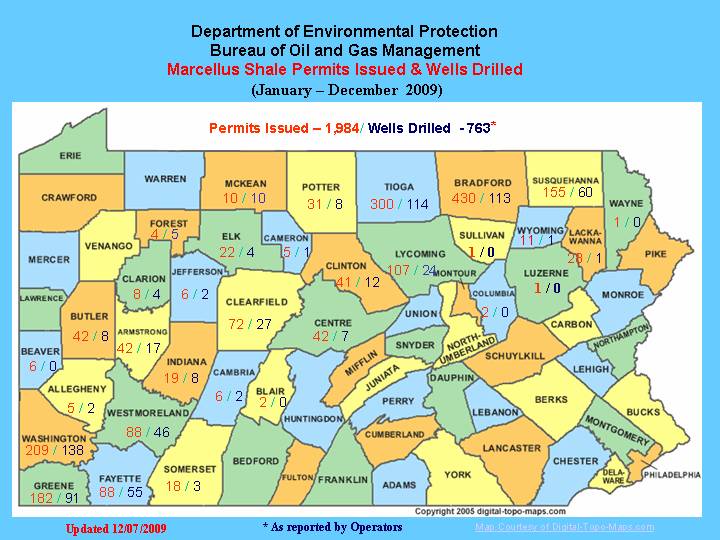
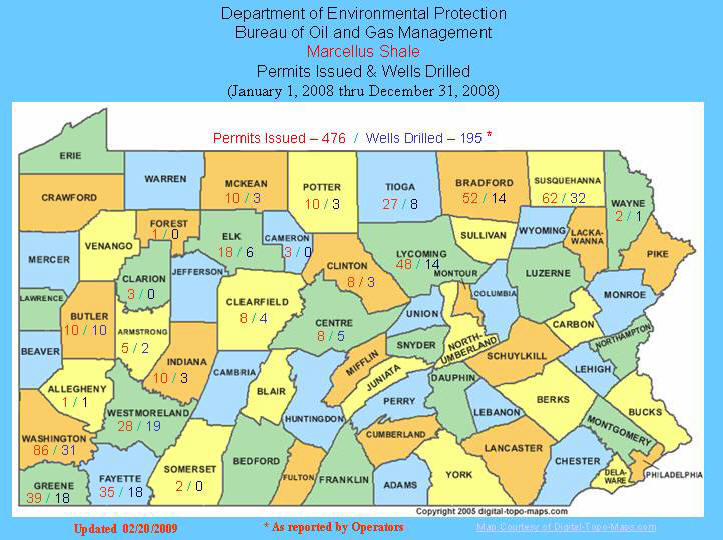
As you know, last year I proposed that we impose a tax on the Marcellus natural gas extraction. Based on information from the industry, I pulled back from that proposal with the intent of giving the industry a year to get its sea legs and embed itself in Pennsylvania. We have seen tremendous activity in the past year, with DEP issuing 1,984 Marcellus Shale drilling permits, and in the same period operators reporting 763 Marcellus wells drilled (compared to just 195 Marcellus wells drilled in 2008). The industry has informed DEP that it expects it will seek to permit 5,200 Marcellus wells just in 2010: a huge jump or a tripling of the number of Marcellus wells now permitted. This week’s auction results of more than $4,000 bid per acre – considerably higher than we anticipated – is further proof of how well the industry is doing and how much this commodity is valued.

Given that the industry is now firmly footed here and doing very well, I believe we should pursue the imposition of a tax on Marcellus natural gas extraction. I propose that this tax be effective this July and I hope the legislature will embrace this proposal.

Pennsylvania has an opportunity to hold onto the mantel of a leading state in alternative energy development as well as in natural gas extraction. Between the passage of the Alternative Energy Portfolio Standards (AEPS) in 2004, and nearly one billion dollars in state investments, we have made some remarkable progress. By the end of 2009, Pennsylvania will have 17 operating wind farms providing 800 megawatts of electricity – enough power for 270,000 homes. We ranked second nationally in wind power growth in the second and third quarters of 2009 and doubled the amount of wind power operating in Pennsylvania in a single year.

We are also making tremendous strides in bringing more solar capacity on line. By December 2010, Pennsylvania will rank in the top five states for solar in terms of megawatts operating. With the programs that we have in place today and the funds made available to us through the federal stimulus, this will bring our total solar capacity to nearly 60 megawatts, or enough to power 7,200 homes.

In 2004, when we passed our standards, they were considered among the most ambitious standards in the nation. The law required that by 2021, eighteen (18) percent of all retail electricity sold in Pennsylvania had to be from clean and renewable resources.

But as you know, the alternative energy field is changing very rapidly and there are new developments being announced almost every day. Other states have raised the bar since 2004 by enacting more aggressive requirements for renewable energy:

• Maryland now has a renewable requirement of 20 percent by 2022;
• New Jersey has a renewable requirement of 22.5 percent by 2021; and
• Illinois – the seventh largest coal producing state in the nation – has a renewable requirement of 25 percent by 2025.

We also have to take another look at solar energy. Pennsylvania’s solar requirement is currently 0.5 percent by 2021, which is below other states.

• New Jersey’s solar requirement is 2.12 percent by 2020.
• Maryland’s is 2 percent by 2015.
• Illinois’ requirement is 6 percent by 2015.

Recently, the Pew Charitable Trusts reported that Pennsylvania has the third highest number of clean energy jobs among the fifty states. That is good news, but we cannot hold onto that ranking if we don’t keep pace with other states with respect to our portfolio standards. When other states enact higher requirements for renewable energy, they make their own states more attractive for future investments and put our competitiveness at risk. We need to preserve the Commonwealth’s position as a leader in alternative energy and protect our investments and the thousands of associated jobs by raising our requirements for renewable energy.

I appreciate your attention to this request and I look forward to working closely with you to get both of these important energy bills done.

Sincerely,

Edward G. Rendell, Governor

LINK

DEMAND ACCOUNTABILITY!

Friday, November 20, 2009

Pa. needs assurances that 'fracking' is safe

OPINION
The Philadelphia Inquirer
philly.com
Nov. 19, 2009


In "Money, it's a gas" (Nov. 11), The Inquirer rightly tongue-lashed the state legislature and Gov. Rendell for caving in to Big Gas. A separate story that day reported a great leap backward: 32,000 more acres of state forest lands are leased for gas drilling.

Natural gas is 95 percent methane, a greenhouse gas already responsible for one-third of global warming.

Adding injury to injustice, Big Gas uses toxic technology: horizontal drilling combined with hydraulic fracturing - "fracking" - to extract the gas.

Four facts:

Fracking operations use millions of gallons of water per gas well.

Companies mix "acutely toxic" (Environmental Protection Agency designation) chemicals into the water. It is forced underground to fracture the Marcellus Shale, which lies under 63 percent of Pennsylvania.

There is no way to safely treat the wastewater, which also contains metals from deep underground and radioactive materials.

Fracking is exempt from major provisions of the federal Safe Drinking Water Act.

Since key federal regulations do not apply, and the state Department of Environmental Protection can't regulate this rush, we must demand an environmental impact statement for Pennsylvania from the EPA. Until that's done, we need a fracking moratorium in Pennsylvania.

Iris Marie Bloom

Philadelphia

DEMAND ACCOUNTABILITY!

Friday, October 30, 2009

Petition to continue oil and gas drilling on Allegheny National Forest sent to Obama, Rendell


A petition signed by 2,000 people in favor of continuing oil and gas drilling on the Allegheny National Forest has been sent to President Barack Obama and Pennsylvania Gov. Ed Rendell.

The petition, distributed by the Pennsylvania Oil and Gas Association (POGAM) and the Allegheny Forest Alliance, urges intervention to lift a ban on oil and gas development by the U.S. Forest Service.

The ban came earlier this year after a settlement between the Forest Service and a group of environmentalists who were seeking to have environmental impact analyses done prior to any drilling on the forest.

See Splashdown's "Oil and Gas Drilling is Transforming the Allegheny National Forest" and "Warren County Commissioner gathering evidence for oil/gas drilling hearing"

The settlement is a deviation from prior management practices, which never required an analysis. The Forest Service has ordered a halt to new drilling until a forest-wide impact assessment can be prepared.

The oil interests say that delay will be devastating to the local economy, as at least a year will pass without drilling and local companies are having to lay-off workers.

On Thursday, Steve Rhoads, president of POGAM, explained the reason behind the petition.


“The only way, outside of a court action, for this stop is if the Forest Service decides to stop or if someone above forces their hand. We don’t expect the Forest Service to back away from its policy. That’s why we’re in court,” he said. “They are shutting the industry down, period.”

“We wanted to demonstrate to the powers that be that the behavior of the Forest Service and the effects of that behavior is far reaching and very damaging,” Rhoads said, “not only to owners of minerals who are being stifled by the bureaucratic logjam this is creating, but the employees, families, and communities as well.
“The potential for layoffs is growing as the Forest Service shuts the industry down arbitrarily,” he said. “The economic ramifications are significant. We’re asking for some intercession on behalf of the communities to protect their economic interest and health.”

Nearly 2,000 citizens, and civic and business leaders from McKean, Elk, Warren and Forest counties signed the petition.

Meanwhile, a lawsuit is pending in federal court in which Minard Run Oil Co. of Bradford, along with POGAM, the Forest Alliance and Warren County, are awaiting a judge’s decision on whether to grant a preliminary injunction against the enforcement of the settlement order.

“We expect a decision on the preliminary injunction at any time now,” Rhoads said. “We don’t know what that decision will be. We’re hopeful for a positive result.”

He said this petition has nothing to do with any action in federal court.

The petition, on the other hand, is to bring attention to the suffering local oil industry at a time when the federal government is working on stimulating the economy and creating jobs.

“We want to bring attention to the issue at the highest level of governments,” Rhoads said.

“State records show that fewer than 50 wells, all of them permitted prior to the drilling ban imposed on January 1, have been drilled in the Allegheny National Forest during 2009. The Forest Service has prevented the drilling of between 200-300 wells that would have otherwise occurred,” Rhoads said. “These undrilled wells translate into private investment of nearly $100 million and jeopardize hundreds of good-paying jobs in the region. The action of the Forest Service amounts to a full-scale assault on the economic health of the families and communities living in and around the Allegheny National Forest.”
...

For the complete story, CLICK HERE.


DEMAND ACCOUNTABILITY!

Tuesday, October 27, 2009

Cramer explains Pennsylvania...

TheStreet.com's Jim Cramer says perhaps Obama can learn from Gov. Ed Rendell of Pennsylvania, who has become a believer in the fuel...


Maybe President Obama can make the transition to natural gas that Ed Rendell just did in Pennsylvania. The transition is a simple one: Focus on jobs and many things go well; don't focus on jobs and you aren't focused on anything.

When I first heard of the Marcellus Shale from Aubrey McClendon of Chesapeake (NYSE: CHK) (Cramer's Take), I was pretty much in disbelief. How could there be so much natural gas in some place in western Pennsylvania? Too good to be true.
That was just a few years ago. I devoured everything I could read about the Marcellus Shale and quickly asked the governor to come on the show. I had known him for years, had helped raise money for him and thought this natural gas patch might be the thing he needed to get people in his state hiring again in good jobs.

Initially, he didn't seem all that interested. In fact, I dealt more with his environmental preservation people than him, as there were initial thoughts that too much water was being used and too many roads broken down.

All of that has now been dealt with and this weekend Rendell actually made sure that the industry wasn't taxed for bringing nat gas out of the ground, setting the stage for a drilling boom and pipeline laying -- the infrastructure for this is much better in Louisiana and Texas than Pennsylvania so both the drilling rigs and the pipelines have to be moved and created.

Rendell's pretty confident that as many as 200,000 jobs will be created over the next few years and that nat gas will be used as a bridge fuel. He also believes that if the federal government mandates that its own fleets be natural gas-capable, we will have gone a long way toward switching to this fuel.

Was he helped by lobbyists like Murry Gerber, the CEO of EQT (NYSE: EQT) (Cramer's Take), the largest natural gas company in Pennsylvania?

No. While he took money from them, I think he saw an opportunity to get the drilling companies to come to Pennsylvania over New York, which already has made life hell for them over environmental concerns, and over West Virginia, which does tax the stuff.
For more Cramer, click here.

DEMAND ACCOUNTABILITY!

Saturday, September 26, 2009

More Pa. House Democrats opposing plan to expand natural gas drilling in state forests

By MARC LEVY
Associated Press
09/25/09 3:40 PM PDT

HARRISBURG, PA. A top state House Democrat said Friday that more than two dozen of his colleagues signed a letter to caucus leaders expressing grave concerns over a plan to expand gas drilling in Pennsylvania forests.

Finance Committee Chairman David Levdansky said he did not want to release a copy of the letter or disclose who signed it. He said the letter was signed by 28 representatives, including himself, and three other House Democrats added their signatures after the original was sent.

"Raping our state forest system is not a wise fiscal or environmental choice, and we're sending the message that it needs to be fixed, and it can be," Levdansky said.

The week-old deal struck by Democratic Gov. Ed Rendell and leaders of three of the Legislature's four caucuses includes leasing more land in state forests to gas drilling companies to help fill a multibillion-dollar revenue shortfall.

The agreement anticipates $115 million in revenue from leasing land over two years.

Combined with House Republican opposition to the budget, Levdansky said the letter's signers represent enough votes to defeat the still-evolving budget proposal. There are 104 Democrats in the House, which has 203 seats.

...

Levdansky said the letter's signers oppose the idea of ordering the state's forests department to come up with a set amount of money from leasing land, saying that ignores sound science and forestry conservation practices.

He also said the signers oppose the use of the land-leasing money for the state's general budget needs, instead of putting the money toward state forest and park improvements, as has been the practice for decades.

The signers prefer to see the state impose a severance tax on the exploration companies that are flocking to Pennsylvania to drill into the potentially lucrative Marcellus Shale formation, Levdansky said.

Rendell proposed a natural gas severance tax but backed away from it after Senate Republicans, who control the chamber, rejected the idea on grounds that a tax would hurt the growth of the industry.

Pennsylvania is one of the biggest — if not the biggest — natural-gas producing states that does not tax the methane drawn from its ground.

For the complete report, CLICK HERE.

DEMAND ACCOUNTABILITY!

Tuesday, September 8, 2009

A history lesson

CENTRE DAILY NEWS
MARK NALE, PA Outdoor Writers Association
MarkAngler@aol.com
Sun., Sept. 6, 2009

It is amazing and sad to realize what $1 million in lobbying effort will buy in Pennsylvania. Our state budget is still not settled. The state is strapped for revenue, so it seems that it would be a no-brainer to tax the billions of dollars of natural gas that will be extracted from the very-deep Marcellus Shale formation in Pennsylvania. A proposed 5 percent tax was expected to generate $90 million in this fiscal year alone.

According to Richard Martin of the Forest Coalition, Pennsylvania is the only major fossil fuel-producing eastern state that does not levy a mineral resource extraction (severance) tax.

On Aug. 31, Gov. Ed Rendell announced that he was dropping his plan to impose such a tax. According to the Associated Press, Rendell told reporters that “conversations with (read ‘lobbying by’) the major gas producers convinced administration officials that imposing such a tax at this early stage could hurt the industry.”

The idea of a tax was first proposed in February, won support in the House Environmental Resources and Energy Committee, but faced strong Republican opposition. It is amazing what $1 million worth of lobbying can buy — this figure is based on information from the Pennsylvania Forest Coalition, an environmental watchdog group.

Let’s back up for a moment and look at Pennsylvania’s sad history of resource extraction. By the late 1800s, almost the entire state had been stripped of its timber, with no thought to the future. Fires raged in the aftermath and billions of tons of high-quality topsoil were forever lost to the fires and erosion.

The oil boom started here with the drilling of Drake’s well in 1859. Prior to 1901, one-half of the world’s oil supply came from Pennsylvania. This resulted in more erosion and streams polluted with sediment and oil.

Then, there is the legacy of “King Coal” — over 10 billion tons of coal have been mined from 21 counties in this state over the past 200 years. Environmental regulations and bonding were inadequate. The industry left behind hundreds of unreclaimed strip mines and over 3,000 miles of dead streams — polluted with sulfuric acid, iron, aluminum and manganese. Millions of dollars are spent each year in attempting to correct this wrong.

We are now rushing headlong into the Marcellus Shale “boom,” yet again with inadequate environmental protection and little thought to the future. Pennsylvania’s forests, ground water and trout streams are once more on the line. Have we learned anything from our past mistakes?

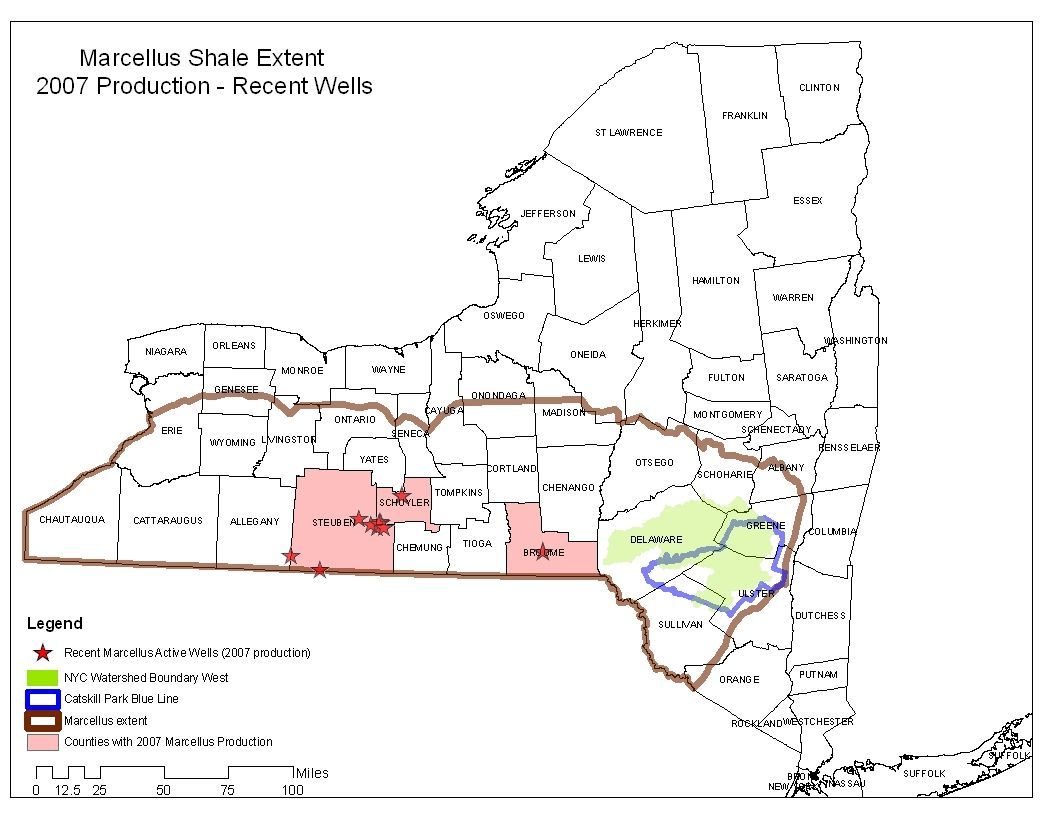
With environmental concerns at the forefront, the state of New York put a one-year moratorium on Marcellus shale drilling until they could study the process and put proper environmental safeguards in place. Not heavily-lobbied Pennsylvania, though — we would not want to hurt the industry.

Monday, July 27, 2009

King Coal... RF Kennedy, Jr. Weighs in on Coal vs. Natural Gas

ROBERT F. KENNEDY, JR.

THE HUFFINGTON POST, JULY 27, 2009: LINK HERE.

Over the past decade, nearly one hundred coal burning power plants have died in the proposal stage trumped by the legitimate objections of local communities fearful of a dirty deadly fuel that is neither cheap nor clean. Ozone and particulates from coal plants kill tens of thousands of Americans each year and cause widespread illnesses and disease. Acid rain emissions have destroyed the forests over the length of the Appalachian and sterilized one in five Adirondack lakes. Neurotoxic mercury raining from these plants has contaminated fish in every state--including every waterway in nineteen states--and poisons over a million American women and children annually. Coal industry strip mines have already destroyed 500 mountains in Appalachia, buried 2,000 miles of rivers and streams and will soon have flattened an area the size of Delaware. Finally, coal, which supplies 46% of our electric power, is the most important source of America's greenhouse gases.

Beating our deadly and expensive coal addiction will be lucrative. America's cornucopia of renewable energy resources and the recent maturation of solar, geothermal and wind technologies will allow us to meet most of our future energy needs with clean, cheap, abundant renewables. Bright Source, a solar thermal provider, has just signed contracts to provide California with 2.6 gigawatts of power annually from desert mirror farms. Construction costs are about the same per gigawatt as a coal plant and half the cost of a nuke plant. Once built, the energy is free forever. In contrast, once you build a coal plant, your biggest costs--fuel extraction and transportation and the harm from emissions--are just the beginning.

In the short term, a revolution in natural gas production over the past two years, has left America awash in natural gas and has made it possible to eliminate most of our dependence on deadly, destructive coal practically overnight--and without the expense of building new power plants.

How? Well it's pretty easy. Around 900 of America's coal plants--78% of the total--are small (generating less than half a gigawatt), antiquated, and horrendously inefficient. Their average age is 45 years, with many limping past 75. These ancient plants burn 20% more coal per megawatt hour than modern large coal units and are 60-75% less fuel efficient than high-efficiency gas plants. These small units account for less than 42% of the actual capacity for coal fired power but almost one half the total emission of the entire energy sector! The costs of operation, maintenance, capital improvements and repair costs of these antiquated worm-eaten facilities, if properly assessed, would make them far more expensive to run than natural gas plants. However, energy sector pricing structures make it possible for many plant operators to pass those costs to the public and make choices based on fuel costs, which in the case of coal, appears deceptively cheap because of massive subsidies.

Mothballing or throttling back these plants would mean huge cost savings to the public and eliminate the need for more than 350 million tons of coal, including all 30 million tons harvested through mountain top removal. Their closure would reduce U.S. mercury emissions by 20-25%, dramatically cut deadly particulate matter and the pollutants that cause acid rain, and slash America's CO2 from power plants by 20%--an amount greater than the entire reduction mandated in the first years of the pending Climate Change Legislation--at a fraction of the cost.

These decrepit generators can be eliminated very quickly--in many instances literally overnight by substituting power from America's existing and underutilized natural gas generation, which is abundant, cleaner and more affordable and accessible today than dirty coal.

Since 2007, the discovery of vast supplies of deep shale gas in the United States, along with advanced extraction methods, have created stable supply and predictably low prices for most of the next century. Of the 1,000 gigawatts of generating capacity currently required to meet national energy demand, 336 are coal fired, many of which are utilized far more heavily than for cleaner gas generation units. Surprisingly, America actually has more gas generation capacity--450 gigawatts--than coal. But most of the costs for coal-fired units are ignored in deciding when to operate these units. Public regulators traditionally require utilities to dispatch coal first. For that reason, high efficiency gas generators, which can replace a large percentage of U.S. coal, are used only 36% of the time. By simply changing the dispatch rule nationally, we could quickly reduce power generated by existing coal-fired plants and achieve massive emissions reductions. The new rule would change the order in which gas and coal fired plants are utilized by requiring that whenever coal and gas plants are competing head-to-head, the gas generation must be dispatched first.

To quickly gain further economic and environmental advantages, the larger, newer coal plants that remain in operation should be required to co-fire with natural gas. Many of these plants are already connected to gas pipelines and can easily be adapted to burn gas as 15 to 20% of their fuel. Experience shows using gas to partially fuel these plants dramatically reduces forced outages and maintenance costs and can be the most cost effective way to reduce CO2 emissions. This change can immediately achieve an additional 10 to 20% reduction in coal use and immediately reduce dangerous coal emissions.

Natural gas comes with its own set of environmental caveats. It is a carbon-based fuel and [its] extraction from shale, the most significant new source, if not managed carefully, can cause serious water, land use, and wildlife impacts, especially in the hands of irresponsible producers and lax regulators. But those impacts are dwarfed by the disastrous holocaust of coal and can be mitigated by careful regulation.

The giant advantage of a quick conversion from coal to gas is the quickest route for jumpstarting our economy and saving our planet.
__________________________________________________________________
SPLASHDOWN EDITORIAL:

It sounds reasonable, doesn't it?
All we need are responsible producers and vigilant regulators!

Congress can't even agree that this is necessary! Money isn't there for environmental protection agencies to hire the number of inspectors necessary to monitor this lawless industry. And YES! coal mining and burning is dangerously toxic, but when Kennedy talks about enough affordable natural gas to last us into the next century, he's supporting perpetuation of a carbon-based energy industry that has demonstrated it is unwilling to divert a nickel of its profits to safeguard our absolutely VITAL resources: WATER, AIR and LAND. Their best practices are simply NOT GOOD ENOUGH. Especially not a century's worth!!!
Closing coal fired plants would reduce carbon dioxide emissions from power plants by 20%... BUT, what measure of CO2 and even more environmentally harmful methane is released into the atmosphere during extraction of natural gas, including toxic air polluting emissions from transportating the millions of gallons of water to and from well pads, treatment or burial of "produced water", operating drilling rigs, compressors and other associated gas production equipment and activities, over and above emissions from well flares and finally, power plant emissions from enegy generation from natural gas? How does all that stack up against that 20%?
How too does Kennedy justify the permanent depletion and contamination of drinking water supplies across the country, occuring as a result of mining for gas? Surely he can't think that indicating the need for responsibility and vigilance is going to suddenly manifest a new attitude on all fronts, by all players in this play?
What guarantees do we have that a gluttonous industry won't milk the quick fix dry, leaving us with an irrevocable permanent loss in exchange for temporary energy?

There are important unanswered, and without drilling reform legislation in place, perhaps unanswerable questions. They loom like loopholes in his argument as we continue to learn how criminally untrustworthy corporate America is willing to be in pursuit of the almighty dollar. We've seen too how even regulations aren't foolproof, and how when one entity acts outside the law it encourages others to follow suit.
Meanwhile, the gas industry has already been irresponsible for deadly releases of toxins into the atmosphere, deadly releases of toxins into our waters, for killing and/or sickening livestock, wildlife and humans, for the seepage of toxic wastewater into our lands, contaminating land and water, the evaporation into the atmosphere of carcinogens from open sludgepits... in short, there isn't anything healthy or friendly about the production of natural gas and turning a blind eye to the devastating problems of the lesser of two evils does not make the lesser evil any better.
Today, Governor Ed Rendell of Pennsylvania announced the availability of a new tax credit to help Pennsylvanians in their quest to create renewable sources of clean, alternative energy. Types of eligible projects include solar, wind, geothermal, biologically derived methane gas, fuel cells, biomass and also (unfortunately, and not sure how it's renewable) coal methane. Still, support for 6 out of 7 clean energy sources is encouraging. Let's hope Pennsylvanians take advantage of this inducement!

Like Living with the Atomic Bomb

During the 1950's part of growing up was living with the constant threat of the atomic bomb exploding over my home or my school when I'd be in it, separated from my family, unprotected by them... and knowing they'd be separately annihillated, just like me. This was a kind of silent fear I've learned as an adult that every other person from my time slot endured as a child too. A stressor without personal remedy, and a government with other goals at the helm. Quality of life at the level of individual well-being seems to be low on the list of national priorities. We don't even argue with our legislators about the logical priorities of our health and well-being, or that of the singular irreplaceable environment that feeds and nurtures us, and how that should govern our leadership roles both here at home and abroad.
Global warming, fed by an energy crisis, fed by an unsustainable demand for MORE, by ever more people around the globe, is creating a new, pervasive stress for all of us, including our children who, just as my young friends and i intuitively and helplessly understood the dangers of the atomic bomb, today are understanding and have much to fear about the future they are helplessly inheriting from profligate leaders with antisocial agendas.

DEMAND ACCOUNTABILITY!

Friday, June 26, 2009

Who Does Dougie Drillbit Represent?

While industry proponents say a severance tax (i.e., anything that would present a hurdle to the unbridled pursuit of natural ga$) would fetter an industry in its infancy here in Pennsylvania, according to a report in today's Pittsburgh Tribune-Review, 87% of PA residents strongly or somewhat favor using a severance tax to protect our land, water and wildlife.
In fact, 39 states now tax the extraction of natural resources, making Pennsylvania (one of the gas wealthiest states in the nation) in the minority when it comes to charging industry with responsibility for reparations necessitated as a result of their activities, and putting McLinko clearly in the minoritiy too.

Whose interests is Dougie Drillbit representing protecting? Are Bradford Countians so out of step with their fellow Pennsylvanians that they want to shelter the profits of commercial drillers (for the sake of lease holders???) at the expense of all residents who will be forced to dig into their pockets to bear the cost of the reckless pursuit of those profits?

Jan Jarrett, CEO of Penn Future, sees the severance tax as a way of balancing the great opportunity the Marcellus shale play offers with the "tremendous risk to the land, water and wildlife that makes Pennsylvania so special."

A well-structured severance tax on natural gas production will protect Pennsylvania taxpayers from shouldering the public costs that come with increased drilling, according to a Pennsylvania Budget and Policy Center report.

The report, “Responsible Growth: Protecting the Public Interest with a Natural Gas Severance Tax,” examines the potential costs of increased natural gas drilling on taxpayers and the environment, how severance taxes are structured in other states, and what lessons Pennsylvania can learn from them. It can be accessed HERE.

As guest columnist in the Delaware County Times last week, Jan Jarrett made the following observations:
(To read Jarrett's complete statement, click HERE.)

• The tax proposed by Gov. Ed Rendell is identical to the tax paid by the industry in West Virginia. If this tax is onerous, we would expect that Pennsylvania would be the drilling capital of the nation. But it isn’t. Pennsylvania is 15th out of 32 gas-producing states.

• But while this tax will do no harm to the industry, it can do a great deal of good for our state. Natural gas development will bring jobs, investment and money into Pennsylvania’s rural communities, but environmental officials admit that drilling will inevitably result in some damage to our natural resources and communities.

• Careful permitting and oversight can reduce, but not eliminate, the environmental harm. We must have a severance tax that reserves a portion for the environment so taxpayers are not left holding the bag for industry’s damage.

• Without a severance tax that has a portion reserved for local governments, rural areas will have no money to accommodate the influx of workers, their families and additional businesses that drilling will bring.

• Without a severance tax, our state agencies will have no money to protect and enhance the parks, forests, fishing and game areas that are likely to be harmed.

• Without a severance tax, our citizens will lose the natural resources being removed, with no compensation for this permanent loss.

• Without a severance tax, our battered state budget will continue to suffer, with our citizens having to pay larger taxes to cover all the needs of our state.

It's almost a no brainer isn't it?

Heh. What's that say about Doug McLinko?
Call him first thing Monday morning at 570.265.1727 x2700!
Tell him you're not satisfied with the way he's representing you!

DEMAND ACCOUNTABILITY!

Thursday, April 2, 2009

NOT SO FAST... THERE GOES THE NEIGHBORHOOD REDUX

TEMPORARY HOLD ON LEASING STATE LAND SOUGHT

Just last week, the GOP House Energy Task Force, co-chaired by Tina "Drill Baby Drill" Pickett (R-Bradford), unveiled a proposal to violate 390,000 new acres of PA state forest land drilling for gas.

In an environmentally considered move, the Conservation and Natural Resources Advisory Committee has requested a temporary hold on leasing additional state forest land for Marcellus Shale natural gas drilling until the environmental impacts of drilling on the first 74,000 acres can be evaluated.

The Memorandum of Concern, addressed to Governor Edward Rendell and Department of Conservation and Natural Resources (DCNR) Secretary Michael DeBerardinis, notes, “We believe that to lease additional substantial acreage of state forest lands at this time would be an abrogation of the public trust of these public lands, and would be a short-sighted approach to the use of the resources managed by this state agency [DCNR].”

The committee also recommended future revenues from leased lands be retained in DCNR’s Oil and Gas Lease Fund to help maintain state parks and forests and to address any environmental issues arising from the drilling.

RURAL IMPACT VIDEOS, 6 parts

Natural gas development in Colorado, the impacts on communities, environment and public health. A primer for public servants and residents of counties that care for their lifestyles.

Drilling for Gas in Bradford County, PA ... Listen!

Cattle Drinking Drilling Waste!

EPA... FDA... Hello? How many different ways are we going to have to eat this? ... Thank you TXSharon for all you do! ... Stay tuned in at http://txsharon.blogspot.com

Landfarms

A film by Txsharon. Thank you Sharon for all you do. Click HERE to read the complete article on Bluedaze: Landfarms: Spreading Toxic Drilling Waste on Farmland

SkyTruth: Upper Green River Valley - A View From Above