Showing posts with label HYDRAULIC FRACTURING. Show all posts

Wednesday, August 18, 2010

DEP Fines Atlas Resourcs for Drilling Wastewater Spill in Washington County

Bloomberg Businessweek
Associated Press
August 17, 2010

- The state's Department of Environmental Protection has fined a natural gas drilling company nearly $100,000 for a wastewater spill that contaminated a southwestern Pennsylvania watershed.

The DEP on Tuesday announced the $97,350 fine against Atlas Resources. Environmental officials say Atlas allowed hydraulic fracturing fluids used to drill in the Marcellus Shale to overfill a wastewater pit and contaminate a tributary of Dunkle Run in Washington County.

DEP officials say the spill happened in early December 2009. Environmental officials say Atlas corrected the problem but failed to report it to the DEP.

Atlas Energy says the spill had no negative environmental consequences and the company has stepped up monitoring in response.

LINK

DEMAND ACCOUNTABILITY!

Friday, August 13, 2010

EPA delays final hearing on study of controversial process

By Sarah Hoye, CNN
August 13, 2010 5:06 p.m. EDT

Philadelphia, Pennsylvania (CNN)
-- The U.S. Environmental Protection Agency is on the hunt for a new location to hold its final public hearing on a planned study of hydraulic fracturing, the controversial process used to extract natural gas from underground, agency officials say.

"We wanted a central location and wanted to keep it in the area where the drilling has been proposed. We're leaving no stone unturned," said agency spokeswoman Betsaida Alcantara. "We are pushing to make an announcement as swiftly as possible."

In July, public hearings were held in Fort Worth, Texas; Denver, Colorado; and Canonsburg, Pennsylvania, to help determine how the EPA will conduct the study.

A final public hearing was slated for Thursday at Binghamton, New York, but on Monday it was rescheduled for Saturday in Syracuse, New York, and on Tuesday it was postponed indefinitely, agency officials said. About 1,800 people had registered to speak for two minutes each, Alcantara said.

Both of the proposed venues, Binghamton University and Syracuse's Oncenter Complex, expressed concern about hosting an event estimated to attract 8,000 people.

"The last-minute change to Syracuse was caused by Binghamton University taking several actions to dissuade the EPA from holding the meetings at its campus, including increasing the cost from $6,000 to almost $40,000," the EPA said in a statement Tuesday.

The university issued a statement putting the cost at $32,000, which it said included "all of the estimated operational costs that the university believed it would incur in order to ensure that activities associated with these meetings would be carried out in a safe and orderly manner."

The EPA now is planning to hold the meeting in September at a location in upstate New York that will be announced as soon as it is confirmed, Alcantara said. The meeting is open to industry stakeholders and the general public.

Victoria Switzer, who registered to speak at Thursday's hearing, is among 15 residents of the northeastern Pennsylvania township of Dimock who filed suit in November 2009 against Cabot Oil & Gas Corp., alleging it contaminated their well water. Cabot solicited Switzer for a gas lease in 2006, according to court records.

Changing the location and then postponing the meeting was upsetting but did not come as a total surprise, Switzer said.

"I had a feeling it was going to be big, but it's absurd," she said.

"Who's leading this pack?" asked Switzer, a former schoolteacher. "I am against drilling as it's going now. They need to step back, call a moratorium and do some serious geological studying."

Julie Sautner of Dimock planned to attend the EPA meeting with her husband, Craig, a cable splicer, and 17-year-old daughter Kelly. They also are a part of the lawsuit.

"We might seem small, but we're here, too, and we're fighting the industry not to pollute, and were fighting for the future generations," said Sautner, who added she has been unable to use her well water for nearly two years. "We're not mad at anybody but we're stuck here."

The EPA announced in March that it would study the potential adverse impact that hydraulic fracturing may have on drinking water, human health and the environment, agency officials said.

"People have raised important concerns that require our attention," said Jeanne Briskin, EPA liaison on hydraulic fracturing from the agency's the Office of Research and Development. "I've worked for EPA for a long time, I was here in the early '80s, this is a case that is unusual."

Hydraulic fracturing is used by gas producers to stimulate wells and recover natural gas from sources including coalbeds and shale gas formations, said Briskin. The process requires the injection of fluids -- generally water and chemical additives.

"We need to have a baseline to get an idea of what the effects of that are, and if you're doing monitoring you have to know what to look for," she said. "At the federal level there is no requirement that companies have to tell us what they use and what concentrations."

The EPA plans to complete the study design by September 2010, begin the study in January 2011 and release initial results by late 2012, she said.

"This is an expedited process; it usually takes longer," Briskin said of the timeline. "As we get results, we're going to be reporting them."

LINK

DEMAND ACCOUNTABILITY!


Tuesday, August 10, 2010

EPA hearings on hydraulic fracturing moved from Binghamton to Syracuse

A regional hearing to be held Thursday on a landmark Environmental Protection Agency study of hydraulic fracturing has been moved from Binghamton to Syracuse, N.Y., the agency announced Monday.

The hearings on the controversial natural gas drilling process, which are expected to draw as many as 8,000 participants and protestors, including many from Northeast Pennsylvania, will be held in the Exhibit Hall of the Oncenter Complex Convention Center in Syracuse, after the EPA and Binghamton University, the initial host site, disagreed on a venue.

The three, four-hour information sessions and hearings will be held at the same time they were originally scheduled: 8 a.m., 1 p.m., and 6 p.m. The 300 speaking slots at the event are full, but the agency expects slots will open up because of the venue change. It will open registration for those slots by phone and online beginning at 10 a.m. on Wednesday.

People who preregistered to speak at or attend the event remain registered, according to the EPA, and others who would still like to preregister can do so by Wednesday morning. Walk-in attendees will also be welcome.

The venue was changed after the anticipated crowd size - and the cost of hosting the event - swelled.

Binghamton University released a statement Monday saying that the event is expected to involve 1,200 registered participants, but might have drawn 8,000 people to the campus. The university developed a price based on the expected crowd size "to ensure that the campus would remain cost neutral," it said.

Judith Enck, the administrator of EPA Region 2, criticized that price in a statement, saying it was "more than 500 percent higher than the University's original estimate" and "unacceptable." An EPA official familiar with the situation said the price increased from $6,000 to $40,000.

The venue was moved to Syracuse when an alternate location in Binghamton could not be found, she said.

The EPA announced in March that it will conduct a multiyear, $1.9 million study of the potential for hydraulic fracturing - the process of breaking apart gas-bearing rock with chemically treated water and sand - to harm water quality and public health.

The Syracuse sessions are the largest of four such events that have been held across the country this summer in Colorado, Texas and southwestern Pennsylvania to gather comment about the study's design.

LINK

DEMAND ACCOUNTABILITY!

Wednesday, August 4, 2010

Why Gas Leaks Matter in the Hydraulic Fracturing Debate

by Abrahm Lustgarten ProPublica, Aug. 2, 3:56 p.m.

Last week's article (see July 29 Splashdown post) about a hydraulic fracturing clause that was included in the Senate's drilling accountability bill sparked a lively debate on ProPublica's website about why methane contamination from drilling is relevant to a discussion of environmental risks of fracturing. In response:

Methane migration is a critical part of the discussions of underground contamination risks from drilling and hydraulic fracturing because it demonstrates that a pathway exists for contaminants to move through the substrata to the surface or into water supplies. In many of the cases described in ProPublica's articles, methane -- which was proved to be thermogenic and not from biological decay -- is believed to have moved from thousands of feet underground, or travelled several miles laterally, sometimes from the same layer of gas being exploited for energy.

Fracturing consists of injecting water and (usually secret) concoctions of chemicals deep underground, where it fractures the rock and releases the natural gas deposits. One of the most influential explanations why fracturing presents no risk hinges on the assertion that the deep isolation and many layers of rock and earth effectively seal off the fracture zone from the surface -- that it is impossible for chemicals, water, gas or anything else to move from thousands of feet below into shallow aquifers.

But the consistent and widespread detection of methane migration from unnatural causes -- in places including Colorado, Wyoming, Pennsylvania, Ohio and New York -- shows that it is not impossible, that in fact there are underground pathways for such movement. And if methane can move, it's an indicator of other substances' ability to migrate as well.

Many of the methane migration cases have been traced to flaws in the cementing and casing of the wells, as many of our articles have explicitly explained. Research shows that others may have migrated directly through underground faults and fissures.

Scientists we ask about these issues consistently make two points:

1. The pressure of hydraulic fracturing inside a well structure exerts great force that can exploit cementing problems. In other words, a crack in the cement or casing might be fine until the pressure of hydraulic fracturing forces substances through it.

2. It doesn't matter whether contaminants reach aquifers through a spider web of geologic cracks created by hydraulic fracturing, or in the spaces alongside the well bore that was pushed through the earth. Contaminants are reaching water supplies as a result of the processes and pressures being exerted underground.

The question of whether hydraulic fracturing is responsible for this contamination, and whether it is causing other contamination, remains unanswered. Neither our articles, nor anyone we have spoken with, has claimed to have reached a conclusion on that point. That is why the Environmental Protection Agency conducting two simultaneous studies of these issues -- one in Pinedale, Wyo., which will attempt to assess a specific pattern of contamination there, and another broad national study meant to evaluate the potential risks of fracturing. These are the first studies we are aware of that have engaged a scientific process to study these issues.

Two things are clear now, however:

1. Hydraulic fracturing is the only aspect of the complicated drilling process where basic standards for safe operations are not set by the federal government.

2. If fracturing were regulated, for instance, under the Safe Drinking Water Act -- the federal law that regulates every other type of underground chemical injection -- the law would likely require the sort of well integrity tests and localized pre-drilling geologic analysis to ensure that underground faults and fractures could not reach water supplies. It would also likely require that well casing and cementing be solid enough to withstand the pressures exerted by the fracturing process, and thus prevent the well from leaking methane, or chemicals, or anything else.
LINK

DEMAND ACCOUNTABILITY!

N.Y. Senate Approves Fracking Moratorium

By MIREYA NAVARRO
nytimes.com
August 4, 2010

The New York State Senate voted 48 to 9 Tuesday night in Albany to issue a temporary moratorium on a type of natural gas exploration that combines hydraulic fracturing with horizontal drilling and the injection of millions of gallons of chemically treated water underground. The aim of the measure is to ensure an adequate review of safety and environmental concerns.

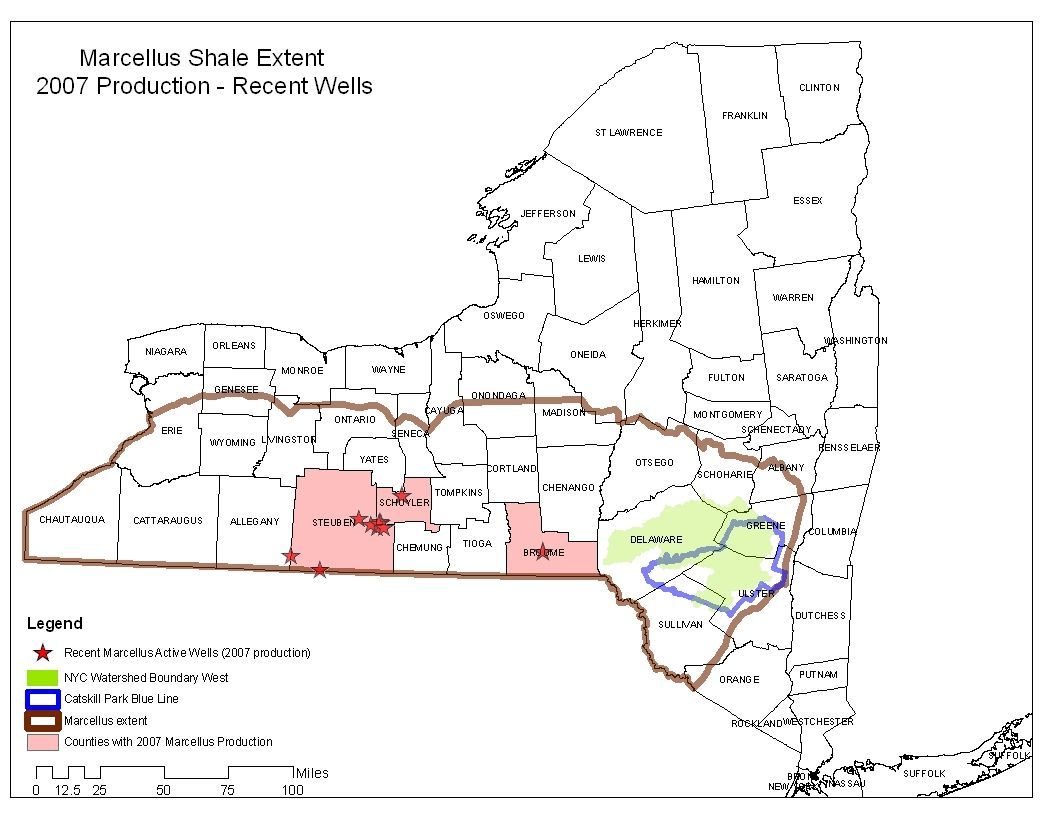
The state Department of Environmental Conservation is currently reviewing the environmental impact of drilling in upstate New York, where natural gas companies are buying up leases and applying for permits to tap the Marcellus Shale, one of the largest natural gas fields in North America.

The moratorium proposed in the bill would prevent new drilling permits from being issued for the Marcellus Shale until May 15, 2011. While the measure cannot become law before the state Assembly passes a similar bill, and that chamber is not expected to take up the issue until September, environmentalists said the vote was significant in that it buys state officials more time to examine safety issues. They noted that a new administration will be taking over after the November elections because Gov. David Paterson is not running for re-election.

“This is the first action in the country to put the brakes on this type of drilling to give New York the time we need to assess the risks if we’re going to move forward responsibly,” said Katherine Nadeau, a program director with Environmental Advocates of New York.

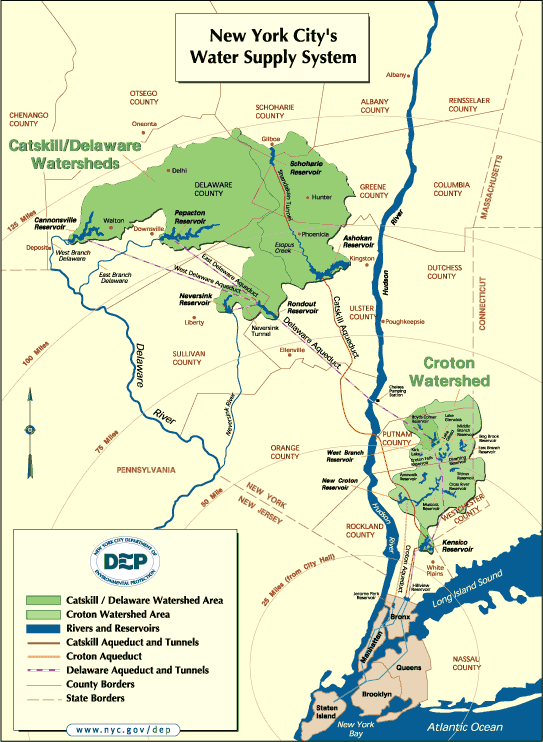
New York City officials, who oppose drilling anywhere near the watersheds that supply drinking water to the city, welcomed the vote. Councilman James F. Gennaro, head of the City Council’s environmental protection committee, called it “a historic victory for all New Yorkers.”

“Speaker Quinn and I urge the Assembly to follow the lead of the Senate and for Governor Paterson to sign this historic first-in-the-nation hydraulic fracturing moratorium bill,” he said, referring to Christine C. Quinn, the City Council speaker.

Officials with the Independent Oil and Gas Association of New York, a trade group, had no immediate comment on the vote. They have argued that delays and more regulation of gas exploration only serve to stifle an energy source that the nation sorely needs.

3:01 p.m. | Updated Brad Gill, the association’s executive director, said Wednesday that the moratorium is delaying the jobs, tax revenue and other benefits the state would attract with more drilling. “We have companies that want to come to New York, but in this regulatory and legislative climate and instability they’re going to Pennsylvania,” he said. “We’re just losing out on this economic opportunity.”

Horizontal hydraulic fracturing, or fracking, is controversial because of the chemicals and vast amounts of water it requires and the risks that opponents say it poses to groundwater. The Senate bill noted both the “risks of accidents” and “potential effects on the communities in which shale gas production is located, including traffic, noise and an influx of transient workers.”

The federal Environmental Protection Agency is currently holding hearings on the effects of hydrofracking as it conducts a national study.

LINK

DEMAND ACCOUNTABILITY!

Monday, August 2, 2010

DEP Fines Talisman Energy USA for Bradford County Drilling Wastewater Spill, Polluting Nearby Water Resource

COMMONWEALTH OF PENNSYLVANIA
Dept. of Environmental Protection

Commonwealth News Bureau
Room 308, Main Capitol Building
Harrisburg PA., 17120

FOR IMMEDIATE RELEASE
08/2/2010

CONTACT:
Daniel T. Spadoni, Department of Environmental Protection Northcentral Regional Office
570-327-3659

WILLIAMSPORT -- The Department of Environmental Protection has fined Talisman Energy USA Inc., of Horseheads, N.Y., $15,506 for a spill of used natural gas drilling fluids last November at its Klein gas well pad in Armenia Township, Bradford County that polluted a small, unnamed waterway.

The spill involved hydraulic fracturing flowback fluid, which is the substance that returns to the surface after a company injects the pressurized fluid underground to fracture, or “frack,” a geologic formation and extract natural gas.

“DEP’s investigation in late November 2009 determined that Talisman spilled between 4,200 to 6,300 gallons of fracking flowback fluids when a pump failed and sand collected in a valve,” said DEP North-Central Oil and Gas Program Manager Jennifer Means.

The fluids flowed off the well pad and toward a wetland, and a small amount ultimately discharged to an unnamed tributary to Webier Creek, which drains into the upper reaches of the Tioga River, a cold water fishery.

Talisman successfully completed DEP’s Act 2 process for spill cleanup activities.

The fine will be deposited into the fund that supports DEP’s oil and gas permitting and enforcement programs.

DEMAND ACCOUNTABILITY!

Friday, July 30, 2010

Shale's Shameless Shill

A Philadelphia Inquirer Editorial
July 30, 2010

Former governors can choose many career paths. Some of them become college presidents. Some go on the lecture circuit.

And then there's Tom Ridge, who is set to become a paid shill for the natural-gas drillers swarming his native state.

The Marcellus Shale Coalition, which represents natural-gas companies, has been negotiating to hire Ridge's lobbying firm. The industry wants the ex-governor's help with a campaign to educate the public about the benefits of drilling.

It's unclear how much Ridge will be paid, but he doesn't come cheap. The tiny impoverished nation of Albania, for example, reportedly paid Ridge nearly $500,000 per year to lobby for its membership in NATO.

Ex-governors are free to enrich themselves however they choose. But there's something obnoxious about a former governor talking up an industry that poses serious environmental risks, and has already spent millions on lobbying to forestall paying its fair share of state business taxes.

The industry does have a positive story to tell as well. It provides jobs at a time when jobs are scarce. Landowners have become financially secure from leasing to drillers. Natural gas is a relatively clean fuel, and the vast deposits beneath Pennsylvania should help this nation become less reliant on foreign oil.

Those factors argue in favor of proceeding with drilling in Pennsylvania. But the potential environmental hazards associated with hydraulic-fracture drilling, or "fracking," require a robust array of regulations to protect drinking water supplies. The state, which had outdated laws governing oil and gas drilling, is still trying to catch up.

In a new energy bill in Washington, Sen. Bob Casey (D., Pa.) has included a needed provision that would require drillers to disclose the chemicals used in fracking.

The oil and gas industry's safety record certainly needs improving. Pennsylvania ranks sixth with 114 significant accidents in the past decade, according to a new report by the National Wildlife Foundation. Most of them weren't caused by Marcellus drillers.

But fracking does carry risks, such as the methane pollution of 14 drinking wells in January 2009 in Dimock Township, Susquehanna County, by Cabot Oil & Gas Corp. Cabot paid a $360,000 fine. And the state temporarily banned Cabot from fracking after three chemical spills at a site in Dimock polluted a wetland and killed fish.

So as the former governor prepares to tell a story for hire, let's all start on the same page: This industry bears greater oversight, not less.

LINK.

DEMAND ACCOUNTABILITY!

Thursday, July 29, 2010

Drilling Accountability Bill Would Regulate Fracturing Too

by Abrahm Lustgarten
ProPublica
July 29,2010

Tucked inside the Senate bill aimed at cracking down on oil drillers after the Gulf spill is a long-sought measure to protect groundwater from natural gas drilling.

The bill, called The Clean Energy Jobs and Oil Company Accountability Act, would require that drilling companies make public a complete list of chemicals injected underground in proprietary formulas to break up rock deep underground and extract natural gas, a process called hydraulic fracturing.

It would not, however, reverse the exemption that prohibits the Environmental Protection Agency from regulating the fracturing process like other forms of underground injection, another important regulatory change that was initially proposed in House and Senate bills last June along with the chemical disclosure.

That bill, called the Frac Act, was sponsored by Sen. Bob Casey, D-Pa., who pushed for its inclusion in the accountability bill now being considered.

(See flaming Splashdown sidebar at left. Write letters now!)

"Proper regulation is another essential element in protecting drinking water and public health. That is a battle that we still need to fight," Casey told ProPublica in an e-mail. But he emphasized that disclosing the chemical names "is an important step toward informing the public and building accountability for oil and gas companies."

A push for disclosure and stricter regulation of the fracturing process began in earnest last year after a series of articles by ProPublica reported more than a thousand cases of ground and surface water contamination in drilling areas where the process was being used. The articles examined drilling records in more than seven states, and found both a consistent pattern of water contamination in drilling areas, and a gap in scientific knowledge about the way hydraulic fracturing affects underground layers of rock and aquifers.

Problems were severe in Casey's home state, where fast-paced development of the Marcellus Shale natural gas deposit quickly led to dozens of reports of drinking water well contamination in places where hydraulic fracturing had been employed. Residents reported flammable tap water, and state investigations found that methane had seeped into water supplies underground as a result of the drilling activity.

Investigating the cause of such incidents has been difficult in part because the EPA does not have the jurisdiction to regulate fracturing the way it does other injection processes, and because the chemical makeup of the fracturing fluids has been guarded as a trade secret.

Several states, including New York, Colorado and Wyoming, have recently passed disclosure laws of their own, and industry representatives have begun to support the notion. But the language of the Senate bill is the most specific, and would apply to all of the states where oil and gas is produced.

The disclosure proposed today would still allow companies to withhold the exact recipes they use, meaning they wouldn't have to disclose the concentrations to the public. But they would -- in case of emergencies -- be required to share that information on a confidential basis with doctors and hospitals responding to an accident.

It's not clear how far the bill will get in the face of Republican opposition. Sen. Harry Reid, D-Nev., who added the disclosure component to the accountability bill, has said he hoped to bring the bill to a vote next week. Even if it passes, it will need to be reconciled with a House version that does not include the fracturing disclosure language.

LINK

DEMAND ACCOUNTABILITY!

Wednesday, July 28, 2010

Shale Report: PA considering new casing regulations

Current regulations set in 1989, state says industry is meeting expectations

BY ERIC LIDJI
GREENINGOFOIL.com
July 28, 2010

Opponents of hydraulic fracturing blame it for spoiling water supplies. Proponents say the technology is separated from drinking water supplies by thousands of feet of impermeable rock. One possible link between those contradictory statements is well construction. In a poorly designed well, gas from below escapes into water from above.

That’s not the only way gas can migrate into water supplies, but it’s the main one the Pennsylvania Department of Environmental Protection is targeting with proposed changes to the regulations for oil and gas wells, recently released for public comments.

Many of the current regulations haven’t been updated since July 1989, according to the state. While Pennsylvania isn’t new to drilling — in fact, it’s been producing oil and gas longer than any other state — the current drilling boom in the Marcellus Shale is new.

The revisions would change how wells are constructed and inspected, and set guidelines for responding to gas migration and replacing water supplies spoiled by drilling.

“It was determined that many, if not all, Marcellus well operators met or exceeded the current well casing and cementing regulations,” the DEP said in its proposed regulations. “However, it was also determined that the current regulations were not specific enough in detailing the Department's expectations of a properly cased and cemented well.”

The new standards would bring Pennsylvania in line with other producing states, like Texas, Oklahoma and Louisiana, particularly for the amount of pressure allowed on surface casing, the shallow length of pipe that protects underground drinking water sources.

The standards require operators to inspect wells for pressure, corrosion and signs of escaping gas every three months and report the results to the DEP for five years.

If gas were believed to have migrated into nearby soils and waters, the proposed regulations would require the operator to immediately notify the state and begin an investigation, filing a report by phone within 12 hours and in writing within three days.

The proposed regulations also codify current case law on water supplies damaged by drilling. The regulations would require drillers to replace polluted water supplies to safe drinking water standards, unless the supplies didn’t meet those standards in the first place. It also requires drillers to pay for any increased operations and maintenance costs.

The Environmental Quality Board, an agency within the DEP, held five public hearings across the state on the proposed regulations and is taking comments through Aug. 9.

...

LINK to complete article.

DEMAND ACCOUNTABILITY!

Monday, July 26, 2010

Most speak out against shale gas production at Pennsylvania forum

Jim Magill
Platts
Pittsburgh, PA
July 23, 2010


Highlighting concerns over its possible effects on groundwater, most of the 150 speakers at a US Environmental Protection Agency forum in southwestern Pennsylvania spoke out against shale gas production in the state.

The meeting Thursday night in the small town of Canonsburg, which drew 1,200 people, was the third in a series of four to be held by the EPA in shale gas-producing basins across the US to gather public input ahead of a two-year study it plans to examine the impacts of hydraulic fracturing could have on groundwater.

The Pennsylvania meeting site sits in a region that in recent years has seen a boom of gas drilling targeting the Marcellus Shale.

While a handful of speakers -- most identifying themselves as being currently or formerly employed in the gas industry or representing pro-industry organizations -- defended the use of fracking as a safe and efficient technology for unlocking the gas trapped in shale, the vast majority -- mostly area residents, scientists and conservationists -- demanded greater regulation or, in some cases, an outright ban on the practice.

Many of the latter group called on the EPA to expand the study beyond just looking at the impacts of fracking and to study what happens to the water and chemicals used in fracking before, during and after the work is done. Others wanted the study to be expanded still further, to include impacts of gas drilling on air quality, vehicle traffic and quality-of-life issues such as crime.
...

JOBS TO TEXANS

Although a definite link has never been established between fracking and contamination of groundwater, dozens of speakers claimed to be victims of such a link. One woman who said her family buys drinking water because her well became contaminated with styrene, which she blamed on nearby gas drilling.

Another speaker, representing a local environmental group, Clearville Citizens for Sustainability, said it tested groundwater quality prior to the onset of gas drilling and found the water to be of good quality. "After drilling we have pollution," she said.

A member of the Steel Valley Trail Council, said when the gas industry came into the Marcellus Shale, drillers touted the benefits of clean-burning natural gas and "identified oodles of jobs" for local residents. "The jobs have gone to Texans," he said. Many of the speakers said they thought that a moratorium should be imposed on new in the Marcellus drilling in Pennsylvania, similar to the one called by the state of New York as it develops new drilling guidelines.
...

Several pro-industry speakers dismissed the complaints of the anti-fracking speakers as alarmist and called for the EPA study to "focus on science, not emotion." A speaker who identified himself as a Halliburton employee said the agency should limit the scope of the study to what Congress asked it to focus on and to "avoid wasting time" in expanding the scope beyond that congressional mandate.
"The EPA will find that fracking poses no significant threats to health," he said.

'NO NEGATIVE EFFECTS'

Lou D'Amico, president of the Pennsylvania Independent Oil and Gas Association, said fracking was "neither new nor controversial." He cited a study the EPA undertook during the Clinton administration on the impacts of fracking in coalbed methane wells, which found "no negative effects of fracking from coalbed methane drilling."

D'Amico added that most CBM wells are drilled to much shallower depths than Marcellus Shale wells, placing them that much closer to groundwater aquifers. The EPA should avail itself of the "huge database" of information available through industry players and state regulatory agencies in pursuing its study, he said.

EPA plans to continue the scoping process through the end of the year and begin the study itself in early 2011, the EPA officials said. Preliminary results of the study should be available by the end of 2012, they said.

LINK


E.P.A. Considers Risks of Gas Extraction

By TOM ZELLER Jr.
Published: July 23, 2010
nytimes.com


CANONSBURG, Pa. — The streams of people came to the public meeting here armed with stories of yellowed and foul-smelling well water, deformed livestock, poisoned fish and itchy skin. One resident invoked the 1968 zombie thriller “Night of the Living Dead,” which, as it happens, was filmed just an hour away from this southwestern corner of Pennsylvania.

The culprit, these people argued, was hydraulic fracturing, a method of extracting natural gas that involves blasting underground rock with a cocktail of water, sand and chemicals.

Gas companies countered that the horror stories described in Pennsylvania and at other meetings held recently in Texas and Colorado are either fictions or not the companies’ fault. More regulation, the industry warned, would kill jobs and stifle production of gas, which the companies consider a clean-burning fuel the nation desperately needs.

...

The Environmental Protection Agency has been on a listening tour, soliciting advice from all sides on how to shape a forthcoming $1.9 million study of hydraulic fracturing’s effect on groundwater.

With the steep environmental costs of fossil fuel extraction apparent on beaches from Texas to Florida — and revelations that industry shortcuts and regulatory negligence may have contributed to the BP catastrophe in the gulf — gas prospectors are finding a cold reception for their assertions that their drilling practices are safe.

“The industry has argued there are no documented cases of hydraulic fracturing contaminating groundwater,” said Dencil Backus, a resident of nearby Mt. Pleasant Township, at Thursday night’s hearing. “Our experience in southwestern Pennsylvania suggests that this cannot possibly be true.”

Matt Pitzarella, a spokesman for Range Resources, a Texas-based natural gas producer, acknowledged that the gulf spill had increased public concern about any sort of drilling activity. “However, when people can review the facts, void of the strong emotions the gulf elicits, they can see the stark contrast between high-risk, deep offshore oil drilling and much safer, much lower risk onshore natural gas development,” he said by e-mail.

In this part of the country, the potentially enormous natural gas play of the Marcellus Shale has many residents lining up to lease their land to gas prospectors. Estimates vary on the precise size of the Marcellus Shale, which stretches from West Virginia across much of Pennsylvania and eastern Ohio and into the Southern Tier of New York. But by any estimate, the gas deposit is huge — perhaps as much as 500 trillion cubic feet. (New York State uses a little over 1.1 trillion cubic feet of natural gas each year.)

An industry-financed study published this week suggested that as much as $6 billion in government revenue and up to 280,000 jobs could be at stake in the Marcellus Shale region.

Fracking has been around for decades, and it is an increasingly prominent tool in the effort to unlock previously unreachable gas reserves. The oil and gas industry estimates that 90 percent of the more than 450,000 operating gas wells in the United States rely on hydraulic fracturing.

Roughly 99.5 percent of the fluids typically used in fracking, the industry says, are just water and sand, with trace amounts of chemical thickeners, lubricants and other compounds added to help the process along. The cocktail is injected thousands of feet below the water table and, the industry argues, can’t possibly be responsible for growing complaints of spoiled streams and wells. But critics say that the relationship between fracking fluids and groundwater contamination has never been thoroughly studied — and that proving a link has been made more difficult by oil and gas companies that have jealously guarded as trade secrets the exact chemical ingredients used at each well.

Several other concerns linger over fracking, as well as other aspects of gas drilling — including the design and integrity of well casings and the transport and potential spilling of chemicals and the millions of gallons of water required for just one fracking job.

The recent string of accidents in the oil and gas industries — including the gulf spill and a blowout last month at a gas field in Clearfield County, Pa., that spewed gas and wastewater for 16 hours — has unnerved residents and regulators.

“There is extraordinary economic potential associated with the development of Marcellus Shale resources,” said Representative Joe Sestak, Democrat of Pennsylvania, in a statement Friday announcing $1 million for a federal study of water use impacts in the Delaware Water Basin. However, “there is also great risk.” He said, “One way to ensure proper development is to understand the potential impacts.”

Amy Mall, a senior policy analyst with the Natural Resources Defense Council, said the scrutiny was long overdue. “I think it’s all helping to shine a spotlight on this entire industry,” she said. “Corners are sometimes cut, and regulations simply aren’t strong enough.”

Fears of fracking’s impact on water supplies prompted regulators overseeing the Delaware Water Basin to curtail gas exploration until the effects could be more closely studied. New York State lawmakers are contemplating a moratorium.

At the national level, in addition to the E.P.A. study, a Congressional investigation of gas drilling and fracturing, led by House Energy and Commerce Committee, intensified last week with demands sent to several companies for details on their operations — particularly how they handled the slurry of water and chemicals that flowed back from deep within a well.

A renewed, if unlikely, push is also under way to pass federal legislation that would undo an exemption introduced under the Bush administration that critics say freed hydraulic fracturing from regulation under the Safe Drinking Water Act.

Last month, Wyoming introduced some of the nation’s toughest rules governing fracturing, including provisions that require companies to disclose the ingredients in their fracturing fluids to state regulators — though specifically not to the public.

Gas drillers, responding to the increased scrutiny and eyeing the expansive and lucrative new gas plays in Appalachia, are redoubling their efforts to stave off federal oversight, in some cases by softening their rigid positions on fracking-fluid disclosure. Last week, Range Resources went so far as to announce its intent to disclose the contents of its fracking fluids to Pennsylvania regulators and to publish them on the company’s Web site.

“We should have done this a long time ago,” said Mr. Pitzarella, the Range spokesman. “There are probably no health risks with the concentrations that we’re utilizing. But if someone has that concern, then it’s real and you have to address it.”

Environmental groups welcomed that, but said that clear and broad federal jurisdiction would still be needed.

“Any one accident might not be on the scale of the Deepwater Horizon disaster,” said Ms. Mall. “But accidents are happening all the time, and there’s no regime in place that broadly protects the health of communities and the surrounding environment where drilling is being done.”

That was a common theme at the meeting Thursday night.

“I can take you right now to my neighbors who have lost their water supplies,” Mr. Backus said to the handful of E.P.A. regulators on hand. “I can take you also to places where spills have killed fish and other aquatic life.”

“Corporations have no conscience,” he added. “The E.P.A. must give them that conscience.”

LINK

DEMAND ACCOUNTABILITY!

Friday, July 23, 2010

Tragic Gas Well Explosion TODAY Kills Two People

Kate Sinding's Blog
SWITCHBOARD
Natural Resources Defense Coucil
July 23, 2010


Tragically, two people were killed on Friday when a gas well exploded in Indiana Township, Pennsylvania. Black smoke belched from the well for hours, and firefighters are still at the scene trying to salvage the area. The well is situated in a rural, wooded area-albeit only 15 miles northeast of Pittsburgh-keeping the human toll of this tragic accident thankfully low.

But this explosion is not an anomaly. Rather, it is the third explosion of the summer in the Marcellus Shale, and only one incident in a long list of accidents, spills, leaks, and unexplained health complaints. On June 3, a gas well in Clearfield County, Pennsylvania, erupted into a 75-foot geyser of gas, wastewater, and sludge. It could not be controlled until after the well had spewed 35,000 gallons of waste, over the course of 16 hours. The company didn't install an appropriate pressure-control system-a basic safety requirement. Four days later, a Marcellus gas well in West Virginia, just southwest of Pittsburgh, exploded and severely burned seven people.

The gas industry is expanding voraciously in Pennsylvania, drilling more and more wells every day. Well pads, condensate tanks, waste pits, pipelines, and access roads are often placed only a few hundred feet from residential homes. A single well pad can contain 16 wells, spaced as little as 10 feet apart - shale gas drilling has industrialized countless acres of rural landscape and is already starting to encroach upon neighborhoods and schools. Reports of air pollution, water contamination, fish kills, livestock deaths, and health problems are piling up in Wyoming, Ohio, Colorado, West Virginia, Arkansas, Texas, and right (here) in Pennsylvania.

... The BP Gulf disaster serves as a potent reminder of the risks associated with unchecked, unregulated fossil fuel extraction. When drillers screw up, tragedies ensue.

CLICK HERE to read more.

DEMAND ACCOUNTABILITY!

Sunday, July 11, 2010

Dispute has industry, mineral owners nervous

One name above all others strikes fear into the hearts of Texas oil and gas operators: Garza, or more specifically, the Supreme Court of Texas case No. 05-0466, Coastal Oil & Gas Corp. and Coastal Oil & Gas USA LP v. Garza Energy Trust, et al.

The lawsuit stems from a 2005 Hidalgo County dispute in which Garza Energy Trust was granted $14 million for the court's findings that the trust had been the victim of subsurface trespass due to hydraulic fracturing.

Hydraulic fracturing is a process in which a sand-water mixture is pumped down the well-bore, thousands of feet down to crack and split the shale, providing access to the natural gas stored within the formation. Without hydraulic fracturing, little gas can be retrieved.

The problem is, however, that fracture stimulation isn't a precise science, and doesn't always crack the shale in equal portions. In some ways, cracking the shale evenly could be thought of as trying to hammer a dinner plate into equal pieces - it's not easy.

"You may plan a fracture that will go 1,000 feet, and it might go 2,000 feet or 400 feet," said John S. Lowe, a professor of energy law at Southern Methodist University's Dedman School of Law.

In the Garza case, the 332nd District Court of Hidalgo County determined in 2005 that Garza had been the victim of subsurface trespass when Mission Resources Inc. (later acquired by Coastal) fractured the rock below and, in doing so, crossed over into property belonging to Garza.

In an appeal to the Texas Appellate Court of Corpus Christi, the pro-Garza ruling was upheld, prompting a second appeal that has made its way to the top of the judicial dog pile, the state's Supreme Court in June 2005, where it has remained for several years awaiting a decision. Industry officials say a decision could come at any time.

No matter which way it goes, that forthcoming decision could have far-reaching repercussions.

Trouble down below

The issue at hand is a difficult one to address, said John Holden, a partner at Dallas-based Jackson Walker LLP.

The burden of proof lies in the hands of both Garza and Coastal. Garza must prove Coastal knowingly trespassed whereas Coastal must prove the opposite, or show that Garza sustained no damages in the process.

But knowing what has happened thousands of feet below isn't easy.

"How do you prove any fracing was correct or incorrect in an area that is not precise to begin with?" asked Holden, who has practiced natural resources and energy law for more than 30 years. "Either side has to prove what's going down below, and that's hard for both sides."

Lowe agrees the case is a tricky nut to crack.

"It's possible to ascertain [the trespass]," Lowe said. "You can bring the scientific evidence, the scientific testing to see whether or not a trespass has occurred but I'm not sure you can rely on it 100 percent."

In short, the situation presents a Catch-22 dilemma in which no ruling would present a clear winner.

Should the court rule in favor of Coastal, reversing the two lower courts' decisions, then it deviates from standard, above-ground trespassing cases, Lowe said. But if the Supreme Court again rules in favor of Garza, then post-decision drilling will become significantly more conservative.

"The next guy who plans a frac job in Fort Worth is going to be told by his bosses, "You better be damn careful that you do not cross over the property line," Lowe said. "So how do you do that? Well, you just hold back. So that means you're less likely - maybe - to efficiently fracture, and then society pays because we will leave more oil and gas in the ground."

Big oil and gas weighs in

In July 2005, Chesapeake Energy Corp.'s Raymond Roush, senior attorney, sent a letter to the state's Supreme Court on behalf of some of the oil and gas industry's heaviest hitters to express deep concern "over the potentially devastating impact" a ruling in favor of Garza could have.

"The effect on the economy of the state of Texas if the decision in this case is left to stand will be devastating," Roush wrote in the statement, "and the impact on the nation's developed reserves of oil and gas put into question at a time when the United States of America needs more than ever to be as energy self-sufficient as it can."

Writing for the Independent Producers Amicus Group, Roush predicts nothing short of Judgment Day for the industry should the ruling stand.

"The decision of the trial court and the Thirteenth District Court of Appeals … must not be allowed to stand," Roush said. "The decision is wrong, and portends nothing short of chaos and disaster for oil and gas operators in the state of Texas but conceivably in every other oil and gas producing state as well."

The Railroad Commission of Texas' Victor Carrillo doesn't share Roush's dire prediction, but does believe the effect could have a chilling effect on a hot industry - one whose record levels haven't been seen since 1985.

"Some folks say it would end exploration of the Barnett Shale," said Carrillo, commissioner of the organization that oversees all drilling statewide. "I don't go quite that far but it would certainly slow things down. We would see fewer wells drilled and ultimately a decrease in oil and gas production for the state."

Like Lowe, Carrillo said a pro-Garza ruling could put increased restrictions on hydraulic fracturing, which is the most-popular method of breaking the shale for the retrieval of natural gas.

"Without the ability to fracture those wells, the Barnett Shale trend would not be economic," Carrillo said. "You have to fracture the wells to economically drill and produce the minerals."

Waiting impatiently

Despite the oil and gas industry's malaise, Lowe said above-ground precedent could supercede its grim predictions of a lawsuit-heavy future.

"There's no reason not to be consistent and to apply the ordinary rules of trespass just like we would to you and me," Lowe said. "If the facts show there was bad dealing by a company or that there was substantial damage, then hammer them."

The other side of the coin involves the argument that "if there was property beneath you, and you aren't using it then I can go in and use it," he said.

Ultimately, the Supreme Court's decision is anything but predictable.

"As so often the law is, you have reasonable positions on both sides," Lowe said. "This is a very hard case for the Texas Supreme Court to decide."

Carrillo puts it simply.

"Yea," he said. "It's a big, big case."

LINK

DEMAND ACCOUNTABILITY!

Friday, July 9, 2010

Concerns Spread Over Environmental Costs of Producing Shale Gas

"What legacy will we leave? Will we continue to burn the furniture to heat the house?"
-John Quigley, PA secretary of the Department of Conservation and Natural Resources
By JOEL KIRKLAND of ClimateWire
nytimes.com
Published: July 9, 2010

PITTSBURGH -- Around suppertime on June 3 in Clearfield County, Pa., a geyser of natural gas and sludge began shooting out of a well called Punxsutawney Hunting Club 36. The toxic stew of gas, salt water, mud and chemicals went 75 feet into the air for 16 hours. Some of this mess seeped into a stream northeast of Pittsburgh.

Four days later, as authorities were cleaning up the debris in Pennsylvania, an explosion burned seven workers at a gas well on the site of an abandoned coal mine outside of Moundsville, W.Va., just southwest of Pittsburgh.

The back-to-back emergencies were like a five-alarm fire for John Hanger, secretary of the Pennsylvania Department of Environmental Protection. For a brief moment, the cable news channels turned their attention away from the BP PLC oil gusher in the Gulf of Mexico to the apparent trouble in the nation's expanding onshore natural gas fields.

The events added force to a tough public debate in Pennsylvania and New York and across northern Appalachia about how the environmental impacts of gas drilling balance against the economic benefits of gas and the role it could play in helping electric utilities transition to cleaner fuels.

When used to fire up a power plant, natural gas produces less air pollutants and half of the greenhouse gas emissions produced by conventional coal plants. But extracting the gas from deep sedimentary rock and shipping it to consumers is an industrial process. It requires massive amounts of water and reliable cement and pipe jobs. It also has wastewater-disposal issues and generates air pollution.

"This is a test for people in public life," Hanger says. "Do you get into public service to treat the gas industry fairly and protect our resources, or not? You don't have to choose between producing the gas and protecting our water."

The extent to which U.S. utilities will burn natural gas to slash carbon dioxide emissions tied to global warming is a national issue. But on the ground, where it's being produced, all politics is very local.

To continue reading, CLICK HERE.

DEMAND ACCOUNTABILITY!

Monday, June 28, 2010

According to an APNewsBreak: Strong chemicals used in Pa. drilling

This week state environmental officials will publish, online, the first complete list of chemicals being used to hydraulically fracture natural gas wells in Pennsylvania.

The list was compiled using information drilling companies are required to provide.

Compounds associated with neurological problems or other serious health effects are on the list.

Environmentalists are concerned the chemicals are poisoning underground drinking water sources, while industry officials say the chemicals pose no threat because they are handled safely.

LINK to Marc Levy's AP article.

DEMAND ACCOUNTABILITY!

Monday, June 21, 2010

Hazards posed by natural gas drilling not always underground

Sunday, June 20, 2010

Fracking a danger to communities

Three incidents in one week
Published Jun 19, 2010 8:01 AM

Will the rapid, unregulated expansion of hydraulic fracturing to extract natural gas give way to the next major disaster in the oil and gas industry? Three separate accidents in just one week signify that this could happen.

On June 3 a blowout of a Marcellus gas well in Clearfield County, Pa., sent a gusher of natural gas and chemical-laced drilling fluid 75 feet into the air. The gusher leaked wastewater for 16 hours, spilling an estimated 1.5 million gallons of toxic fluid. Campers were evacuated when the fluid seeped into a small stream in Moshannon State Forest. The well was owned by EOG Resources Inc. — formerly Enron Oil and Gas Co.

Precious hours were lost because a blowout control team had to be flown in from Texas. A virtual media ban on coverage followed the incident; a reporter who attempted to take pictures of the toxic flow was told he’d be shot.

On June 7 seven workers were burned in an explosion caused when drillers hit a pocket of methane in an inactive deep mine near Moundsville, W.Va. The resulting fire flared 50 feet high for four days.

The drilling operations were under subcontract to Union Drilling, headquartered in Fort Worth, Texas. In the past five years, Union Drilling has had more than two dozen violations of Occupational Safety and Health Administration rules and been fined a total of $226,000 at sites in five states.

A gas line explosion on June 7 in North Texas killed one person and injured seven more. The resulting blaze could be seen from 30 miles away.

These are just the latest incidents stemming from the questionable process of using a chemical mix to drive natural gas from shale levels deep below the surface. The mix used in hydraulic fracturing, or fracking, contains more than 85 toxic chemicals, including known carcinogens. Yet state and local government officials across the U.S. seem more interested in the money to be made from gas well leases than in implementing regulations to safeguard residents.

Pennsylvania state officials allowed EOG Resources to restart drilling June 11. Clearwater County Commissioner Mark B. McCracken said the county still wanted a share of the gas boom’s benefits. Commissioners acknowledged that more blowouts were to be expected.

The Texas Railroad Commission, which regulates industry in that state, has reported 102 blowouts of oil and gas wells since 2006, resulting in 10 fires, 12 injuries and two deaths. (Philadelphia Inquirer, June 13) Yet in Fort Worth, wells continue to be built in urban areas, often close to residential areas and even schools.

Upon investigating the natural gas industry, filmmaker Josh Fox encountered Pennsylvania landowners struggling for income in small, rural communities, who gave in to industry pressure and lived to regret their decisions. His investigation led to the documentary “Gasland,” which will air June 21 on HBO.

In western Colorado, Fox found a formerly rural area that had rapidly industrialized, with more than 5,000 wells drilled. Medical researchers from the University of Colorado conducted studies on the air and water and found acute problems as a result of toxic emissions from gas development.

In a March 27 interview, Fox described the pressure the natural gas industry has put on politicians to trade “a short term energy fix and money for the future of our water in America.” (NOW on PBS) More than 200,000 wells are proposed in Pennsylvania and New York state, with 50,000 in the New York City watershed alone, with no additional restrictions placed on drillers.

Fox noted: “I could take a car battery and throw it into a watershed and go to federal prison, but these guys can take the same chemicals and inject them by the thousands of gallons and they’re exempt.”


Articles copyright 1995-2010 Workers World. Verbatim copying and distribution of this entire article is permitted in any medium without royalty provided this notice is preserved.

DEMAND ACCOUNTABILITY!

Friday, June 18, 2010

EPA Announces a Schedule of Public Meetings on Hydraulic Fracturing Research Study

August 12 Meeting to be Held in Binghamton, N.Y.

Contact: Elias Rodriguez, (212) 637-3664, rodriguez.elias@epa.gov

(New York, N.Y. – June 18, 2010) The U.S. Environmental Protection Agency (EPA) is hosting four public information meetings on the proposed study of the relationship between hydraulic fracturing and its potential impacts on drinking water. Hydraulic fracturing is a process that drills vertical and horizontal cracks underground that help withdraw gas or oil from coalbeds, shale and other geological formations. By pumping fracturing fluids (water and chemical additives) and sands into rock formations, fractures are created in the formation from which natural gas or oil can be more easily extracted. The meetings will provide public information about the proposed study scope and design. EPA will solicit public comments on the draft study plan.

The public meetings will be held on:
• July 8 from 6 p.m. to 10 p.m. CDT at the Hilton Fort Worth in Fort Worth, Texas
• July 13 from 6 p.m. to 10 p.m. MDT at the Marriot Tech Center’s Rocky Mountain Events Center in Denver, Colo.
• July 22 from 6 p.m. to 10 p.m. EDT at the Hilton Garden Inn in Canonsburg, Pa.
• August 12 at the Anderson Performing Arts Center at Binghamton University in Binghamton, N.Y. for 3 sessions - 8 a.m. to 12 p.m., 1 p.m. to 5 p.m., and 6 p.m. to 10 p.m. EDT

Natural gas plays a key role in our nation’s clean energy future and hydraulic fracturing is one way of accessing this vital resource. However, serious concerns have been raised about hydraulic fracturing’s potential impact on drinking water, human health and the environment. To address these concerns, EPA announced in March that it will study the potential adverse impact that hydraulic fracturing may have on drinking water.

To support the initial planning phase and guide the development of the study plan, the agency sought suggestions and comments from the EPA Science Advisory Board (SAB)—an independent, external federal advisory committee. The agency will use this advice and extensive stakeholder input to guide the design of the study.

Stakeholders are requested to pre-register for the meetings at least 72 hours before each meeting.

More information on the meetings: http://www.epa.gov/safewater/uic/wells_hydrofrac.html

DEMAND ACCOUNTABILITY!

Thursday, June 17, 2010

Drilling Poses Risk To Pennsylvania Water Supplies

"Gas drilling wastewater is exceptionally polluted.
It's nasty, nasty stuff," says DEP's John Hanger. ...
"The public's right to know should trump the business need of a company to keep something secret."
Listen Up!


DEMAND ACCOUNTABILITY!

Tuesday, June 15, 2010

Congressman Sestak Commends the Delaware River Basin Commission for Protecting Pennsylvanians' Water Supply

Commission Extends Important Policy to Include Natural Gas Exploratory Wells
The Hellenic News of America
June 15, 2010


Media, PA —Congressman Joe Sestak (PA-07) applauded the Delaware River Basin Commission (DRBC) for effectively ensuring that parts of the Marcellus Shale within its jurisdiction will only be drilled when we can best ensure the safety of our communities. In a decision publicized Monday, the Commission ruled that companies wishing to drill exploratory wells to tap into Marcellus Shale – done through a specialized method known as fracking – will need approval of the DRBC. The Commission has further determined that it will not issue more permits until proper safety regulations are put in place. DRBC had previously established this policy for production wells, which are drilled when a location is known to contain natural gas.

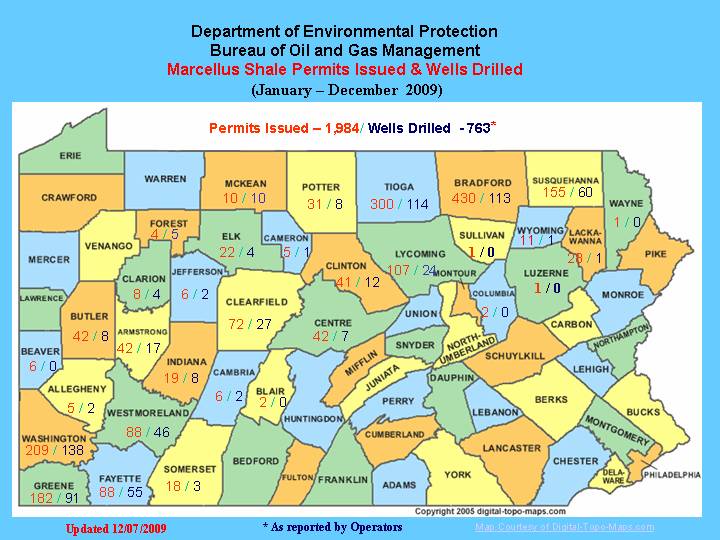
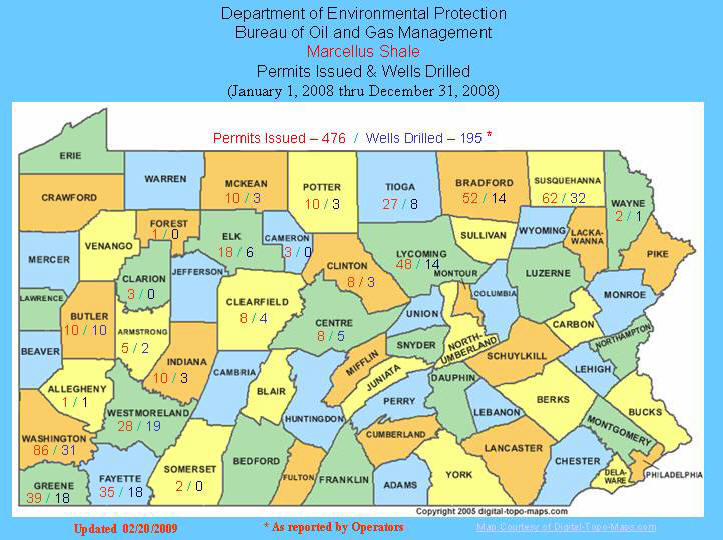
Earlier this month, a blowout of a natural gas well in Clearfield County resulted in gas and harmful drilling liquids being let loose for 16 hours before they were contained. Since 2004, methane related to the natural gas industry has contaminated water wells in at least seven Pennsylvania counties.

“Recent events, from the tragic oil spill in the Gulf of Mexico to the fraudulent activity that contributed to the collapse on Wall Street, have reminded us all that we cannot depend on industry to police itself when our quality of life, present and future, is at stake,” said Congressman Sestak. “The resources of the Marcellus Shale have given us a tremendous economic opportunity, but we must be certain that the environmental, health, and property safeguards in place are strong enough to protect Pennsylvanians. I commend Executive Director Carol R. Collier for recognizing the pragmatic approach needed on this issue, which is a path to drilling that most benefits Pennsylvanians, not just the oil and gas companies. As an added benefit, we need some time to train workers in our state to qualify for Marcellus Shale jobs.”

To read more, including the DRBC Executive Director Determination, CLICK HERE.

DEMAND ACCOUNTABILITY!
Tuesday, June 8, 2010

New case of drinking water contamination after hydraulic fracturing in Texas

PHOTO OF SMITHS' WATER COURTESY OF AMBER SMITH

In her blog on June 7th, Amy Mall, NRDC Senior Policy Analyst reports:
According to recent reports, an underground source of drinking water in the town of DISH, Texas, was contaminated after hydraulic fracturing of nearby natural gas wells last year. At first, the Smith family noticed that its water turned gray and was filled with sediment. There were changes in the water pressure. The Smiths installed a water filtration system, but over a year later, it was useless and clogged.

To read more about the toxicity, CLICK HERE.

DEMAND ACCOUNTABILITY!
RURAL IMPACT VIDEOS, 6 parts

Natural gas development in Colorado, the impacts on communities, environment and public health. A primer for public servants and residents of counties that care for their lifestyles.

Drilling for Gas in Bradford County, PA ... Listen!

Cattle Drinking Drilling Waste!

EPA... FDA... Hello? How many different ways are we going to have to eat this? ... Thank you TXSharon for all you do! ... Stay tuned in at http://txsharon.blogspot.com

Landfarms

A film by Txsharon. Thank you Sharon for all you do. Click HERE to read the complete article on Bluedaze: Landfarms: Spreading Toxic Drilling Waste on Farmland

SkyTruth: Upper Green River Valley - A View From Above