
Showing posts with label NEUROTOXINS. Show all posts

Sunday, February 21, 2010

Dish, Texas mayor shares cautionary tale about natural gas drilling

By Jason Whong •jwhong@gannett.com
stargazette.com
February 20, 2010

ELMIRA HEIGHTS -- Calvin Tillman, mayor of Dish, Texas, says New York is in a unique position when it comes to getting natural gas.

"What I'm proposing is you look at the negative impacts we've had and do it better here," Tillman told a crowd that packed the Heights Theater on Saturday morning for his address.

Tillman says he does not oppose drilling for natural gas. Rather, he supports using gas production and distribution methods that have minimal environmental impact.

"We have air quality issues in Dish," Tillman said before the presentation. "There's a lot of things that can be put in place ... that would eliminate a lot of those problems."

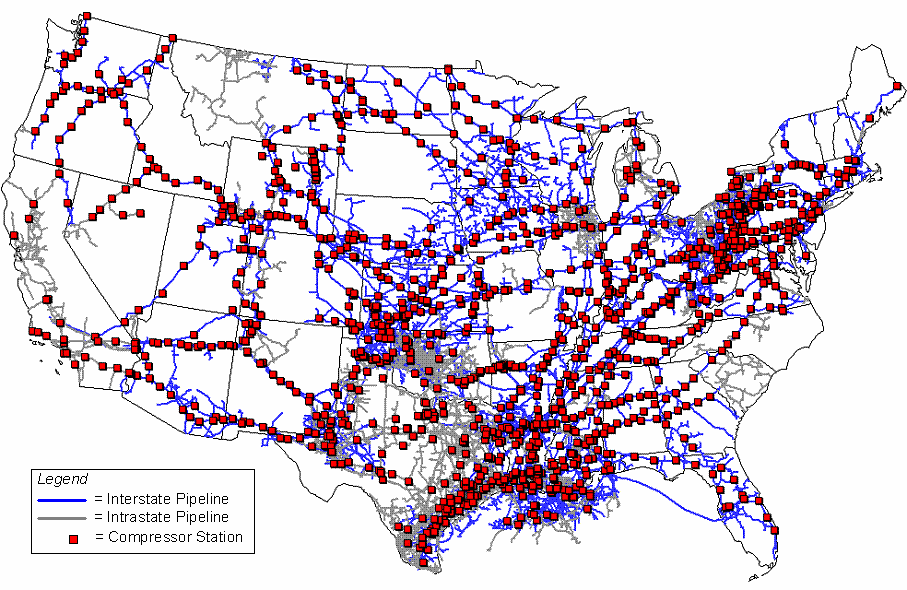
Tillman said the older technology compressor stations in and around Dish, which compress natural gas and remove impurities for transport through pipelines, would pollute less if they were updated.

...

A recent environmental study of Dish shows excessive levels of benzene and other carcinogens and neurotixins in the air, as well as chemicals associated with natural gas production in the water.

Tillman told reporters what he would do with natural gas in Texas if he could do it all over again:

"I would probably do what New York's doing and I would frankly just slow things down quite a bit and think about things and make sure that everything was done in a responsible, respectful and safe manner," Tillman said.

"We did the 'ready, fire, aim.' We didn't take our time and look at the whole process."

Tillman had many suggestions for what New York and Pennsylvania might consider as gas exploration increases.

Tillman said New York and Pennsylvania are the only two of the 32 states that have had gas exploration but do not charge a severance tax -- which measures the gas and taxes it when it is brought above ground.

Tillman said such a tax could generate funds to pay for road maintenance and hire regulators to watch the industry. Gov. David Paterson proposed such a tax this year.

Tillman recommended strong environmental regulations that mandate the latest green technology in all aspects of drilling and transporting natural gas.

He said stricter regulations likely will not chase away the gas companies.

Tillman also recommended taking the power to permit drilling away from the state, favoring local decision-makers instead.

"The further you go up in government, the less attached officials are," Tillman said.

"Your local officials don't need to ask for (permitting authority); they need to demand it."

...

Noel Sylvester, 62, of Cameron Mills, who has a gas lease agreement with Fortuna Energy, said he wanted to hear about Tillman's experiences in person.

Sylvester said he doesn't oppose drilling for natural gas if it can be done cleanly.

"If we think there's going to be an impact in the next generation or two, there's something wrong with the process. It should be cleaner than that and better than that."

Sylvester said he makes about $500 a year from his gas lease.

CLICK HERE for link to complete article.

DEMAND ACCOUNTABILITY!

Wednesday, October 21, 2009

Delaware River Impacts From Natural Gas Drilling

Delaware River Basin Commission "Doesn’t Ask" what will happen to hundreds of millions of gallons of toxic wastewater when deciding on million gallon a day water withdrawal permit
By Iris Marie Bloom
Community Contributor
(Phila.) Weekly Press
21 Oct. 09

Upstate, some folks have started putting spikes in the roads to block trucks related to the natural gas industry. Downstate, meetings have stayed polite but tense, so far.

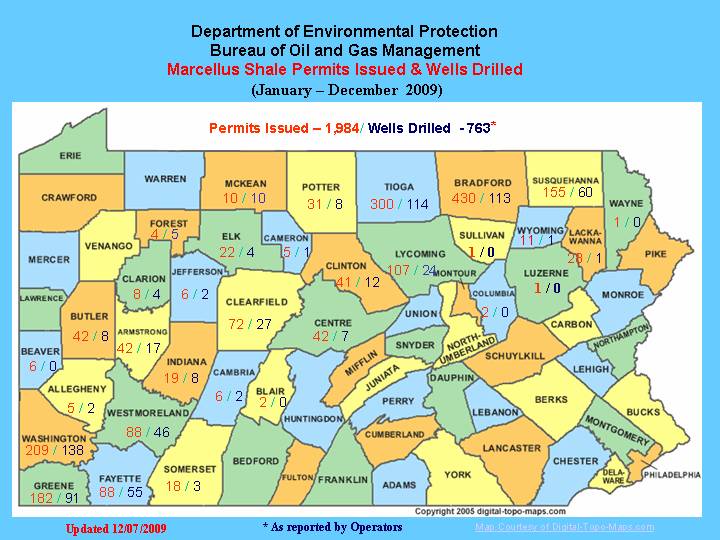
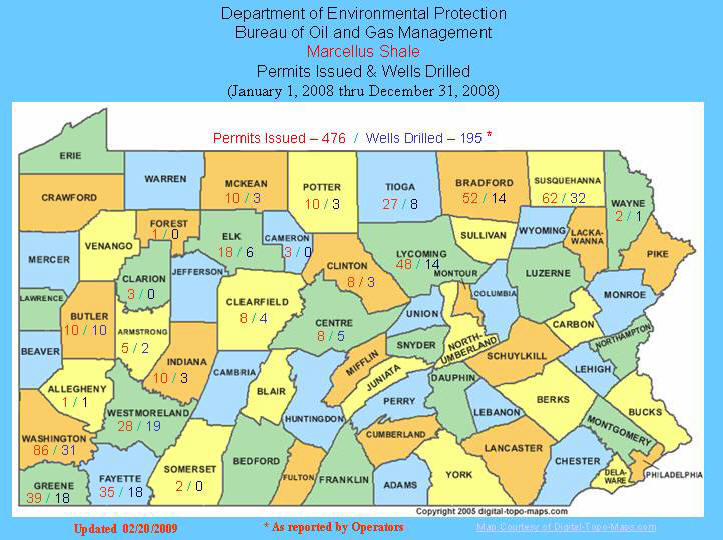
In New York, the Executive Committee of the Sierra Club decided on October 17, looking at the damage across the river in Pennsylvania so far, to ask New York State to ban hydraulic extraction, the water-intensive new natural gas technology, outright. But in Pennsylvania last week, the state legislature decimated its own environmental regulatory agency, the Department of Environmental Protection, with 27% cuts, while protecting the natural gas industry from a severance tax that would have given state coffers 90 million dollars this year, according to its sponsor. As soon as that was accomplished, Rendell’s point man on the issue went to work for the industry.

Nationally, clean water advocates are working to pass the FRAC Act, a bill to restore the Clean Drinking Water Act. The FRAC Act would close a loophole exempting hydraulic extraction – which has contaminated drinking water with toxic substances in at least three states so far, including Pennsylvania – from federal regulation.

What’s that all got to do with Philadelphia? Here, it’s all about drinking water.

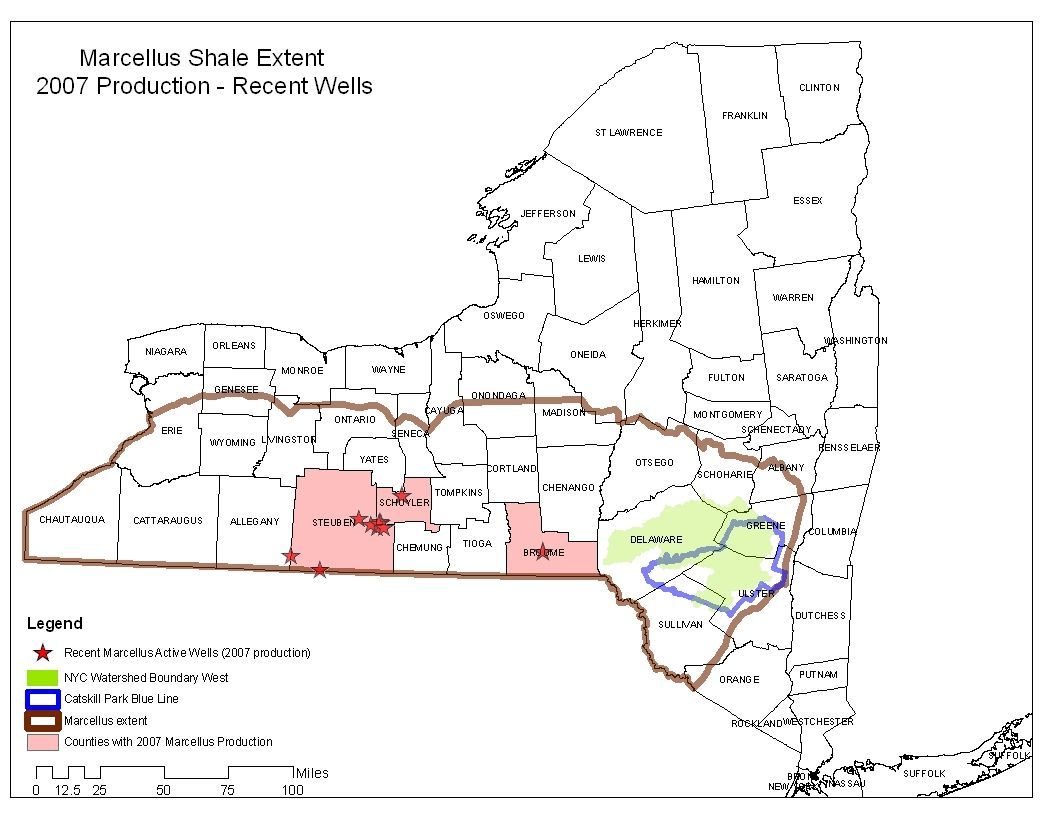
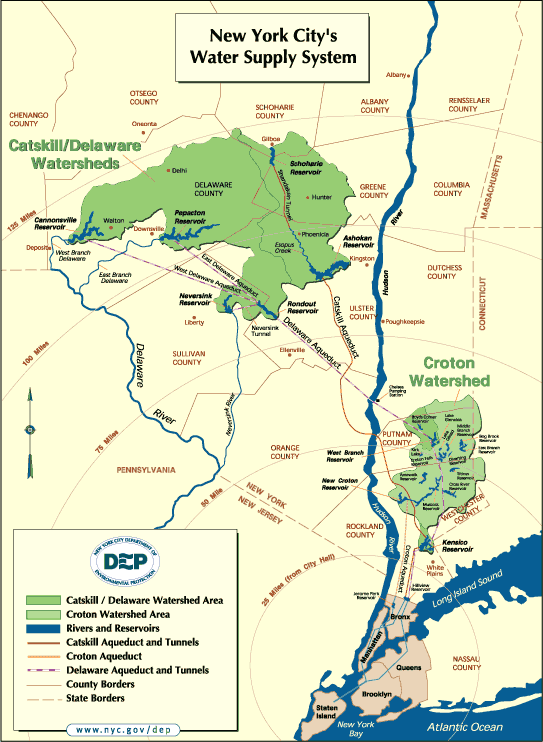
The Delaware River Basin Commission (DRBC) indicated at a meeting sponsored by the American Water Resources Association in Center City on October 15th that it will likely approve a massive withdrawal request for a million gallons of water per day from the Upper Delaware River. Off the record, some officials indicated that public outcry and "TV cameras" might make a difference. All of the water will be mixed with toxic chemicals at a ratio of about 7,500 chemicals per million and a half gallons of water, according to the natural gas industry. Both the industry and the DRBC concur that no plan currently exists to treat the resulting heavily polluted wastewater. Hundreds of millions of gallons of wastewater will be brought back to the surface from natural gas drilling operations and stored in pits (some open, some closed), with a certain amount of inevitable spills, until industry officials and regulators figure out what to do with it.

That could take years. There are currently no treatment plants in Pennsylvania capable of adequately treating the heavily polluted wastewater. Building new plants capable of doing so is extremely expensive, and officials estimate it would take about 50 such plants to handle the anticipated discharge. There is no information available about what might happen to the 40% to 70% of the contaminated water left behind, deep in the ground.

Meanwhile, Carol Collier, Executive Director of the DRBC, commented on October 15 that perhaps the wastewater would be "trucked downstream to where TDS (total dissolved solids, the most measurable and obvious component of frac wastewater) is not such an issue." Translated into simple language, that apparently means discharging the water in the Delaware River far south of where it is being trucked (200 trucks a day, leaving every 7 to 8 minutes) to natural gas pads in northern Pennsylvania. South of Trenton, the Delaware River has a greater volume of water to dilute the pollution. North of Trenton, the Delaware is better protected from severe pollution under the environmental designation, "Special Protection Waters."

Fifty percent of Philadelphia’s drinking water comes from the Delaware River; fifty percent comes from the Schuylkill River, which may also be impacted.

What’s in those chemicals? The exact formulas are not disclosed, at least as long as the process remains exempt from the Safe Drinking Water Act. But EPA officials and other scientists have identified 54 to 300 components of "frac fluid" and wastewater resulting from hydraulic fracturing for natural gas in deep shale layers, such as the Marcellus Shale in Pennsylvania.

The components include known carcinogens and powerful fish pesticides, and the wastewater includes radioactive material from underground as well as heavy metals and extreme amounts of salt from ancient oceans.

The DRBC is still accepting public comment about the proposal from Chesapeake Appalachia, LLC to withdraw a million gallons a day in Wayne, PA, and may make their decision about the proposal and other proposals pending in November. The agency is under tremendous pressure to approve the proposal. Appalachia has taken out ads in northern Pennsylvania blaming the DRBC for keeping landowners from getting the royalties they expect after leasing their lands to gas companies. Hostility towards the DRBC from landowners is mounting accordingly.

In related recent news, one to three spills of frac fluid, from 5,000 to 8,000 gallons, occurred last week in Dimock, PA. Last month, 161 species completely died off in Dunkard Creek in Southwestern PA, creating a mystery that investigators have still not solved. Last week the DEP issued drinking water notices again for the Monongahela River due to unacceptable levels of total dissolved solids (TDS), a result of hydraulic fracturing wastewater being discharged into the river. The Monongahela River provides drinking water to 350,000 people in Pennsylvania.

In August, the EPA confirmed the presence of 2-BE (butoxyethanol), which is associated with kidney damage, harm to the adrenal gland, and reproductive problems, in drinking water both in Colorado and in Pavillion, Wyoming, in association with hydraulic extraction for natural gas there. Butoxyethanol is a known constituent of fracing fluid.

Citizens in both states complaining of adrenal cancer, seizures, birth defects and miscarriages have called for a halt to hydraulic fracturing in their regions after 2-BE contamination in their drinking water was confirmed by the EPA.

At the October 15 public meeting, DRBC director Collier was asked whether existing treatment plants in Pennsylvania have the capacity to treat chemicals such as 2-BE. She answered, "I don’t know."

Collier was also asked for clarification: "Are you saying that you plan to approve the withdrawal of a million gallons a day from the Delaware River without any plan to treat the resulting wastewater?"

The answer was yes: "We don’t ask that question [what will happen to the wastewater] when we are approving water withdrawal proposals."

To continue reading this article, CLICK HERE.

DEMAND ACCOUNTABILITY!

Wednesday, October 14, 2009

Highlights from "Sacrificed to Shale"

The energy crisis facing our nation has many facets. One that has been downplayed by the oil and gas industry, regulatory governmental overseers, and hopeful leaseholders, for obvious rea$ons, is the enormous cost in terms of individual, public and environmental safety, health and well-being. However, things are beginning to change. The toxic damage being done can no longer be minimized or brushed aside. Awareness is growing and concern is mounting.

The cover story in the Oct. 14 Fort Worth Weekly is an in depth look at the health, safety and quality of life problems facing DISH,TX on almost every level. The heart of the problem seems to be bad regulation on the part of the government and its agencies. (It should be, by now, a foregone conclusion that industry does not self regulate with the greater good in mind.)
The concerns of the people of DISH demand accountability! People everywhere deserve protection from this kind of rampant disregard for Life Itself.
Following are excerpts from "Sacrificed to Shale", the excellent, comprehensive five page exposé, written by Peter Gorman:

...the gas industry has picked DISH and a few acres just outside its city limits as a perfect place for not one or two but eleven compression stations, to which gas is piped from wells all over northern Tarrant and Denton counties, to be treated, compressed, and sent out into bigger transmission lines. Residents say the veritable industrial corridor thus created emits hydrocarbons that kill trees, sicken and endanger animals and people, and are making their properties worthless.
...
Losing the use of land is only one of the issues posed by pipelines. Gas running through gathering lines is generally filled with chemicals and water that corrode the pipes; it's also generally unodorized until it reaches the compressor - which means people nearby won't know they are in danger if a leak develops. Companies have mechanisms to alert them to weakening pipes, but leaks and explosions in the Barnett Shale have shown those systems aren't foolproof.
...
The compressor stations also regularly release noxious chemical fumes. The acrid smell burns the throat and nose and sears the eyes. "Some days you can hardly breathe anywhere in DISH," Tillman said. "And then the trees started dying, so we wondered what was actually in those fumes."
... "We've lost a lot of trees in DISH. And a number of them were cedar trees, which are almost impossible to kill. Those trees breathe just like we do, so when they start dying, you've got to pay attention," he said. "They're the canary in the coal mine for our air." Thus far, dozens of trees in the little town and right outside it have died.
...
"We knew something was terribly wrong," Tillman said. But their repeated complaints to the state agencies fell on deaf ears. The agencies "basically asked the companies to investigate themselves," said Tillman, "and they came up clean every time."
...
According to an analysis of the [independently contracted] Wolf Eagle air study done by chemist and microbiologist Wilma Subra, the air samples from DISH contained the kind of chemical cocktail that would have been expected near refineries. Subra, who has been studying oil and gas field waste since the 1970s, said the DISH air samples included varying combinations of the carcinogens benzene and trimethylbenzene; napthalene, which is considered a potential human carcinogen; carbon disulfide, which can be absorbed through the skin and affects the central nervous system and many other bodily systems; and xylene compounds, which are neurotoxins. Subra is a member of the board of Earthworks, a nonprofit group that works with communities to address the destructive impacts of mineral development.
...
Even worse, she said, "No one can tell you what happens when you add these compounds together. It might be that in some cases they cancel each other out. Or they might be exponentially worse when you have a mix like that. And with what we know about chemicals, it's probably exponentially worse."
...
[Re: Long term exposure, Wilma Subra said:]
"Two years is sufficient time to cause neurological damage." ...
"You will not be automatically safe from the chronic, long-term health conditions just because you remove yourself from exposure to those chemicals," Subra said. "The damage could have already been done or could still show itself down the line, years later."
...
Tillman said that each of the companies that has a gas compressor at DISH has told him that their emissions are within acceptable levels established by the federal Environmental Protection Agency. "And that might be so," said Tillman. "But what happens when you have 11 of these things sitting next to each other? Even if each one individually is acceptable, add them up, and you wind up with nearly 11 times the acceptable level of toxins being released into our air."
...
DISH officials and residents aren't opposed to all gas drilling or the kinds of industrial activities that come with it. But many of them are furious at how it's been handled in their town and at the state's part in what has happened.
"I am against the way these people have elected to operate - quick and dirty methods, cheap methods," Cisco, the town commissioner said. "It's regrettable that the Railroad Commission and TCEQ have hoodwinked us into thinking they are protecting the citizens of our community when it seems more like they're on the payroll of these companies."
Tillman agreed. "How on earth could the people of this town suffer and complain about the air quality for so long, and I am the first one to do an air quality study?" he said. "This is squarely on the shoulders of TCEQ, and they let this happen to us. I just feel betrayed by the state."

DEMAND ACCOUNTABILITY!

Tuesday, October 13, 2009

DISH IS DESPERATE! MAYOR TILLMAN PLEADS FOR HELP

I just received this email from the mayor of DISH, TX:
(for background, see today's earlier posts: DEAD TREES... and INDEPENDENT STUDY...)

The news that I continually get makes this nightmare worse and worse. I have yet another twenty something young lady who has undiagnosed neurological problems that started when she moved here. She has been shipped out of state for testing on a number of occasions, and they have been unable to diagnose the problems she is having. I am having a difficult time in know what the next move should be. I wonder if there is a medical doctor out there who may come to help us here? Maybe there would be someone who could perform toxicology tests on the citizens. Please give me any input you may have, and if you know of anyone who may be willing to help, please let us know. Maybe you could post something on your websites or blogs soliciting help. Together I know you reach thousands of people. Thanks.

Calvin Tillman
Mayor, DISH, TX
(940) 453-3640

HAD ENOUGH YET? ...Think these are just flukes? HERE'S MORE!

Fears of tainted water well up in western Colorado

He was thirsty the afternoon of May 30, 2008, after he and his wife, Dollie, drove up the dusty, steeply kinked road to their cabin an hour northeast of DeBeque. He went to the sink and filled a glass with water.

"I tipped it up just like this and just started guzzling — like an idiot. I didn't know it was bad until I drank two- thirds of the cup," said the 61-year-old outfitter as he retraced his actions that day.

His throat burned. His head pounded. His stomach hurt. He felt like he was going to suffocate.

Tests would show the water from a spring he has drank from for decades was heavily contaminated with a carcinogenic and nervous system-damaging chemical stew known as BTEX — benzene, toluene, ethylbenzine and xylene. BTEX and other volatile organic compounds come to the surface in the production water from oil and gas wells.

Don't miss the rest of this compelling article: CLICK!

DEMAND ACCOUNTABILITY!

RURAL IMPACT VIDEOS, 6 parts

Natural gas development in Colorado, the impacts on communities, environment and public health. A primer for public servants and residents of counties that care for their lifestyles.

Drilling for Gas in Bradford County, PA ... Listen!

Cattle Drinking Drilling Waste!

EPA... FDA... Hello? How many different ways are we going to have to eat this? ... Thank you TXSharon for all you do! ... Stay tuned in at http://txsharon.blogspot.com

Landfarms

A film by Txsharon. Thank you Sharon for all you do. Click HERE to read the complete article on Bluedaze: Landfarms: Spreading Toxic Drilling Waste on Farmland

SkyTruth: Upper Green River Valley - A View From Above