Showing posts with label DISH. Show all posts

Tuesday, June 8, 2010

New case of drinking water contamination after hydraulic fracturing in Texas

PHOTO OF SMITHS' WATER COURTESY OF AMBER SMITH

In her blog on June 7th, Amy Mall, NRDC Senior Policy Analyst reports:
According to recent reports, an underground source of drinking water in the town of DISH, Texas, was contaminated after hydraulic fracturing of nearby natural gas wells last year. At first, the Smith family noticed that its water turned gray and was filled with sediment. There were changes in the water pressure. The Smiths installed a water filtration system, but over a year later, it was useless and clogged.

To read more about the toxicity, CLICK HERE.

DEMAND ACCOUNTABILITY!

Friday, May 21, 2010

"The Big Deception"... Calvin Tillman Addresses Paid Liars

When I first decided that we needed to have some biological testing accomplished here in DISH, TX, I was cautioned against getting our state health department involved. Most figured that they would run up here and began covering the back side of the oil and gas industry like they have done so many times before. However, I also have some very smart and nationally recognized people who help me in these decisions and we decided that if they would take our input on the testing, we might be OK. So we asked the Texas Department of State Health Services (DSHS) to test the air and a tentatively identified compound test in conjunction with the tests they were running. But they ignored the request from a nationally recognized scientist, who has more scientific recognition in her little toe, than anyone who works for the DSHS will ever have. Therefore, their report subsequently has turned out more political than scientific.

As one well known citizen who lives in the barnett shale has stated, "everything you hear from the natural gas industry in either a lie, or half truth". Here in DISH, we are used to the paid liars from this industry coming in and feeding us the normal lines like what good neighbors they want to be. However, when you get this from your state agencies that are sworn to protect you, it does not set as well. Many people believe everything these people say, and they are never held accountable when they are wrong...or deceitful. The DSHS showed up just like many of the other paid liars, thinking that they would blow smoke up the rear ends of a bunch of country bumpkins that didn't know any better, and just like the other paid liars, they left with their tails between their legs. Country bumpkins typically recognize the smell of BS pretty quickly.

After thinking about this, and doing some research into the matter, it was clear that no matter what was detected, the DSHS would have found a way to say there is nothing wrong. They have a history of doing just that, please see the following link, where they failed to protect the public interest in Texas once again.

http://www.dshs.state.tx.us/epitox/consults/delroc_hc.pdf

In this "investigation" the community was worried about water run-off from a former refinery (hmm same industry), and subsequent surface water contamination. However, the same characters who came to DISH, decided the surface water didn't need testing. The soil and sediment were tested and both exceeded the Health Based Assessment Comparison for aluminum, arsenic, BaP TEQ (benzene derivative), and vandium. Conclusion - "no apparent public health hazard". In my line of business we call people like this "hacks".

In our case, they were looking hard for criticisms from us before the meeting, so that they could prepare to answer them. I made some comment to the media about the number of folks who had toluene and xylene in their systems, and oddly enough they came up with statistics that show we are actually lower than the rest of the United States, this was not in the report, just the presentation. At this point I started getting that familiar smell that we have grown accustomed to here in DISH... and not the natural gas smell. I then asked for the source of the statistics they used to determine this and they sent me to NHANES, said "just google it". Maybe that was their joke, because me and others searched for hours with no success finding this data. I did find a statement that said VOCs are present in most everyone at some level, but it would not be in detectable levels in everyone, so that may have been one of those "half truths".

During my several hours of research, I did find that the 95th percentile used in the DISH study appears to be a hand picked by the "hacks", and likely hand picked for a purpose. Apparently, you do not need a percentile reference number, but when one is used the 90th percentile seems to be the number used by real scientists. If 50% of the households in DISH were above the 95th percentile for chemical exposure, I wonder how many are over the 90th percentile. However, if they would have figured that, it is likely that they would have that trend they were looking for, and we damn sure wouldn't want that, now would we? I think similar lying with statistics was accomplished in Flower Mound as well. If they start finding problems, the boys and girls in Austin would not get those critical campaign contributions they have grown accustom to. In my business we look for trends, and I am starting to see a trend with these "hacks".

If the above blatant failures were not enough to show what a joke this was, you must hear the rest of the story. Dr. Bradford admitted when questioned that the study was not a scientific study. However, they came to a very solid conclusion, with this non-scientific study. The conclusion goes something like...we see exposure but have no idea where the exposure is coming from, but it damn sure aint coming from that compressor station that we smelled those horrible odors from.

They then admitted that they did not know how close any of the citizens lived to the compressor sites, nor did they know the number of males vs females that were tested, and did not even know the age range of those who were tested. You would think they would have known the answers to the easy stuff if they wanted to appear believable. The data that they used for comparison in DISH was seven years old. Outdated data is something they also used in Flower Mound to help them reach their objective. I guess they figured they had this one in the bag like all the others before, too bad the country bumpkin's weren't buying.

Children were not tested as part of this "investigation". There apparently was no data to compare the results; however, in my wild goose chase that Dr. Bradford sent me on, I found several studies that referenced children. The one mentioned above showed how these chemicals affect children differently than adults...and yea it is much worse. She avoided the question during the meeting when asked about how children are affected differently than adults. Frankly, I believe that they were sent here to not find anything and they would likely find exposure in our children. If they find toluene and xylene in kids they would not be able to blame it on smoking. Even us country bumpkins don't let our five year olds smoke. They would not have been able to give us the "half truths" that they did, and people don't play when it come to their kids. If us nice country folk knew our kids have BTEX chemical exposure, we may not be so nice any more. I am hopeful that the light will shine on some of the roaches who are responsible for these illusions, and I think there is another facility I would rather see them at, and it is located in Huntsville, Texas.

The house of cards they built came down very quickly. I am extremely disappointed that these folks did not take their oaths seriously, and are allowing the public to continue being put at risk. I had originally felt sorry for those who were likely on the puppets for the higher ups, but it is all too apparent that this is not there first deception, so they should have moved on to something else if they weren't committed to covering things like this up. They have actually offered to come back for another round of testing. I think I would rather see if the Chesapeake or Devon environmental department is available, they are much better liars.

In closing I would like to say that this "investigation" brings more questions than answers, and it is time for us to demand a stop to the social injustices that these state agencies are allowed to impose. Many people have no other options than to take their word for it, and no recourse when they are wrong. We apparently have not only been sacrificed for the good of the shale by these companies, but also the State of Texas. It is time for us to hold these paid liars accountable for their actions. Please let me know if you have any skills to help me investigate similar injustices.

Fortunately, the last state agency that left the DISH town hall with their tails between their legs was shamed into installing a permanent air monitor. Frankly, I am delightfully surprised by the improvements in our air quality over the last month. I am certainly not calling all clear, but it may be that we don't even need more testing, but I know that another community will face the same situation if there is not something done. If this industry would just do it right, we would not have many of these problems. The Gulf would not be becoming the dead sea and our children would not be exposed to cancer causing toxins. Please post on your blogs and websites.

See report here:
http://www.dshs.state.tx.us/epitox/consults/dish_ei_2010.pdf

Calvin Tillman
Mayor, DISH, TX
(940) 453-3640


DEMAND ACCOUNTABILITY!

Monday, May 10, 2010

Hydraulic fracking spells disaster

Workers World
May 6, 2010

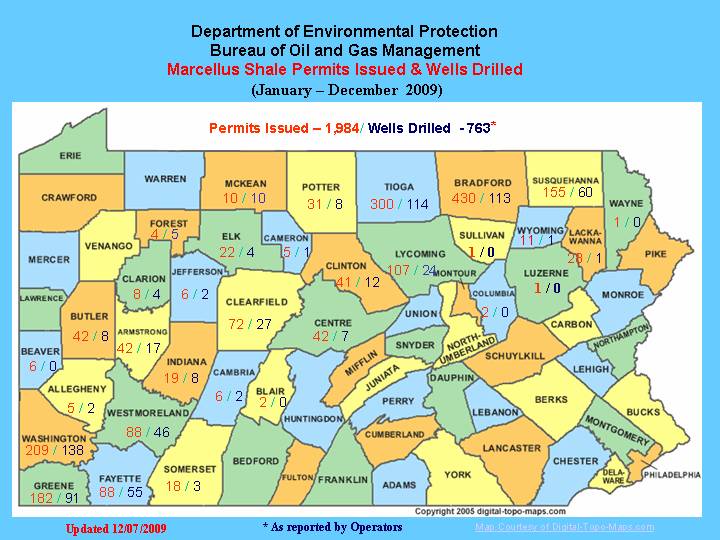
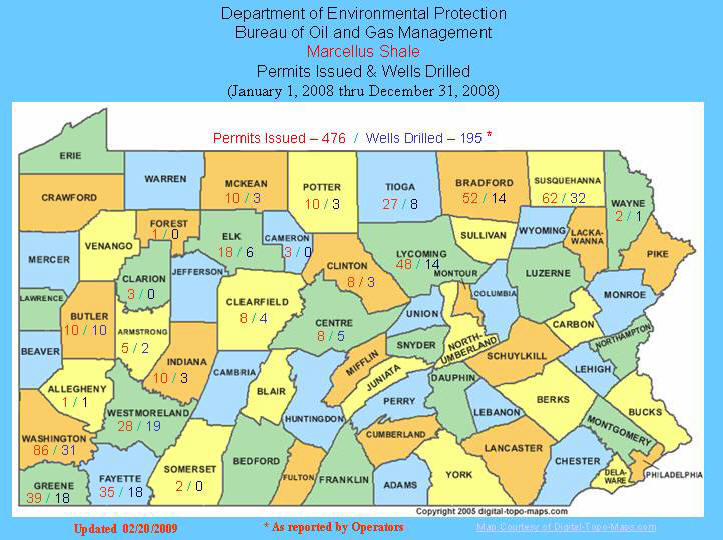
Despite industry claims that the rapidly expanding practice of hydraulic fracturing to extract natural gas from deep underground shale layers is “perfectly safe,” on April 15 the Pennsylvania Department of Environmental Protection fined Houston-based Cabot Oil and Gas $240,000 for causing the contamination of 14 residential water wells in Dimock Township, Pa.

The company was also ordered to plug three gas wells it was operating in the town, which sits atop the Marcellus Shale formation, and was banned from drilling in the area. One water well in Dimock exploded last year, and DEP inspectors witnessed gas bubbling up at the base of eight other wells in March. Despite the ruling, Cabot has plans to drill 100 new wells in Dimock this year.

Independent newsroom ProPublica has reported on 50 similar cases across Pennsylvania, including reports of fish kills, water and air pollution, fires, out-of-control flaring, human illnesses and animal deaths.

The concern over the safety of hydraulic fracturing has prompted calls for a moratorium on drilling in Pennsylvania. In the process, often referred to as fracking, 2 to 9 millions of gallons of water, mixed with sand and up to 250 chemicals, are pushed into underground shale layers to release natural gas.

In January the Pennsylvania state Legislature opened up 32,000 additional acres of state forest land to be leased for drilling. As a result, 692,000 acres of the 2.1 million acres of state forest land are now open for gas wells. During a recent push to expand the practice into the Delaware River basin, the Philadelphia City Council was pressured to pass a resolution on March 25 calling for an environmental impact statement before any new permits are issued.

Fracking has been in use for a number of years throughout the U.S., particularly in the Southwest. Five natural gas sites border the town of Dish, Texas, in a quarter-mile complex. In nearby Fort Worth, Texas, 1,400 wells have been drilled in urban areas, many near schools and residential centers.

Speaking at a meeting at Temple University’s Department of Civil and Environmental Engineering on April 16, Dish Mayor Calvin Tillman described how carcinogenic air pollution from natural gas drilling has damaged the quality of life in his town of 180 residents. The town sits atop the Barnett Shale, a geological formation similar to the Marcellus Shale.

Using his own money, Tillman has been traveling to Pennsylvania and New York to warn about the dangers of the gas boom. In his small town, trees are dying on a 30-acre farm that adjoins a labyrinth of small underground pipelines used to transport fuel from the fracking wells to outside markets. Horses have also fallen ill. Residents report problems with frequent nausea, severe headaches, breathing difficulties, chronic eye irritation, allergies, throat irritations and even brain disorders.

When Texas state inspectors, who are usually linked to the drilling companies, reported they could not find any problem with the wells, Dish town officials hired an environmental firm to collect one-day air samples near the compressors. Their study found high levels of 15 chemicals, including benzene, a known carcinogen. As a result the Texas Commission on Environmental Quality conducted air studies at 94 sites in the region. They found two sites with very high levels of benzene and 19 others with levels that raised concern.

In April, blood and urine testing of 28 adult Dish residents revealed that half the residents had slightly elevated levels of benzene and other contaminants. Four residents tested positive for benzene, including Tillman. Tillman noted that no testing was done on children, pregnant women or the elderly — groups likely to be most susceptible to the contaminants. Tillman’s water also tested positive for traces of styrene, ethyl benzene and xylene.

Growing concern over the danger of fracking has led to a push for legislation in Pennsylvania that would require drillers to disclose chemical ingredients in hydraulic fracturing fluids. Other proposed legislation calls for a moratorium on drilling until environmental impact studies can be performed. Both bills have yet to be passed and face mounting opposition from the natural gas industry.

Nationally, the oil and gas industry won exemption from major provisions of the Safe Drinking Water Act, the Clean Water Act and other federal environmental laws with the passage of the 2005 Energy Bill. The bill’s “Halliburton loophole” protected the company from having to reveal the composition of their fracturing fluid, despite the fact that the list of hazardous substances compiled by the Environmental Protection Agency’s Superfund — the program established to address abandoned hazardous waste sites — includes toxic profiles on benzene, styrene, toluene and other agents known to be in the mix. Efforts are also underway to challenge this legislation.

The EPA announced it will spend $4.4 million to start a study on the impact of fracturing in October, but Dr. Michel Boufadel, director of the Environmental Hydrology and Hydraulics Laboratory at Temple University College of Engineering, expressed concerns that the EPA’s study does not go far enough.

Speaking at the April 16 meeting, Boufadel noted that very few scientific studies on fracking have been conducted by researchers not connected to the drilling industry. He also pointed out that most studies assume that any leak of water contaminated by fracturing fluids would spread horizontally from a holding tank and be detected by ground level monitors.

Boufadel explained that the 250 chemicals contained in the fracturing fluid create “gooey, high density water” — a gel that suspends the sand particles needed to work into cracks in the shale layers. The result is “radioactive water six times more saline than sea water and containing known carcinogens.”

“If you don’t account for this heavy density you would expect water to move outward, but the reality is that it moves down,” Boufadel stressed. “If you only use existing traditional models of monitoring wells at ground level, you won’t detect contamination until it’s too late.”

LINK


Articles copyright 1995-2010 Workers World. Verbatim copying and distribution of this entire article is permitted in any medium without royalty provided this notice is preserved.

DEMAND ACCOUNTABILITY!

Tuesday, April 13, 2010

Tests find toxins in Dish residents

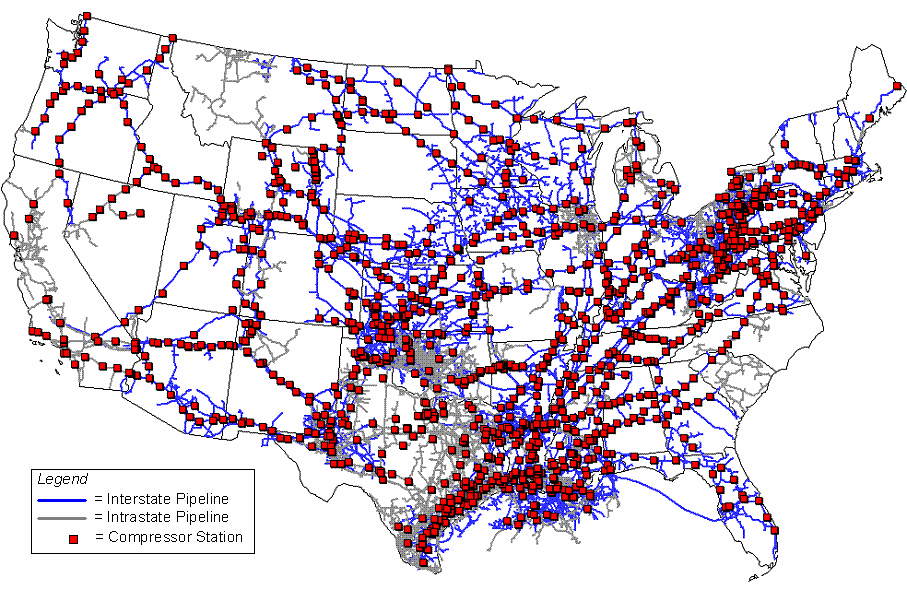
Texas mayor, Calvin Tillman, visited our area recently to talk about the air quality issues facing DISH. The town's air is fouled by emissions resulting from a major convergence of gathering lines, compressors and metering facilities.

Results of blood and urine samples taken from DISH residents by state health officials have found toxic compounds (1,3-Butaduene compound, Toluene compound, Trichloroethylene compound, N,N-Dimethylformamide) in people’s bodies to be the same as those detected in the air and water there.

CLICK HERE to read the distressing report in today's Denton Record Chronicle.

DEMAND ACCOUNTABILTY!

Wednesday, March 31, 2010

What the Frack? Natural Gas from Subterranean Shale Promises U.S. Energy Independence--With Environmental Costs

Natural gas cracked out of shale deposits may mean the U.S. has a stable supply for a century--but at what cost to the environment and human health?

By David Biello
ScientificAmerican.com
March 30, 2010

DISH, Tex.—A satellite broadcasting company bought the rights to rename this town a few years ago in exchange for a decade of free television, but it is another industry that dominates the 200 or so residents: natural gas. Five facilities perched on the north Texas town's outskirts compress the gas newly flowing to the surface from the cracked Barnett Shale more than two kilometers beneath the surface, collectively contributing a brew of toxic chemicals to the air.

It is because of places like DISH (formerly known as Clark) and similar sites from Colorado to Wyoming, that the U.S. Environmental Protection Agency (EPA) has launched a new review of the practice known as hydraulic fracturing, or "fracking". From compressor stations emitting known human carcinogens such as benzene to the poor lining of wells after drilling that has led some water taps to literally spout flames, the full set of activities needed to produce natural gas gives rise to a panoply of potential problems. The EPA study may examine everything from site selection to the ultimate disposal of the fluids used in fracking.

View a slide show of hydraulic fracturing

The picture from DISH is not pretty. A set of seven samples collected throughout the town analyzed for a variety of air pollutants last August found that benzene was present at levels as much as 55 times higher than allowed by the Texas Commission on Environmental Quality (TCEQ). Similarly, xylene and carbon disulfide (neurotoxicants), along with naphthalene (a blood poison) and pyridines (potential carcinogens) all exceeded legal limits, as much as 384 times levels deemed safe. "They're trying to get the pipelines in the ground so fast that they're not doing them properly," says Calvin Tillman, DISH's mayor. "Then you've got nobody looking, so nobody knows if it's going in the ground properly…. You just have an opportunity for disaster here."

DISH sits at the heart of a pipeline network now tuned to exploit a gas drilling boom in the Fort Worth region. The Barnett Shale, a geologic formation more than two kilometers deep and more than 13,000 square kilometers in extent, holds as much as 735 billion cubic meters of natural gas—and the city of Fort Worth alone boasts hundreds of wells, according to Ed Ireland, executive director of the Barnett Shale Energy Education Council, an industry group. "It's urban drilling, so you literally have drilling rigs that are located next door to subdivisions or shopping malls."

Although the first well was drilled in 1982, it took until 2002 for the boom to really get started. Now there are more than 14,000 wells in the Barnett Shale, thanks to a combination of being able to drill horizontally and fracking—pumping water at high pressure deep beneath the ground to literally crack the rock and release natural gas.

"They pump a mixture of water and sand—and half a percent of that is some chemicals, like lubricants," Ireland explains. "They pump that into the formation at a very high pressure. Cracks it just like a windshield. And the cracks go out a couple hundred feet on either side and that forms the pathway for the natural gas to migrate to the well bore and up to the surface."

All that natural gas may prove a boon to a U.S. bid for energy independence. Plus, burning natural gas to produce electricity releases roughly 40 percent less of the greenhouse gas carbon dioxide than burning coal. So the question is: Can extracting that natural gas be done safely?

Water pollution
As Ireland notes: "There's never been a documented case of contaminated water supply." That is technically true, but residents of Dimock, Pa., may disagree. That town sits atop the Marcellus Shale—a giant natural gas–laden rock formation that stretches from Tennessee to New York State—and the kind of extraction now going on in Texas is just getting started there. In Dimock, leaks from badly cased wells contaminated drinking water wells—and one even exploded.

It all comes down to the fact that fracking involves a lot of water. There's the at least 11.5 million liters involved in fracking a well in the first place. There's the brine and other fluids that can come to the surface with the natural gas. And there's the problem of what to do with all that waste fluid at the end of the day.

In Dimock's case, Houston-based Cabot Oil and Gas has spilled fracturing fluid, diesel and other fluids, according to Pennsylvania's Department of Environmental Protection. And elsewhere in the state fracturing fluid contamination has been detected in the Monongahela River, which is a source of drinking water. In more common practice, companies dump used fracking fluid back beneath the surface, usually injecting it into other formations beneath the shale. For example, in the case of the Barnett Shale, disposal wells send that water into the deeper Ellenburger Formation.

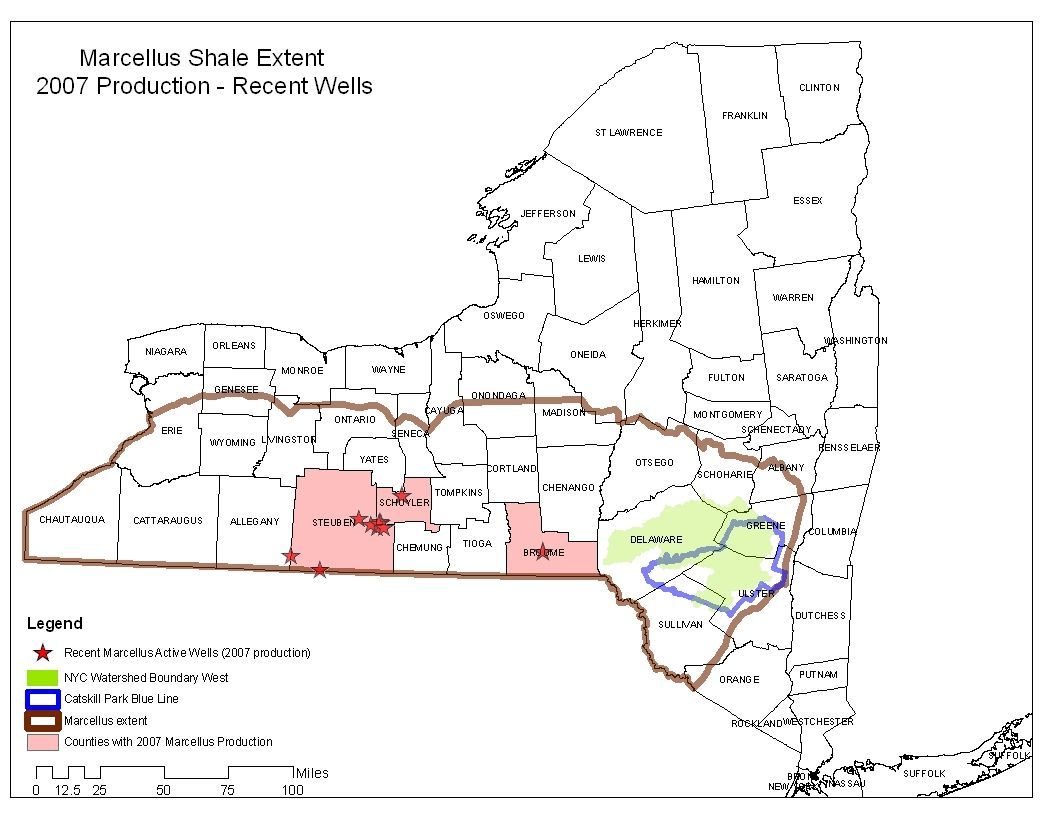
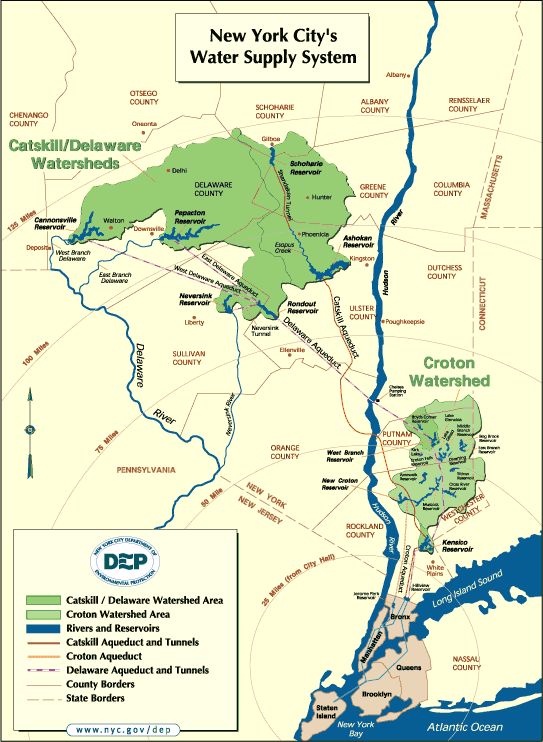
But there's also the problem of what's actually in the fracking fluid. EPA tests in Wyoming have found suspected fracking fluid chemicals in drinking water wells, and a study by the New York State Department of Environmental Conservation identified 260 chemicals used in the process—a review undertaken as the state decides whether to allow such drilling on lands comprising the watershed providing New York City with its drinking water. And Dow Chemical notes that it sells biocides—antimicrobial poisons—to be included in the mix. But companies zealously guard the secret of what exactly makes up their individual "special sauce." It is one of the ways the companies distinguish themselves.
(See Flower Mound Citizens Against Urban Drilling March 30th post: Natural Gas Drilling Companies Searching for Hydraulic Fracturing Alternatives)

Air pollution
In places where required by law, natural gas companies also distinguish themselves by how they filter out air pollutants. "There's [vapor recovery units] that they can put in place to cut out 95 percent of the emissions from a site," Tillman says. "In states where it's been mandated they do it, and they do it willingly—and they do presentations that show how they're going to comply and how their vapor recovery unit is better than the next guy's vapor recovery unit."

That obviously does not happen in DISH, and a big part of such negligence is a lack of appropriate oversight. For example, after it received complaints the TCEQ sent an SUV with a gas detection unit to drive around Dish for a couple of hours. Despite widespread complaints of odor, the commission found "no leaks that would be detectable to the human nose," Tillman says. "So obviously they're trying to deceive us, they're treating us like we're blooming idiots."

As a result, DISH conducted its own air quality test—at a cost of 15 percent of the town's annual budget of $70,000—that revealed the toxic mix of air pollution. Subsequently, the town petitioned and won the right to install one of seven permanent air monitors in the entire state of Texas. "It's not just writing regulations," Tillman notes. "Somebody has to go out and make sure they're following regulations. And when they're not following regulations, the punishments need to be swift and harsh."

That problem is not confined to the TCEQ or the Railroad Commission of Texas, which through a quirk of history regulates the Lone Star State's oil and gas industries. National laws, like the Safe Drinking Water Act, have been specifically amended to exempt hydraulic fracturing from federal regulation. Yet a New York City analysis of fracking has found that whereas a single fractured natural gas well may do no harm, the hundreds required to exploit shale gas "brings an increased level of risk to the water supply." Plus, although fracking occurs deep below freshwater aquifers, natural cracks "serve as conduits that facilitate migration of contaminants, methane or pressurized fluids."

And it's in the air, too. The Texas Health and Human Services Commission is now conducting tests on roughly 30 residents of DISH to see what might be the human health impacts of this air pollution exposure. And the TCEQ has found high air pollution levels in other nearby towns, such as Decatur, and at individual residences.

Climate savior?
Nevertheless, a 2004 study by the EPA found hydraulic fracturing harmless and the oil industry has been using a roughly similar extraction method since the 1940s. If shale gas can be extracted safely, it might go a long way to cutting back on U.S. emissions of greenhouse gases, as acknowledged at the U.N. Copenhagen climate conference this past December by environmentalists such as Christopher Flavin of the Washington, D.C.–based World Resources Institute. "Compared with coal, natural gas allows a 50 to 70 percent reduction in greenhouse gas emissions," he said. "It's a good complement to the wind and solar generators that will be the backbones of a low-carbon electricity system."

Already, the U.S. produces nearly 600 billion cubic meters of natural gas annually, according to the U.S. Department of Energy (DoE), and it estimates proved reserves of natural gas of at least 6.7 trillion cubic meters. The Marcellus Shale alone may have at least 10 trillion cubic meters.

A host of companies have moved in to exploit this resource, and a "few hundred" wildcatters operate in the Barnett Shale alone, according to Ireland. "The wildcatters are the small companies, they have a low overhead, and they can afford to go out and take some risks," he says. "That's been the history of the business and I think that will continue." But major companies have also taken an interest; ExxonMobil hopes to buy natural gas producer XTO Energy pending regulatory approval.

That's because natural gas is becoming more and more the fuel of choice for generating electricity; the DoE expects 21 percent of U.S. electricity to be derived from natural gas by 2035, and by 2034 power plant builder and consulting firm Black & Veatch expects almost half of all U.S. electricity to come from burning natural gas. "I don't see gas shales having an insurmountable environmental problem that is expensive to fix," says Mark Griffith, head of Black & Veatch's power market analysis.

And the gaseous fossil fuel is used for everything from home heating to making plastics and fertilizer. "It's good that we've discovered all this natural gas, because we're going to need it to generate electricity," Ireland says. "Twenty years from now, we're still going to need all the natural gas we can get."

Some, such as Texas oil- and gas-millionaire T. Boone Pickens, have even suggested using this new surfeit of natural gas to help wean the U.S. off foreign oil, turning it into vehicle fuel. Of course, compressed natural gas is already the fuel of choice for many metropolitan area bus fleets.
Ultimately, however, shale gas extraction—and the hydraulic fracturing that goes with it—will have to be done right. "If something comes out that you're poisoning the population, it's going to be a very bad thing," Ireland notes.
The EPA anticipates finishing its latest study of the practice by 2012. "Six months ago, nobody knew that facilities like this would be spewing benzene," Tillman notes. "Someone could come in here and look at us and say, 'You know what? They've sacrificed you. You've been sacrificed for the good of the shale.'"

LINK

Editor's Note: David Biello is the host of a forthcoming series on PBS, tentatively titled "The Future of Electricity". The series will explore the coming transformation of how we use and produce electricity, along with its impact on the environment, national security and the economy. He conducted the interviews for this article in conjunction with his work on that series.

DEMAND ACCOUNTABILITY!
Sunday, February 21, 2010

Dish, Texas mayor shares cautionary tale about natural gas drilling

By Jason Whong •jwhong@gannett.com
stargazette.com
February 20, 2010

ELMIRA HEIGHTS -- Calvin Tillman, mayor of Dish, Texas, says New York is in a unique position when it comes to getting natural gas.

"What I'm proposing is you look at the negative impacts we've had and do it better here," Tillman told a crowd that packed the Heights Theater on Saturday morning for his address.

Tillman says he does not oppose drilling for natural gas. Rather, he supports using gas production and distribution methods that have minimal environmental impact.

"We have air quality issues in Dish," Tillman said before the presentation. "There's a lot of things that can be put in place ... that would eliminate a lot of those problems."

Tillman said the older technology compressor stations in and around Dish, which compress natural gas and remove impurities for transport through pipelines, would pollute less if they were updated.

...

A recent environmental study of Dish shows excessive levels of benzene and other carcinogens and neurotixins in the air, as well as chemicals associated with natural gas production in the water.

Tillman told reporters what he would do with natural gas in Texas if he could do it all over again:

"I would probably do what New York's doing and I would frankly just slow things down quite a bit and think about things and make sure that everything was done in a responsible, respectful and safe manner," Tillman said.

"We did the 'ready, fire, aim.' We didn't take our time and look at the whole process."

Tillman had many suggestions for what New York and Pennsylvania might consider as gas exploration increases.

Tillman said New York and Pennsylvania are the only two of the 32 states that have had gas exploration but do not charge a severance tax -- which measures the gas and taxes it when it is brought above ground.

Tillman said such a tax could generate funds to pay for road maintenance and hire regulators to watch the industry. Gov. David Paterson proposed such a tax this year.

Tillman recommended strong environmental regulations that mandate the latest green technology in all aspects of drilling and transporting natural gas.

He said stricter regulations likely will not chase away the gas companies.

Tillman also recommended taking the power to permit drilling away from the state, favoring local decision-makers instead.

"The further you go up in government, the less attached officials are," Tillman said.

"Your local officials don't need to ask for (permitting authority); they need to demand it."

...

Noel Sylvester, 62, of Cameron Mills, who has a gas lease agreement with Fortuna Energy, said he wanted to hear about Tillman's experiences in person.

Sylvester said he doesn't oppose drilling for natural gas if it can be done cleanly.

"If we think there's going to be an impact in the next generation or two, there's something wrong with the process. It should be cleaner than that and better than that."

Sylvester said he makes about $500 a year from his gas lease.

CLICK HERE for link to complete article.

DEMAND ACCOUNTABILITY!

Friday, February 19, 2010

Mayor Tillman Talks about the Effects of Drilling in DISH, TX

Sarah Blazonis
Fox 40 WICZ TV
Friday, February 19, 2010


Mayor Calvin Tillman says town officials in DISH, TX, had big ideas about what natural gas wells like these could bring to the area.

"Jobs, prosperity -- most of the things the folks in the Marcellus Shale are probably thinking about right now," said Tillman.

Tillman says drilling into the Bartlett Shale has cost the town as much as it's gained.

DISH's web site provides information about about its noise problem and air quality study -- which found several toxins related to gas production.

Sixty percent of residents who filled out a health questionnaire reported symptoms known to be related to those toxins.

"Watery eyes, sore throat, severe headaches, nausea, neurological problems," Tillman said.

Tillman was invited to the area by the Binghamton Regional Sustainability Coalition. He plans to talk to residents about urging state lawmakers to pass regulations to protect the environment if drilling is approved in New York.

A local environmental defense lawyer says getting these regulations passed depends on team work from both sides of the issue.

"The economy vs. the environment, landowners vs. everyone else -- these are false dichotomies, and there's one water table that everyone's drinking from," said Helen Slottje, a managing attorney with the Community Environmental Defense Council, Inc.

Above all, DISH's mayor says the Southern Tier shouldn't rush into drilling.

"Slow down," said Tillman. "Slow down and think about it. Think it through, make sure that you put every precaution in place you can before you start."

It's a lesson Tillman says his town learned the hard way.
Residents voted just this week for a 90-day moratorium on new drilling permits.
LINK

DEMAND ACCOUNTABILITY!

Sunday, November 15, 2009

A MESSAGE FROM THE MAYOR OF DISH, TX

I have been asked on several occasions, by folks around the country to come and talk about the air study here in DISH. It seems a bit odd to me, but it appears that tiny DISH, TX has been the only municipality to perform a study such as this. I will happily share our story here in DISH with anyone who would like to hear about. I firmly believe that the only way to change the current situation is stand together. I further believe that helping you, where ever you may be, will also help us here in DISH. Therefore, if you are interested in hearing about our story please contact me directly to discuss the possibilities. I will not accept funding for any travel expenses, but also need to know that my presentation would make a difference. Please give me a call or email for details.

Calvin Tillman,
Mayor, DISH TX

940.453.3640

tillman4council@aol.com

DEMAND ACCOUNTABILITY!

Thursday, November 5, 2009

LISTEN TO THIS!!!


DEMAND ACCOUNTABILITY!

RURAL IMPACT VIDEOS, 6 parts

Natural gas development in Colorado, the impacts on communities, environment and public health. A primer for public servants and residents of counties that care for their lifestyles.

Drilling for Gas in Bradford County, PA ... Listen!

Cattle Drinking Drilling Waste!

EPA... FDA... Hello? How many different ways are we going to have to eat this? ... Thank you TXSharon for all you do! ... Stay tuned in at http://txsharon.blogspot.com

Landfarms

A film by Txsharon. Thank you Sharon for all you do. Click HERE to read the complete article on Bluedaze: Landfarms: Spreading Toxic Drilling Waste on Farmland

SkyTruth: Upper Green River Valley - A View From Above