
Showing posts with label CLIMATE CHANGE. Show all posts

Wednesday, June 2, 2010

As EPA Takes Action, Trade Secrets Continue Threatening Health and Safety

© OMB Watch
Posted on June 2, 2010

Unified Agenda The U.S. Environmental Protection Agency (EPA) has taken a significant step toward making more chemical health and safety information available to the public even as trade secrets claims continue to conceal such information elsewhere. A new EPA policy will reject most industry claims that chemical identities included in health and safety studies are trade secrets. Meanwhile, the oil and gas industry continues to use trade secrets privileges to thwart attempts to disclose chemical information related to the BP oil spill and controversial natural gas drilling operations.

On May 27, the EPA announced a new "general practice" where the agency will review all claims by manufacturers that a chemical's identity should be treated as confidential business information (CBI) when the identity is part of a health and safety study or the study's underlying data. The agency expects that unless the disclosure of the chemical identity explicitly reveals how the chemical is produced or processed, the secrecy claim will be rejected, allowing the public to link the chemical to its health and safety information.

This is the third recent major action by EPA to rein in overuse of trade secrets claims by the chemicals industry under the nation's primary chemicals statute, the Toxic Substances Control Act (TSCA). Earlier, the agency announced that chemical identities that were public in the TSCA inventory (a list of more than 83,000 chemical substances) could not be claimed as trade secrets and that the agency would provide free access to the inventory, which had only been available for a fee.

According to EPA, the new practice "is part of a broader effort to increase transparency and provide more valuable information to the public by identifying data collections where information may have been claimed and treated as confidential in the past but is not in fact entitled to confidentiality under TSCA." By late August, EPA plans to begin reviewing new and existing confidentiality claims for chemical identities found in health and safety studies, as well as associated data.

TSCA generally prohibits chemical health and safety information from being withheld from the public. Up to this point, however, the public might have had access to the health studies but not the identity of the chemicals the health studies referred to, rendering the studies and data practically useless. The practice of claiming chemical identity as CBI has been widespread at EPA despite regulatory language that clearly states that "chemical identity is part of, or underlying data to, a health and safety study" and also states, "Chemical identity is always part of a health and safety study."

EPA "believes that Congress generally intended for the public to be able to know the identities of chemical substances for which health and safety studies have been submitted." EPA announced that it "believes these actions will make more health and safety information available to the public and support an important mission of the Agency to promote public understanding of the potential risks posed by chemical substances in commerce."

EPA further acknowledges that TSCA was not intended "to limit the uses of information from a health and safety study" by keeping the public – including a chemical company's competitors – in the dark about chemical identities. Manufacturers have argued that their competitors could use disclosed chemical identities to learn about the proprietary manufacturing processes. EPA has rejected this argument, stating that "[disclosing] the end product of a process (i.e., a chemical identity) is not the same thing as disclosing the process to make that end product."

Oil and Gas Drillers Push for Secrecy

Despite EPA's actions, the disclosure of chemical identities remains a major issue on other fronts. At a recent House Energy and Commerce Committee mark-up, an amendment to the Safe Drinking Water Act that would have required the disclosure of the identities of chemicals used in a near-ubiquitous natural gas drilling process called hydraulic fracturing was withdrawn by its sponsor (Diana DeGette, D-CO) following strong industry criticism.

Hydraulic fracturing (or fracking) is a process where water, chemicals, and other materials are pumped under high pressure into a well to create and prop open fissures in underground rock, thus allowing trapped natural gas to flow out and be recovered. Fracking chemicals may include known carcinogens and other toxins.

Hydraulic fracturing, which was exempted from federal regulation in 2005, is linked to numerous cases of groundwater contamination. Fracking fluids may also leak or spill on the surface, creating additional ecological and public health threats. The House measure, sponsored by Rep. Diana DeGette (D-CO), only would have required the chemical constituents used in hydraulic fracturing to be posted on the Internet, with no other federal regulations placed on the process.

Another fracking disclosure measure is included in the discussion draft of climate change legislation now pending in the Senate. The language in the climate bill and other measures would only require disclosure of chemical constituents, imposing no other regulation of natural gas drilling. Regardless, the oil and gas drilling industry has fought vociferously against the disclosure of the chemicals being pumped underground, claiming the information is proprietary.

The day after the House mark-up, during which DeGette withdrew her disclosure amendment, a subcommittee of the same House Energy and Commerce Committee held a hearing to examine the BP oil spill catastrophe in the Gulf of Mexico. The poor flow of information to the public and Congress was a topic of concern.

Significant concerns have been raised regarding the use and identity of chemical dispersants on the BP oil spill. The dispersants are chemicals that attempt to break down oil before it can reach the shoreline. So far, BP has used more than 980,000 gallons of dispersants. The identities of the chemicals being poured into the Gulf of Mexico are considered to be trade secrets, and the EPA has not released this information to the public. The toxic effects – both short-term and long-term – of the dispersants are not fully understood. Scientists remain concerned about the ultimate fate of the chemicals and how they travel and interact with marine life and other chemicals in the Gulf.

EPA states, "All the information EPA can make public about these dispersants can be found on the Product Schedule. Some of the ingredients are listed as confidential. This is because the manufacturer has chosen to keep this information proprietary, and as a result EPA is obligated to withhold this information."

Both the general rules EPA uses to make CBI determinations and the specific rules that apply to TSCA's CBI determinations contain emergency provisions that allow the EPA to disclose CBI under conditions where public health and the environment face "imminent and substantial danger" or "an unreasonable risk of injury."

The chemical reportedly being used by BP to disperse the oil is banned in Britain but approved for use in the United States and Canada. Recent reports of fishermen becoming ill after possibly being exposed to the dispersants, combined with the unprecedented quantities of dispersants being used and the unique situation involving their use at extreme ocean depths, would seem to qualify the situation for the same level of openness that EPA is applying to chemical identities elsewhere. As the EPA made clear in describing its new TSCA CBI policy, without knowing what the chemicals are, researching their impacts is considerably more difficult.

LINK

DEMAND ACCOUNTABILITY!

Write to your Senators and Representatives in support of public health and safety. Demand disclosure legislation now!

Wednesday, March 31, 2010

US Oil Company Donated Millions to Climate Sceptic Groups, Says Greenpeace

Report identifies Koch Industries giving $73m to climate sceptic groups 'spreading inaccurate and misleading information'

by John Vida

A Greenpeace investigation has identified a little-known, privately owned US oil company as the paymaster of global warming sceptics in the US and Europe.

The environmental campaign group accuses Kansas-based Koch Industries, which owns refineries and operates oil pipelines, of funding 35 conservative and libertarian groups, as well as more than 20 congressmen and senators. Between them, Greenpeace says, these groups and individuals have spread misinformation about climate science and led a sustained assault on climate scientists and green alternatives to fossil fuels.

...

"The company's network of lobbyists, former executives and organisations has created a forceful stream of misinformation that Koch-funded entities produce and disseminate. The propaganda is then replicated, repackaged and echoed many times throughout the Koch-funded web of political front groups and thinktanks," said Greenpeace.

...

The groups include many of the best-known conservative thinktanks in the US, like Americans for Prosperity, the Heritage Foundation, the Cato institute, the Manhattan Institute and the Foundation for research on economics and the environment. All have been involved in "spinning" the "climategate" story or are at the forefront of the anti-global warming debate, says Greenpeace.

Read all about it HERE.

DEMAND ACCOUNTABILITY!

Sunday, March 28, 2010

Appalling News Needs Your Attention and Action!!!

Oil giants propose limiting federal oversight of fracturing
By TOM FOWLER
Copyright 2010 Houston Chronicle
March 24, 2010, 10:12PM
Reprinted by permission. (Thanks Tom)

BP, ConocoPhillips and Shell Oil Co. have provided Senate lawmakers with language to include in a pending climate change bill that essentially would block federal oversight of hydraulic fracturing, a technology that's key to the current natural gas drilling boom.

The companies prepared the document, according to sources familiar with it, at the request of the Senate team that is drafting climate change law, which includes Sens. John Kerry, D-Mass., Lindsey Graham, R-S.C., and Joseph Lieberman, I-Conn.

If incorporated into the climate change law, it would keep the Environmental Protection Agency from imposing regulations on fracturing, which is now regulated at the state level.


Read more HERE,
then write letters!

DEMAND ACCOUNTABILITY!

Saturday, March 27, 2010

FYI: Chesapeake Energy spent $720,000 lobbying in 4Q

The Associated Press
Bloomberg.com/Business Week
March 26, 2010

Natural gas producer Chesapeake Energy spent $720,000 in the fourth quarter to lobby the federal government on natural gas issues, climate change and natural gas vehicles, according to a recent disclosure.

That's up from the $590,000 that the company spent in the third quarter.

The company also lobbied Congress on hydraulic fracturing, according to the report filed Jan. 19 with the House clerk's office. The technique involves injecting massive amounts of water, sand and chemicals underground to unlock huge natural gas reserves. The technique has gained widespread use, but it has raised concerns about environmental damage in some areas, and the Environmental Protection Agency has said it will spend $1.9 million to study potential human health and water quality threats.

Chesapeake, based in Oklahoma City, has used this technique to become one of the nation's largest gas producers. It has maintained that the technique is safe.

Chesapeake also has pushed for greater consumption of natural gas for electricity and other uses because of the ample supplies and because it releases far less carbon dioxide than coal.

LINK

DEMAND ACCOUNTABILITY!

Saturday, November 7, 2009

Natural Gas = Bridge to Nowhere

Stan Cox, Salinas, Kans., column: Natural gas threatens environment

Published November 07 2009
By Stan Cox
Prairie Writers Circle

Natural gas is “clean” only in contrast to coal — just as a bacon cheeseburger can be regarded as healthful compared with a double bacon cheeseburger.

SALINAS, Kans. — Holding out the prospect of vast new domestic reserves, the natural gas industry is promising to make the U.S. an energy-rich nation once again.

But we should be careful what we wish for. Spending those riches could endanger water supplies for millions of Americans while still failing to solve the climate crisis.

Electric utilities have expanded their use of gas because gas-fired plants can be “turned up” to meet high peak power demand more quickly than can coal-fired plants. Natural gas also is more climate-friendly than coal and less menacing than nuclear energy.

With the discovery of drilling techniques that can extract natural gas from deep shale formations, the authoritative Potential Gas Committee estimates that the total of confirmed and potentially accessible gas reserves has grown 35 percent in just three years.

Climate bills in Congress contain strong incentives to increase drilling and burning of natural gas. Seized by anti-coal fervor, most major environmental groups have gone along with the gas rush.

But natural gas is “clean” only in contrast to coal — just as a bacon cheeseburger can be regarded as healthful compared with a double bacon cheeseburger. Per kilowatt of electricity generated, gas releases 55 percent as much carbon as coal. And gas drilling poses a growing threat to our water supplies.

The investigative news organization ProPublica has documented thousands of cases of surface and groundwater contamination caused by natural gas drilling in six states.

Concern is now growing over hydraulic fracturing, in which water laced with sand, clay and “fracturing fluids” is pumped deep underground to create fissures and free gas trapped in rock formations. Most of the polluted water returns to the surface and must be handled as waste.

Drilling in shale, which depends heavily on fracturing, can consume hundreds of times more water per well than does drilling in traditional gas fields.

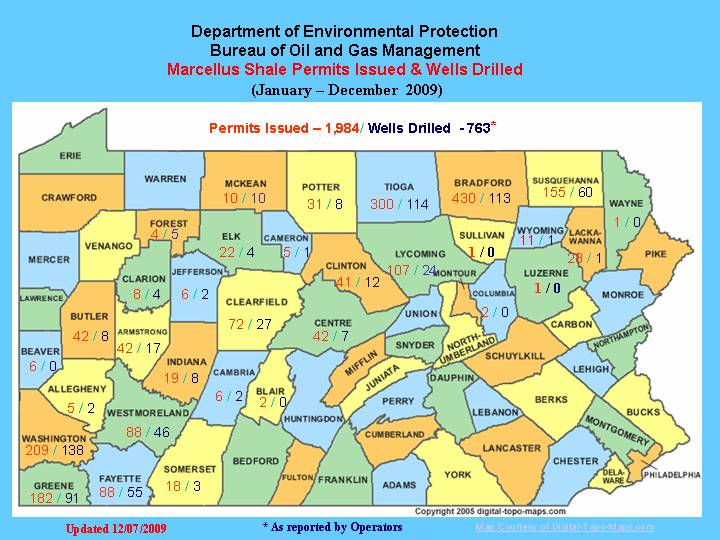
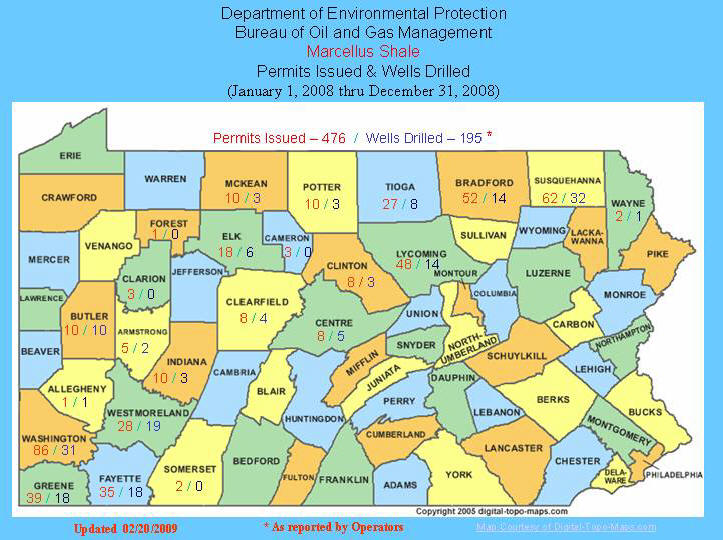
In Pennsylvania, which shares the vast, gas-laden Marcellus shale formation with four other states, drilling is expected to generate 19 million gallons of waste water daily by 2011, according to the state’s Department of Environmental Protection. The water, which carries both natural and human-made toxins and is up to five times as salty as sea water, puts a heavy burden on water treatment plants.

Gas companies have enjoyed a slack environmental leash since the 2005 Energy Policy Act exempted them from regulation under the Safe Drinking Water Act and the Water Pollution Control Act. Bills now stalled in Congress that would re-regulate the industry need broader grassroots support.

Risking our water so we can burn more natural gas will not be the planet’s miracle climate cure. For the U.S. to achieve necessary reductions in greenhouse emissions — estimated at more than 80 percent — will require not more energy production, even if somewhat cleaner, but deep cuts in energy consumption.

Coal must be phased out as quickly as possible, but more gas won’t accomplish that. While electric utilities’ gas consumption doubled from 1996 to 2007, coal use continued its steady climb.

Financier T. Boone Pickens recommends running our vehicles on natural gas. But substituting natural gas for gasoline in all vehicles would cut the nation’s total carbon emissions by less than 9 percent. Converting all gasoline-powered vehicles would consume more natural gas than electric utilities, homes and businesses combined. Consequences for the nation’s water would be disastrous.

Natural gas is being hailed by some, including Pickens, as a high-energy “bridge” to a renewable future, and by others as sufficiently climate-friendly to be a “destination” fuel. But as gas’ environmental drawbacks become more evident, it’s looking more like a bridge to nowhere.

Cox is lead scientist for the Land Institute in Salina, Kan., and wrote this comment for the institute’s Prairie Writers Circle.

DEMAND ACCOUNTABILITY!

Sunday, October 18, 2009

Sierra Club Calls for Ban on Gas Drilling in NYS


On Saturday, October 17, 2009, the Executive Committee of the Atlantic Chapter of the Sierra Club met in Syracuse and passed a resolution proposed by the SC Gas Drilling Task Force. The resolutions calls on the NYS legislature to enact a ban on unconventional gas drilling in NYS.


“WHEREAS extensive environmental and health damages would be caused by horizontal drilling and high pressure hydrofracturing gas extraction techniques due to the contamination of water, soil and air by the toxic chemicals used in drilling and fracturing, and the naturally occurring toxic chemicals brought to the surface from deep in the ground,

“WHEREAS these environmental and human and animal health damages will have damaging economic consequences on residential property values, and on the state’s tourism, agriculture, forestry, winery, real estate development and educational businesses,

“WHEREAS the infrastructure costs of building and repairing roads, water treatment facilities, and other public services would far exceed any economic benefit to local communities, and

“WHEREAS it is yet to be proven that the green house effects of the production and use of natural gas produced by horizontal drilling and hydrofracturing are any less than those of the production and use of coal when the life cycle emissions of natural gas production and the higher impact of methane as a green house gas are taken into account.

“Be It Resolved that the Atlantic Chapter of the Sierra Club calls on the New York State Legislature to enact a ban on permitting gas wells that use horizontal drilling and hydro-fracturing to release gas from tight sand and shale formations such as the Marcellus.”

DEMAND ACCOUNTABILITY!

Thursday, September 17, 2009

Speaking of Climate Change...

Following are strategic excerpts from a provocative view on where we are now, and where we might be heading...

The fallacy of climate activism
Posted 23 Aug 2009
on grist.org by Adam D. Sacks

(Editorializing in red by Splashdown)
In the 20 years since we climate activists began our work in earnest, the state of the climate has become dramatically worse, and the change is accelerating—this despite all of our best efforts. Clearly something is deeply wrong with this picture. What is it that we do not yet know?
What do we have to think and do differently to arrive at urgently different outcomes?[1]

The answers lie not with science, but with culture.

Climate activists are obsessed with greenhouse-gas emissions and concentrations. Since global climate disruption is an effect of greenhouse gases, and a disastrous one, this is understandable. But it is also a mistake.

Such is the fallacy of climate activism[2]: We insist that global warming is merely a consequence of greenhouse-gas emissions. Since it is not, we fail to tell the truth to the public.

I think that there are two serious errors in our perspectives on greenhouse gases:

Global Warming as Symptom

The first error is our failure to understand that greenhouse gases are not a cause but a symptom, and addressing the symptom will do little but leave us with a devil’s sack full of many other symptoms, possibly somewhat less rapidly lethal but lethal nonetheless.

The root cause, the source of the symptoms, is 300 years of our relentlessly exploitative, extractive, and exponentially growing technoculture, against the background of ten millennia of hierarchical and colonial civilizations.[3] This should be no news flash, but the seductive promise of endless growth has grasped all of us civilized folk by the collective throat, led us to expand our population in numbers beyond all reason and to commit genocide of indigenous cultures and destruction of other life on Earth.

To be sure, global climate disruption is the No. 1 symptom. But if planetary warming were to vanish tomorrow, we would still be left with ample catastrophic potential to extinguish many life forms in fairly short order: deforestation; desertification; poisoning of soil, water, air; habitat destruction; overfishing and general decimation of oceans; nuclear waste, depleted uranium, and nuclear weaponry—to name just a few. (While these symptoms exist independently, many are intensified by global warming.)

We will not change course by addressing each of these as separate issues; we have to address root cultural cause.

Beyond Greenhouse Gas Emissions

The second error is our stubborn unwillingness to understand that the battle against greenhouse-gas emissions, as we have currently framed it, is over.

It is absolutely over and we have lost.

We have to say so.

There are three primary components of escalating greenhouse-gas concentrations that are out of our control:

Thirty-Year Lag

The first is that generally speaking the effects we are seeing today, as dire as they are, are the result of atmospheric concentrations of carbon dioxide in the range of only 330 parts per million (ppm), not the result of today’s concentrations of almost 390 ppm. This is primarily a consequence of the vast inertial mass of the oceans, which absorb temperature and carbon dioxide and create a roughly 30-year lag between greenhouse-gas emissions and their effects. We are currently seeing the effects of greenhouse gases emitted before 1980.

...

Positive Feedback Loops

...

It is now clear that several phenomena are self-sustaining, amplifying cycles; for example, melting ice and glaciers, melting tundra and other methane sources, and increasing ocean saturation with carbon dioxide, which leads to increases in atmospheric carbon dioxide. These feedbacks will continue even if we reduce our human emissions to zero—and all of our squiggly lightbulbs, Priuses, wind turbines, Waxman-Markeys, and Copenhagens won’t make one bit of difference. Not that we shouldn’t stop all greenhouse-gas emissions immediately—of course we should—but that’s only a necessity, not nearly a sufficient response.

We need to find the courage to say so.

Non-Linearity

The third component is non-linearity, which means that the effects of rising temperature and atmospheric carbon concentrations may change suddenly and unpredictably. ...

We don’t know where the tipping points—effectively the changes of state—are for such events as the irreversible melting of glaciers, release of trapped methane from tundras and seabeds, carbon saturation of the oceans. Difficult to pin down, tipping points may be long past, or just around the corner. As leading climatologist Jim Hansen has written, “Present knowledge does not permit accurate specification of the dangerous level of human-made GHGs. However, it is much lower than has commonly been assumed. If we have not already passed the dangerous level, the energy infrastructure in place ensures that we will pass it within several decades.”[4]

Evidence of non-linearity is strong, not only from the stunning acceleration of climate change in just the past couple of years, but from the wild behavior of the climate over millions of years, which sometimes changed dramatically within periods as short as a decade.

The most expert scientific investigators have been blindsided by the velocity and extent of recent developments, and the climate models have likewise proved far more conservative than nature itself. Given that scientists have underestimated impacts of even small changes in global temperature, it is understandably difficult to elicit an appropriate public and governmental response.

Beyond the Box

We climate activists have to tread on uncertain ground and rapidly move beyond our current unpleasant but comfortable parts-per-million box. Here are some things we need to say, over and over again, everywhere, in a thousand different ways:

Bitter climate truths are fundamentally bitter cultural truths. Endless growth is an impossibility in the physical world, always—but always—ending in overshot and collapse. Collapse: with a bang or a whimper, most likely both. We are already witnessing it, whether we choose to acknowledge it or not.

(—Mining the Alberta tar sands for oil, mountaintop removal for coal and deep well hydrofracking for natural gas all bear witness to that truth.)

Because of this civilization’s obsession with growth, its demise is 100 percent predictable. We simply cannot go on living this way. Our version of life on earth has come to an end.

Moreover, there are no “free market” or “economic” solutions. And since corporations must have physically impossible endless growth in order to survive, corporate social responsibility is a myth. The only socially responsible act that corporations can take is to dissolve.

We can’t bargain with the forces of nature, trading slightly less harmful trinkets for a fantasied reprieve. Geophysical processes care not one whit for our politics, our economics, our evening meals, our theologies, our love for our children, our plaintive cries of innocence and error.

We can either try to plan the transition, even at this late hour, or the physical forces of the world will do it for us—indeed, they already are. As Alfred Crosby stated in his remarkable book, Ecological Imperialism, mother nature’s ministrations are never gentle.[5]

Telling the Truth

If we climate activists don’t tell the truth as well as we know it—which we have been loathe to do because we ourselves are frightened to speak the words—the public will not respond, notwithstanding all our protestations of urgency.

And contrary to current mainstream climate-activist opinion, contrary to all the pointless “focus groups,” contrary to the endless speculation on “correct framing,” the only way to tell the truth is to tell it. All of it, no matter how terrifying it may be.[6]

It is offensive and condescending for activists to assume that people can’t handle the truth without environmentalists finding a way to make it more palatable. The public is concerned, we vaguely know that something is desperately wrong, and we want to know more so we can try to figure out what to do. The response to An Inconvenient Truth, as tame as that film was in retrospect, should have made it clear that we want to know the truth.

And finally, denial requires a great deal of energy, is emotionally exhausting, fraught with conflict and confusion. Pretending we can save our current way of life derails us and sends us in directions that lead us astray. The sooner we embrace the truth, the sooner we can begin the real work.

Let’s just tell it.

(This is precisely why we need the gas companies to disclose their proprietary formulas... for all that has gone on to now, that contributes to climate change and environmental degradation that subtracts from future potential quality of life, real work is chomping at the bit, demanding our serious attention and real solutions.)

To read the climactic (no pun intended ;) ending to Sack's thesis, including endnotes, CLICK HERE.


DEMAND ACCOUNTABILITY!

SUPPORT FOR THE FRAC ACT CONTINUES TO INCREASE! ADD YOUR VOICE!

IT'S EASY TO JOIN IN!

These 160 national, regional, state and local organizations, including conservation, faith, sportsmen and community organizations, have signed a letter urging members of the joint houses of Congress to co-sponsor S. 1215/ H.R. 2766, the Fracturing Responsibility and Awareness of Chemicals (FRAC) Act.

National Organizations
American Rivers
Center for Food Safety
Earthjustice
Earthworks/Oil and Gas Accountability Project
Environment America
Environmental Working Group
Food & Water Watch
International Center for Technology Assessment
National Alliance for Drilling Reform
National Audubon Society
National Wildlife Federation
Natural Resources Defense Council
Public Citizen's Energy Program
Rural Community Assistance Partnership, Inc.
The Wilderness Society
Trout Unlimited
Waterkeeper Alliance

Regional Organizations
Appalachian Mountain Club
Chesapeake Bay Foundation
Delaware River Greenway Partnership
Delaware Riverkeeper Network
Greater Yellowstone Coalition
Highlands Coalition
Housatonic Valley Association
Midwest Organic and Sustainable Education Service
San Juan Citizens Alliance
Western Environmental Law Center
Western Organization of Resource Councils
WildEarth Guardians

State Organizations
Alabama - Black Warrior Riverkeeper
Arizona - Environment Arizona
Arkansas
Arkansas Conservation Alliance
Citizens Against Resource Exploitation (CARE)
Omni Center for Peace, Justice & Ecology
California
Ballona Network
Californians for Western Wilderness
Environment California
Grassroots Coalition
Colorado
Colorado Environmental Coalition
EcoFlight
Environment Colorado
Grand Valley Citizens Alliance
Majors Ranch Property Owners Association Environmental Impact Committee
Navajo Ranch Clean Water Preservation Committee
North Fork Ranch Landowner's Association
San Luis Valley Ecosystem Council
San Luis Valley Water Protection Coalition
The Citizen's Alliance for Responsible Urban Gas Drilling
Western Colorado Congress
Wilderness Workshop
Connecticut - Environment Connecticut
Florida - Environment Florida
Georgia
Citizens Organized for Pipeline Safety (COPS)
Environment Georgia
Illinois - Environment Illinois
Iowa - Environment Iowa
Louisiana - Lower Mississippi Riverkeeper
Maine - Environment Maine
Maryland - Environment Maryland
Massachusetts - Environment Massachusetts
Michigan
Citizens Against Environmental Destruction
Environment Michigan
Minnesota - Environment Minnesota
Montana - Environment Montana
Northern Plains Resource Council
Nevada - Environment Nevada
New Hampshire - Environment New Hampshire
New Jersey - Environment New Jersey
New Mexico
Blancett Ranches
Common Ground United
Drilling Santa Fe
Environment New Mexico
Gila Resources Information Project
New Mexico Environmental Law Center
New Mexico Wildlife Federation
Velasquez Ranch
New York
Atlantic States Legal Foundation, Inc.
Binghamton Regional Sustainability Coalition
Catskill Citizens for Safe Energy
Catskill Mountainkeeper
Citizens Campaign for the Environment
Environment New York
Environmental Advocates of New York
Hudson Highlands Land Trust
Hudson Riverkeeper
New Yorkers for Sustainable Energy Statewide
Northeast Organic Farming Association of New York, Inc.
NYH2O
Orange County Land Trust
Orange Environment, Inc.
PlanPutnam.Org
Putnam County Coalition to Preserve Open Space
Scenic Hudson
Shaleshock
The Ramapo River Watershed Intermunicipal Council
Theodore Gordon Flyfishers, Inc.
North Carolina - Environment North Carolina
North Dakota - Dakota Resource Council
Ohio
East Shore Unitarian Universalist Church, Environmental Action Group
Environment Ohio
Mentor Lagoons Preservation Committee
Northeast Ohio Gas Accountability Project
Oregon - Environment Oregon
Pennsylvania
Allegheny Defense Project
Berks County Conservancy
Cooks Creek Watershed Association
Damascus Citizens for Sustainability
Foundation for Pennsylvania Watersheds
Gaia Defense League
Green Valleys Association
Juniata Valley Audubon
Mountain Watershed Association
PennEnvironment
Pennsylvania Forest Coalition
Pennsylvania Organization for Watersheds and Rivers
Sagamore Estates Property Owners Association
Schmid & Company, Inc., Consulting Ecologists
Twin & Walker Creeks Watershed Conservancy
Twin and Walker Lakes Communities Coalition
Twin and Walker Lakes Watershed Conservancy
Twin Lake Preserve
Twin Lake Woods Property Owners Association
Twin Lakes Conservancy Inc.
Twin Lakes Property Owners Association
Walker Lake Landowner's Association
Youghiogheny Riverkeeper
Rhode Island - Environment Rhode Island
Texas
Blue Wind Partners
Citizens for Environmental Clean-Up
Environment Texas
Family Area Ministry & Education
Flower Mound Citizens Against Urban Drilling
Fort Worth Citizens Against Neighborhood Drilling Operations (FWCanDo)
Galveston Baykeeper
PARCHED
Texas Oil and Gas Accountability Project
Unity Church of Fort Worth
WE CAN (Working Effectively for Clean Air Now)
Utah Colorado Riverkeeper
Southern Utah Wilderness Alliance
Virginia
Blackwater Nottoway Riverkeeper Program
Environment Virginia
Washington - Environment Washington
West Virginia
Greenbrier River Watershed Association
West Virginia Citizen Action Group
West Virginia Headwaters Waterkeeper
West Virginia Rivers Coalition
West Virginia Surface Owners' Rights Organization
Wetzel County Action Group
Wisconsin - Wisconsin Environment
Wyoming
Biodiversity Conservation Alliance
Clark Resource Council
Equality State Policy Center
Friends of a Legacy
Pavillion Area Concerned Citizens
Powder River Basin Resource Council
Upper Green River Valley Coalition
Wyoming Conservation Voters
Wyoming Outdoor Council

This important legislation would repeal an exemption in the Safe Drinking Water Act (SDWA) for an oil and gas technique called hydraulic fracturing. It would also require public disclosure of the chemicals used in hydraulic fracturing fluids.

According to a Wilderness Society press release: “When it comes to the public’s health, it is not unreasonable to require the oil and gas industry to disclose the toxic chemicals they use in our local communities,” said Rep. Diana DeGette (D-CO). “The oil and gas industry has one of the only exceptions under the Safe Drinking Water Act that frees them from federal oversight and disclosure. With people getting sick from contaminated water sources potentially due to frac’ing, the public’s safety is paramount.” Rep. DeGette introduced the Fracturing Responsibility and Awareness of Chemicals Act (or “FRAC Act”) in the House with Rep. Maurice Hinchey (D-NY) and Rep. Jared Polis (D-CO). Sens. Bob Casey (D-PA) and Chuck Schumer (D-NY) introduced the bill in the Senate.

“While hydraulic fracturing has been used for decades, the chemicals used in this process are known toxins that inherently present risks to drinking water supplies," said Rep. Hinchey. “Natural gas drilling certainly has its place as part of a comprehensive energy plan, but it must be done in a way that does not jeopardize public health and put the environment at risk for decades and centuries to come.”

Join these organizations and urge your senators and representatives
to support the FRAC Act!
It's easy... CLICK HERE and you're almost done!

According to Bruce Baizel, senior staff attorney with Earthworks’ Oil & Gas Accountability Project, based in Durango, Colorado, ... recent state hearings in Colorado revealed that the oil and gas industry has caused more than 300 instances of contaminated water in Colorado since 2003 and more than 700 instances in New Mexico, and no one has thoroughly investigated whether contamination is linked to hydraulic fracturing. Citizens in other states are also increasingly impacted and concerned that state regulations, investigations and response to complaints are not sufficient. ...

“My water well has been contaminated, and I believe it’s because EnCana drilled and fracked gas wells close to my well,” said Louis Meeks. “The state has done nothing but watch, while EnCana contaminated the ground water where we get our drinking water. EnCana ruined my well and now that they can’t fix it, they’ve walked away. That’s why we need federal oversight.”

“With increasing concern about climate change, it’s clear that natural gas is positioned to play a significant role in the nation’s energy picture,” said The Wilderness Society’s Dave Alberswerth. “But we need to improve the way natural gas is currently developed, so it doesn’t pollute water supplies and our atmosphere or damage wildlife habitat. Natural gas will not be a viable ‘bridge fuel’ from a health and environment perspective until we factor in the true environmental cost of its development and begin to use safe, twenty-first century technologies.”

For the complete press release, including links to further resources and pdf files, CLICK HERE.

DEMAND ACCOUNTABILITY!

RURAL IMPACT VIDEOS, 6 parts

Natural gas development in Colorado, the impacts on communities, environment and public health. A primer for public servants and residents of counties that care for their lifestyles.

Drilling for Gas in Bradford County, PA ... Listen!

Cattle Drinking Drilling Waste!

EPA... FDA... Hello? How many different ways are we going to have to eat this? ... Thank you TXSharon for all you do! ... Stay tuned in at http://txsharon.blogspot.com

Landfarms

A film by Txsharon. Thank you Sharon for all you do. Click HERE to read the complete article on Bluedaze: Landfarms: Spreading Toxic Drilling Waste on Farmland

SkyTruth: Upper Green River Valley - A View From Above