Showing posts with label SUSPICIOUS ACTIVITY. Show all posts

Wednesday, March 31, 2010

Natural Gas Drilling Tip Line

EPA's Mid-Atlantic Region has a natural gas drilling tip line for reporting dumping and other illegal or suspicious hauling and/or disposal activities.

• Tip line number (toll free): 877-919-4372 (877-919-4EPA)

• Tip email address: eyesondrilling@epa.gov

• Tip mailing address:
EPA Region 3
1650 Arch Street (3CEOO)
Philadelphia, PA 19103-2029

Documenting Suspicious Activity

To the extent possible, record:

• Location of the event

• Date of the event

• Time of the event

• Who, if anyone you interacted with during the event

Photos and videos are great ways to document observations. Be sure to record the date and time the photo or video was taken. Email your digital files, or mail your photographic prints, video cassettes, or CD-ROM disks to EPA using the contact information above.

When describing what you observed, include:

• Activity taking place, including description of equipment and materials involved

• Descriptions of vehicles
- Color
- Company name or logo
- License plate number
- Type of vehicle

• Destination of discharge (physical location and stream name, if known)

• Environmental impacts: discoloration, dying vegetation, dead fish or other wildlife

Thank you for reporting this information to EPA.

.....................................................................................

Reporting Environmental Concerns to Pennsylvania's Dept. of Environmental Protection

The Pennsylvania DEP site for Environmental Complaints - Northeast Region:
http://www.depweb.state.pa.us/portal/server.pt/community/northeast_regional_office/13779/environmental_complaints/617080

• Pennsylvania DEP Environmental Complaint Form:
https://www.logiforms.com/formdata/user_forms/23785_4145344/76918/

• Environmental Cleanup Hotline: 570 820-4902

Environmental Program Manager: Ron Brezinski

DEMAND ACCOUNTABILITY!

Wednesday, January 27, 2010

More about EPA's "Eyes on Drilling" Tipline...

PHILADELPHIA (January 26, 2010) - The U.S. Environmental Protection
Agency ... announced the creation of the “Eyes on Drilling” tipline
for citizens to report non-emergency suspicious activity related to oil
and natural gas development.

The agency is asking citizens to call 1-877-919-4EPA (toll free) if they observe what appears to be illegal disposal of wastes or other suspicious activity. Anyone may also send reports by email to
eyesondrilling@epa.gov. Citizens may provide tips anonymously if they don’t want to identify themselves.
In the event of an emergency, such as a spill or release of hazardous material, including oil, to the environment, citizens are advised to call the National Response Center at 1-800-424-8802.
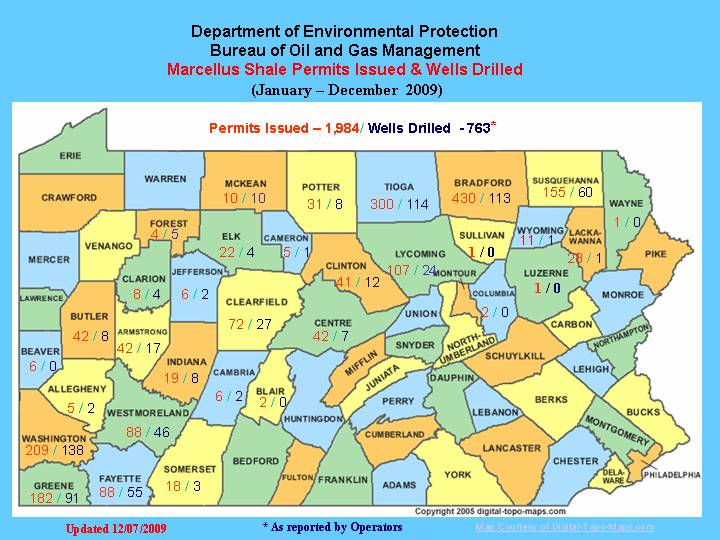
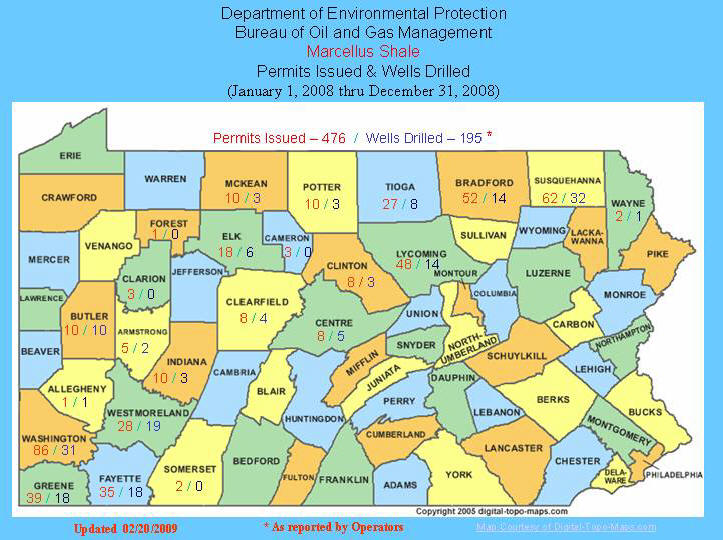
Public concern about the environmental impacts of oil and natural gas drilling has increased in recent months, particularly regarding development of the Marcellus Shale formation where a significant amount of activity is occurring. While EPA doesn’t grant permits for oil and gas drilling operations, there are EPA regulations which may apply to the storage of petroleum products and drilling fluids. The agency is also very concerned about the proper disposal of waste products, and protecting air and water resources.
EPA wants to get a better understanding of what people are experiencing and observing as a result of these drilling activities. The information collected may also be useful in investigating industry practices.
The agency works closely with state and local officials, as well as industry and public interest groups, to ensure that oil and natural gas drilling occurs in a manner which is protective of human health and the environment and complies with applicable laws. The agency is also counting on concerned citizens to report unusual or suspicious activity related to drilling operations.
EPA is asking citizens to report the location, time and date of such activity, as well as the materials, equipment and vehicles involved and any observable environmental impacts.
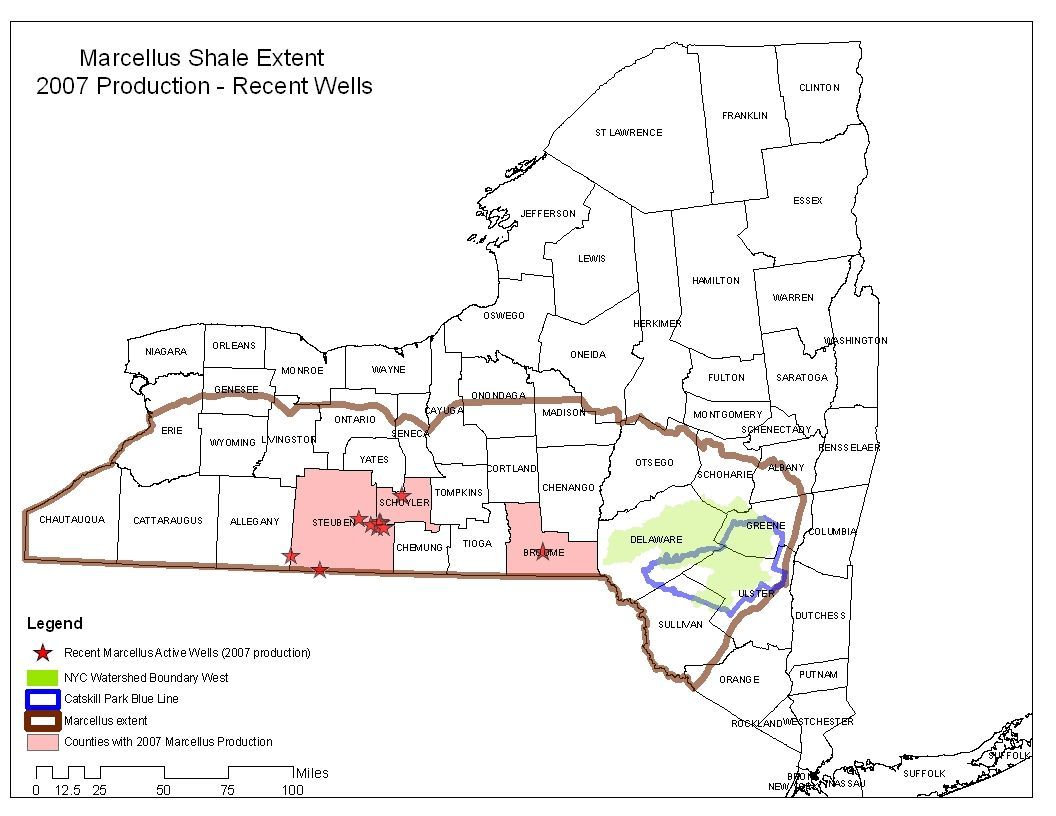
The Marcellus Shale geologic formation contains one of the largest mostly untapped reserves of natural gas in the United States. It underlies significant portions of Pennsylvania, West Virginia, Ohio, and New York, and smaller portions of Tennessee, Virginia, Maryland, and Kentucky.
Interest in developing Marcellus Shale has increased because recent improvements in natural gas extraction technology and higher energy prices now make recovering the gas more profitable.

Operators produce this gas through a process called hydraulic fracturing (fracking). Fracking requires drilling a well thousands of feet below the land’s surface and pumping down the well under pressure millions of gallons of water, sand, and chemicals to fracture the shale.

The process allows the gas trapped in the formation to flow to the well bore. Approximately 20 to 30 percent of the fluid flows back to the surface. This “flowback” fluid consists of fracking fluid and brines which contain dissolved minerals from the formation.

Operators are urged to recycle their flowback water for reuse in the fracking process, but some of the flowback is taken offsite for disposal. Chemicals used in the process are often stored on-site.
Spills can occur when utilizing these chemicals or when transporting or storing wastewater, which can result in the contamination of surface water or ground water, which is used for many purposes including drinking water.

Instructions for the tipline can be found at:
http://www.epa..gov/region03/marcellus_shale/tipline.htm

DEMAND ACCOUNTABILITY!

Tuesday, January 26, 2010

1-877-919-4EPA

US sets up HOTLINE for natgas drilling complaints
Tue Jan 26, 2010
By Ayesha Rascoe
REUTERS

WASHINGTON - The U.S. Environmental Protection Agency has set up a hotline to address public concerns that water supplies may be endangered by a drilling practice used to extract natural gas from rock formations, the agency said on Tuesday.

The use of hydraulic fracturing, or fracking, for shale gas production has drawn fire from environmentalists and neighbors of drilling operations who complain the method has contaminated well water and made people sick.

"We wanted to make sure that we had a central point of contact where these calls can come in and make sure they're responded to and handled appropriately," said David Sternberg, a spokesman in the EPA's Mid-Atlantic office.

Fracking involves injecting water, sand and chemicals into rock formations at high pressure to make oil and natural gas flow more freely. The practice is essential to tapping shale gas, which has significantly boosted U.S. gas output.

The agency said citizens should call 1-877-919-4EPA if they see any illegal disposal of wastes or other suspicious activity by oil and natural gas producers.

Information collected from the hotline may also be "useful in investigating industry practices," EPA said.

...
LINK.

DEMAND ACCOUNTABILITY!

RURAL IMPACT VIDEOS, 6 parts

Natural gas development in Colorado, the impacts on communities, environment and public health. A primer for public servants and residents of counties that care for their lifestyles.

Drilling for Gas in Bradford County, PA ... Listen!

Cattle Drinking Drilling Waste!

EPA... FDA... Hello? How many different ways are we going to have to eat this? ... Thank you TXSharon for all you do! ... Stay tuned in at http://txsharon.blogspot.com

Landfarms

A film by Txsharon. Thank you Sharon for all you do. Click HERE to read the complete article on Bluedaze: Landfarms: Spreading Toxic Drilling Waste on Farmland

SkyTruth: Upper Green River Valley - A View From Above