How Neutral Is The Potential Gas Committee?by Adam Federman, Contributing Writer, Earth Island JournalThe NYT Tells Only Half The Story
An article published last week in the New York Times (“Estimate Places Natural Gas Reserves 35% Higher”) extols the potential virtues of a natural gas boom and, in particular, new technologies that have made it possible to profitably extract that gas from shale formations in the United States. The article reads like an industry power point presentation
(which is why you didn't read it here) and, though it mentions environmental concerns (“Some environmental groups fear that hydraulic fracturing will pollute drinking water”), does not quote a single critic of the industry, glosses over the details of hydraulic fracturing, and trumpets the line that natural gas is a clean alternative to fossil fuels.
While natural gas is relatively clean burning compared to coal and oil, the process of removing it from the earth is far from what most would consider clean or environmentally sound. Moreover, the impact of hydraulic fracturing on the environment remains highly controversial.
According to Catskill Citizens for Safe Energy, a small environmental organization in New York State, “Gas extraction, particularly shale gas extraction, is a dirty and destructive business that degrades our environment. It's a daunting task, but somehow we have to make both the public and the politicians aware that the environmental damage wreaked by gas extraction is an important part of the equation that has to be considered as we chart our energy course for the future.”
The New York Times, rather than present the arguments of those who are opposed to opening up certain areas to natural gas drilling, relies almost entirely on industry insiders and those connected with the Potential Gas Committee (PGC), a group of “academics and industry experts” supported by the Potential Gas Agency at the Colorado School of Mines. Created in the 1960s, the Potential Gas Committee issues a review of the nation’s gas reserves every two years. This year they’ve made headlines with the estimate that the United States has 35 percent more natural gas reserves than previously thought. The Times article ran the day before the Committee’s report was released and fails to explore its connections to the gas industry, identifying it simply as “the authority on gas supplies.”
According to their website, the Committee currently has 105 members who contribute their time pro bono (“typically after work and on weekends”). They are primarily geologists and engineers “engaged in exploration for and development of natural gas.”
Though sales from the Committee’s reports cover some internal costs, the rest of the group’s funding comes in the form of “strings-free” contributions from a “diverse array of companies, organizations, and individuals that for whatever reason are interested in the Nation’s future supply of natural gas.” Given the actual makeup of the Committee’s sponsors, the phrase “for whatever reason” is rather telling.
Here are a few of the organizations that provide “strings-free” funding: Chesapeake Energy Corporation (one of the big players drilling in the Marcellus Shale), The Houston Exploration Company, Cabot Oil & Gas Corporation (also involved in Marcellus Shale drilling), Wolverine Gas and Oil Corporation, The American Gas Association, Duke Energy Field Services, GASCO Energy, Black Diamond Energy, White Eagle Exploration Inc., among others. Committee volunteers are affiliated (or have been affiliated) with many of the big industry players such as Halliburton, Schlumberger, Chevron, Shell, and Cabot Oil & Gas. Other organizations represented include the American Gas Association, The American Association of Professional Landmen, the World Petroleum Congress, and the World Energy Council.
Not surprisingly, on the day the report was released, the American Petroleum Institute issued its own statement arguing that the Committee’s work, “underscores the vital role of hydraulic fracturing, a production technology needed to develop shale gas,” even though the report has little to say on the issue of hydraulic fracturing. “Without hydraulic fracturing,” the API continues, “these crucial American-owned natural gas resources would likely remain in the ground.
Although the API is listed as a member affiliated with the Committee on the Committee’s website (http://geology.mines.edu/pgc/members.html), API Media Relations Manager Karen Matusic said in an email that they are “not a member of the Potential Gas Committee.” According to the PGC the API has been affiliated in the past but is not currently a member. In their statement, the API goes on to note that access to closed federal lands and offshore federal waters could help address global warming.
Times reporter Jad Mouawad echoes that argument, writing that, “The finding raises the possibility that natural gas could emerge as a critical transition fuel that could help to battle global warming.” He then briefly mentions the role hydraulic fracturing has played in opening up shale formations and describes the process as one in which “water is injected at high pressure into wells to shatter rocks deep underground, helping to release trapped gas [italics added].” Of course, that is only part of the story.*
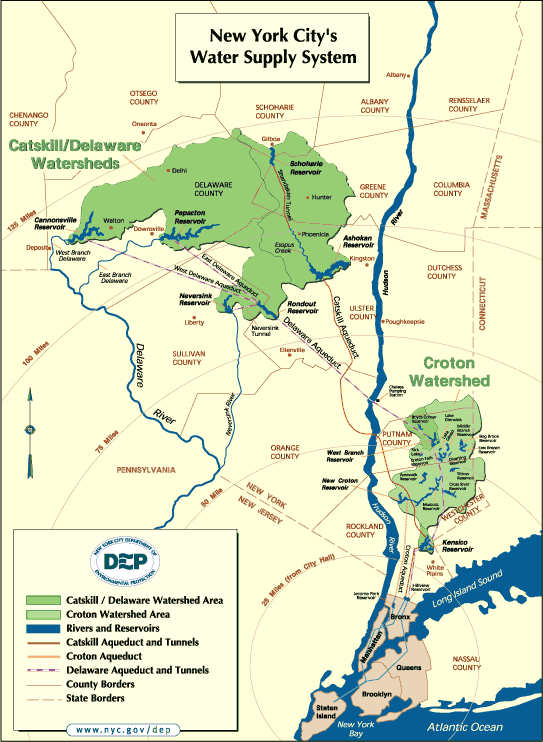
*Time and again, it's the only part industry and vested interests like to tell.Hydraulic fracturing involves not only injecting millions of gallons of water into wells but sand and hundreds of chemicals, many of which have not been made public. The industry’s insistence that the chemicals used remain a trade secret has only contributed to skepticism among critics and environmentalists. If the process is clean and does not pose a threat to drinking water supplies, then what does the industry have to hide? If, as the industry claims, contamination of ground water and wells has not occurred why not release the list of chemicals it uses in fracking for public review?Beyond the chemicals used in hydraulic fracturing there are many other environmental issues that often go unmentioned. The massive wells required for hydraulic fracturing can stretch for over a half-mile in every direction. In the Catskills (where part of the Marcellus Shale is located) this is of particular concern because forests and farmland stand in the way of gas extraction. The region, much of which is designated forever wild, is mountainous and prone to flooding. Wetlands, the New York City Watershed (the largest unfiltered drinking water supply in the country), and the Upper Delaware Scenic area and Recreational River are also at risk.
Each time a well is fracked, between two and nine million gallons of water are needed. Each well may be fracked up to 6 or more times. The question of where the water will come from and where the wastewater (or produced water) will be stored is also an issue that must be addressed.
There have been several cases of water contamination from poorly stored wastewater, which contains not only the chemicals injected into the well but also radioactive materials and heavy metals.__________________________________________________________
A U.S. Geological Survey document,
Water Resources and Natural Gas Production from the Marcellus Shale, by Daniel J. Soeder and William M. Kappel concludes:
"Because of questions related to water supply and wastewater disposal, however, many state agencies have been cautious about granting permits, and some states have placed moratoriums on drilling until these issues are resolved. At the same time, gas companie
$, driller
$, and landowner
$ are eager to move forward and develop the re
$ource.
While the technology of drilling directional boreholes, and the use of sophisticated hydraulic fracturing processes to extract gas resources from tight rock have improved over the past few decades, the knowledge of how this extraction might affect water resources has not kept pace. Agencies that manage and protect water resources could benefit from a better understanding of the impacts that drilling and stimulating Marcellus Shale wells might have on water supplies, and a clearer idea of the options for wastewater disposal."
__________________________________________________________
The New York Times article also leaves out what may be the most important development surrounding natural gas exploration in recent weeks: the possibility that the EPA will review its policy on hydraulic fracturing.
__________________________________________________________
Click HERE to Read: Safe Drinking Water Act Should Cover Hydraulic Fracturing
Prepared by Earthworks/OGAP and Environmental Working Group
__________________________________________________________
EPA head Lisa Jackson recently told NY Rep. Maurice Hinchey that she thinks it would be a good idea for the agency to review environmental risks associated with hydraulic fracturing. Colorado Representatives Diana DeGette and Jared Polis, along with Hinchey, have recently introduced a bill (the FRAC Act) that would close a loophole in the Safe Drinking Water Act of 2005 (the Halliburton Loophole) that exempted hydraulic fracturing from regulatory oversight. A matching Senate version has been supported by Bob Casey and Chuck Schumer.
__________________________________________________________Urge your Senators and Representatives to vote in favor of the FRAC Act, removing exemptions for hydraulic fracturing from the Safe Drinking Water Act! WRITE TODAY! For contact info, see sidebar on the left.__________________________________________________________“When it comes to protecting the public’s health, it’s not unreasonable to require these companies to disclose the chemicals they are using in our communities – especially near our water sources,” said DeGette in a June 9 statement. “Our bill simply closes an unconscionable Bush-Cheney loophole by requiring the oil and gas industry to follow the same rules as everyone else.”
__________________________________________________________Urge your Senators and Representatives to vote in favor of the FRAC Act, removing exemptions for hydraulic fracturing from the Safe Drinking Water Act! WRITE TODAY! For contact info, see sidebar on the left. __________________________________________________________In just a year the industry’s hopes have taken a sharp turn. As congress moves to increase oversight, the price of natural gas has plummeted from record high levels last summer when the rush was at its peak. Today the price of gas per thousand cubic feet is just above $4. For extraction to be profitable the price needs to be somewhere between $4 and $6. A year ago it was hovering around $13.
“The best thing in our favor is the economic downturn because this is not a cheap process,” Bruce Ferguson, a member of Catskill Citizens, told me a couple of months ago. “Hydraulic fracturing is a very expensive way to extract gas. You're not putting a straw into the ground and sucking out the gas. If the price of gas remains low enough, if alternative technologies come online quickly, the incentive to go ahead with this could diminish. In the meantime public awareness is growing by the day.”
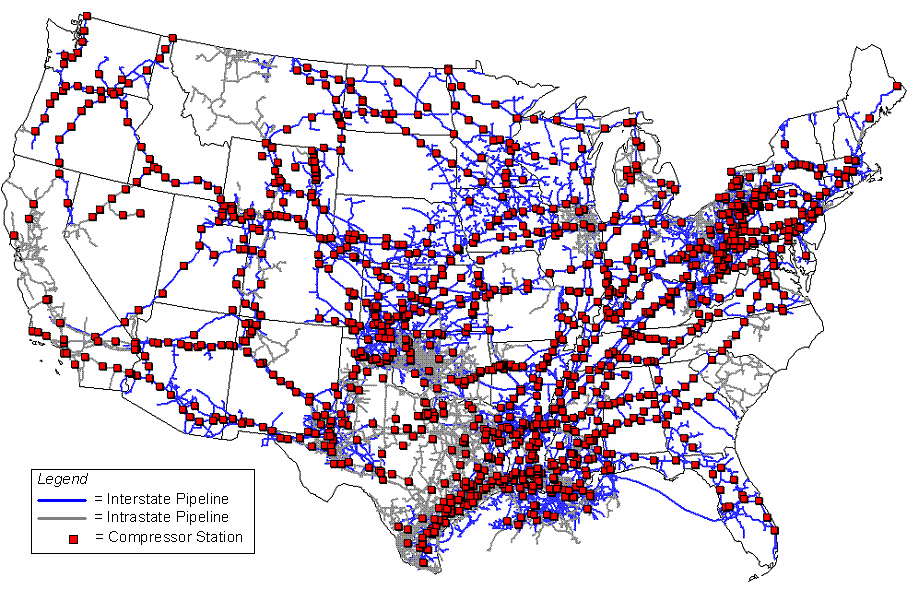
Even as public awareness grows, however, the gas industry is pushing hard to convince Americans that natural gas is the solution to our energy problems and that closing the Halliburton Loophole will have potentially devastating consequences. It’s clean, they say, and it’s ours. We reduce our dependence on foreign oil and at the same time “battle global warming,” as the NYT puts it in rather grandiose fashion.
In the light of day however, extracting does contribute to global warming and is already having devastating consequences.
 This hydraulic fracturing stimulation on a Marcellus Shale gas well showsthe amount of diesel powered and storage equipment involved.
Rather than explain to its readers why the Potential Gas Committee (or its member volunteers) might have a vested interested in encouraging hydraulic fracturing as a new energy policy is hashed out in congress, the paper of record simply states that for “advocates of the gas industry, the report vindicates the potential of natural gas in the economy.” Then they close by quoting the managing director for policy analysis at the American Gas Association, Chris McGill, failing to mention that it is one of the institutions listed among the Committee’s volunteer members. Not only that but McGill himself, according to Committee program assistant Linda D’Epagnier is an observer with the PGC and, in his role (he’s been involved for several years), handles all press releases and acts more or less as a PR official for the organization. He’s also a Director on the board of the Potential Gas Agency. That’s a fact the Times should have pointed out.
(Red italic editorializing by Splashdown.) DEMAND ACCOUNTABILITY!









 Posts


