
Showing posts with label HALLIBURTON. Show all posts

Monday, April 26, 2010

Chorus of operators calling for frac fluid disclosure grows

(But What Does It Mean???)
Fort Worth Business Press
By JOHN-LAURENT TRONCHE
April 26, 2010


When the nation’s largest oil and gas exploration and production company offered its support for making the chemicals used in hydraulic fracturing public, concerned U.S. residents who want transparency got perhaps their biggest boost from a somewhat unlikely source.

In a U.S. Securities and Exchange Commission filing, Irving-based ExxonMobil Corp. said it would support the disclosure of chemicals used in hydraulic fracturing. ...the injection of millions of gallons of water, sand and chemicals – so far not publicly disclosed by oilfield services companies – into the ground to break up porous shale and allow for enhanced recovery of natural gas and oil.

“ExxonMobil supports the disclosure of the identity of the ingredients being used in fracturing fluids at each site,” according to the April 13 filing. “While we understand the intellectual property concerns of service companies when it comes to disclosing the proprietary formulations in their exact amounts, we believe the concerns of community members can be alleviated by the disclosure of all ingredients used in these fluids.”

The company’s stance is seen as a move aimed at curbing possible federal regulation of fracing, which so far has been overseen by state agencies, such as the Railroad Commission of Texas. ExxonMobil’s statement also echoes similar stands by two other companies: Chesapeake Energy Corp. and Range Resources Corp., whose top executives last year offered their support for disclosure.

Although several big names support disclosure, transparency isn’t their decision to make. The oilfield services companies perform the process for the operators, and therefore must choose to make the chemicals public information, which isn’t likely.

...

The top three firms – Halliburton, Schlumberger and BJ Services Co. – either did not return multiple requests for comment by the Business Press’ time of publication or skirted the question of whether they would consider disclosing the chemicals used.

ExxonMobil can’t force services companies to disclose, said Lisa K. Vaughn, a partner in the Fort Worth office of Shannon, Gracey, Ratliff & Miller LLP, “but as they and the other bigwigs of the world put more pressure on the suppliers to disclose that might lead the,” push toward disclosure.

Operators “are beginning to feel legislative pressure against their potential environmental contaminants,” she added...

Insistence on safety

A driving force behind the move toward disclosure is public pressure.

“Part of what’s going on is this recognition by the oil and gas companies that there’s this fear by the public about what’s in the frac fluid, and this fear is caused by not knowing,” Vaughn said.

Despite public fears, the Railroad Commission of Texas insists the process is safe and effectively regulated.

Yadda yadda yadda:

“Even with the recent intense hydraulic fracing activity in the Barnett Shale of more than 13,000 gas wells, there have been no documented cases of groundwater pollution caused by fracing in Texas,” said Ramona Nye, a commission spokeswoman. “One reason for this is that the commission has strict well construction requirements that require several layers of steel casings and cement to protect groundwater. Another reason is that most of the fracing that is occurring, such as in the Barnett Shale, for example, occurs in geologically confined formations that are more than a mile deep. In contrast, the groundwater in the Barnett Shale region goes no deeper than 500 feet.

Meanwhile...

Although the Texas officials say no contamination has yet occurred, last week, about 135 Caddo Parish, La., families were evacuated after an EXCO Resources Inc. drilling crew reported “irregular pressure readings and signs of natural gas in the air” at a well site, according to KSLA-TV, a local news organization. Two wells of the three wells at the Dallas company’s site were cemented shut as a result; however, testing of private water wells also revealed at least 10 wells contaminated with natural gas, according to the Louisiana Department of Environmental Quality.

Little data available because chemicals untracked

The Railroad Commission of Texas does not require operators to list the specific chemicals used in their frac jobs; however, in the commission’s Form G-1, required for each well drilled, companies fill out how much water and sand they used, according to a commission spokeswoman. For example: 2.3 million barrels of water (which would include the chemicals) and 250,000 pounds of sand. (Each well’s drilling data is accessible to the public via the commission’s Web site.)

While the commission does not track how many wells drilled are fractured, “it is safe to assume that all of the more than 13,000 wells in the Barnett Shale have been hydraulically fractured at least once,” Nye said.

Both the state agency and the federal government are in the dark. The U.S. Occupational Safety and Health Administration requires companies to keep a list of the chemicals used at drill sites in case of accidental spills or an incident in which someone is exposed to the chemicals; however, OSHA itself does not have the information.

Oilfield services companies have resisted disclosure because they argue their formulas are proprietary.

“It’s the same concept as Coca-Cola – water, sugar and natural flavors,” said Vaughn, adding it’s that last vague component other companies want to know.

Couldn’t companies patent their recipes?

“It can be hard to get intellectual property protection for the recipes they’re using because those recipes can change day to day, week to week (and) site to site due to all these different variables,” she said.

Although companies claim their specific formulas are trade secrets, operators have sought to dispel concerns by shedding some light on the process; for example, Chesapeake Energy created a Web site, hydraulicfracturing.com, that reveals some of the chemicals – though not the amounts in which they’re used.

“What is not fully disclosed are the specific quantities of each chemical used in the blending of frac mixtures on location. That varies, well-by-well, and is proprietary to the service providers,” according to a company spokesman. “We have encouraged the providers to be more transparent with this information but we respect that they are in a highly competitive industry and have trade secrets to protect.”

And this is, of course, more important than public health and safety or protecting our most vital, irreplacable resource (water), among other environmental concerns.

Possible federal regulation

Last summer, four legislators from Colorado, New York and Pennsylvania introduced a bill aimed at giving the federal government oversight into hydraulic fracturing, arguing a process being used in more than half of the United States requires even-handed regulation across the board. Industry groups counter the bill would result in thousands of lost jobs and billions in unrealized revenue.

The FRAC Act, or Fracturing Responsibility and Awareness of Chemicals Act, would amend the Safe Drinking Water Act of 1974 to require oil and gas companies to disclose the chemicals they use in their hydraulic fracturing processes.

If companies opt to disclose, it’s likely it would be an all or none approach, because if just one company offered its formula it would put itself “at a business disadvantage,” Thompson said. “If there’s governmental regulation, then they’re all going to have to disclose.”

ExxonMobil has an interest in thwarting federal oversight; a stipulation in its proposed about $30 billion acquisition of Fort Worth’s XTO Energy Inc. says the former can walk away from the deal if Congress passes federal regulation.

Not all operators support disclosure

While some companies have offered their support for disclosure, EOG Resources Inc. will not. A March 25 proxy statement includes a proposal, expected to be put forth April 28 at the company’s annual meeting by a group of stockholders owning about 245,000 shares, that calls for a study into using “less toxic fracturing fluids, recycling or reuse of waste fluids and other structural or procedural strategies to reduce fracturing hazards.”

EOG Resources’ Board of Directors opposes the proposal, calling the process “a well-established reservoir stimulation technique” that poses “minimal impact to the environment and to human health.” The board recommends shareholders vote against the proposal. (An EOG Resources spokeswoman said the company would not provide further comment.)

A virtually identical proposal in ExxonMobil’s proxy statement, submitted by San Francisco’s The Park Foundation, also will receive a no vote by the company’s board of directors; however, as previously noted, ExxonMobil does support disclosure. (It's an easy public relations ploy... looks good, costs nothing.)

Editorial comments by Splashdown in red.

LINK

DEMAND ACCOUNTABILITY!

Saturday, February 20, 2010

Congress Launches Investigation Into Gas Drilling Practices

Sabrina Shankman and Abrahm Lustgarten
ProPublica

February 19, 2010

Rep. Henry Waxman announced Thursday that the House Committee on Energy and Commerce, which he chairs, is launching an investigation into potential environmental impacts from hydraulic fracturing. (Tim Sloan/AFP/Getty Images)Two of the largest companies involved in natural gas drilling have acknowledged pumping hundreds of thousands of gallons of diesel-based fluids into the ground in the process of hydraulic fracturing, raising further concerns that existing state and federal regulations don’t adequately protect drinking water from drilling.
Rep. Henry A. Waxman, D-Calif., who released the information in a statement Thursday, announced that the House Committee on Energy and Commerce, which he chairs, is launching an investigation into potential environmental impacts from hydraulic fracturing.

The process, which forces highly pressurized water, sand and chemicals into rock to release the gas and oil locked inside, gives drillers unprecedented access to deeply buried gas deposits and vastly increases the country’s known energy reserves. But as ProPublica has detailed in more than 60 articles, the process comes with risks. The fluids used in hydraulic fracturing are laced with chemicals — some of which are known carcinogens. And because the process is exempt from most federal oversight, it is overseen by state agencies that are spread thin and have widely varying regulations.

In 2004, the U.S. Environmental Protection Agency examined hydraulic fracturing and determined it can be safe as long as diesel fuel isn’t added to the drilling fluids. The agency based its decision in part on a non-binding agreement it struck with the three largest drilling service companies — Halliburton, Schlumberger and B.J. Services — to stop using diesel. But the agreement applied only to gas drilling in a specific type of geologic formation: shallow coal deposits. The EPA study has since been widely criticized.

The information obtained by Waxman’s group shows that B.J. Services violated that agreement and that Halliburton continued to use diesel in other geologic formations not governed by the agreement. All three companies acknowledged using other potentially harmful chemicals, such as benzene, toluene, ethylbenzene and xylene.

A memo (PDF) released by the Energy and Commerce Committee on Thursday said B.J. Services acknowledged that between 2005 and 2007 it injected 2,500 gallons of diesel-based fuels into coal bed methane wells.

INDUSTRY SPIN:

Jeff Smith, CFO for B.J. Services, told ProPublica the incidents in which diesel was used were isolated, and that the company has been vigilant in making sure that it has not been used since.

“The company has taken this very seriously,” he said.

The memo said Halliburton reported using more than 807,000 gallons of diesel-based fuel to fracture wells in 15 states during the three-year period. But in a statement released Thursday night Halliburton said any suggestion that it had violated the agreement was “completely inaccurate,” because none of the fuel was used in coal bed methane wells.

“Halliburton is firmly committed to full compliance” with the agreement, the statement said.

The information about the companies came from an investigation Waxman launched when he was chairman of the House Committee on Oversight and Government Reform during the last Congress.

As part of the new investigation by the Energy and Commerce Committee, Waxman and subcommittee chairman Edward Markey, D-Mass., sent letters to eight companies, including Halliburton, B.J. Services and Schlumberger, asking for more information about the drilling process and the chemicals it requires. The five other companies — Frac Tech Services, Superior Well Services, Universal Well Services, Sanjel Corp. and Calfrac Well Services – are smaller companies that make up a growing share of the market. They are not included in the 2003 memorandum of agreement with the EPA.

“As the use of these technologies expands, there needs to be oversight to ensure that their use does not threaten the public health of nearby communities,” said the memo from Waxman and Markey.

The letters ask the companies for detailed information, including documentation of all the wells they hydraulically fractured from 2007 to 2009, the proximity of those wells to underground drinking water sources, the volumes and types of chemicals used in the process, and any health and environmental effects of the drilling. If the companies comply, the committee will have created the most complete picture to date of hydraulic fracturing.

Click for pdf files of the letters (LINK):

Smith said B.J. Services will fully respond to the request. When asked if the company has used petroleum distillates and benzene in its drilling process, he said, “I’m not going to get into the details in terms of what the chemicals are.” He said that the information will be disclosed in the company’s response to the committee’s letter.

Halliburton also said it will respond to the committee’s request for information.

Schlumberger spokesman Stephen Harris said in an e-mail that officials at the company “have received the Committee’s request and are reviewing it,” but he declined to comment further.

LINK TO ARTICLE

Commentary in red and letter inserts by Splashdown.

DEMAND ACCOUNTABILITY!

Wednesday, November 4, 2009

The Halliburton Loophole

The New York Times
EDITORIAL
Published: November 2, 2009


Among the many dubious provisions in the 2005 energy bill was one dubbed the Halliburton loophole, which was inserted at the behest of — you guessed it — then-Vice President Dick Cheney, a former chief executive of Halliburton.

It stripped the Environmental Protection Agency of its authority to regulate a drilling process called hydraulic fracturing. Invented by Halliburton in the 1940s, it involves injecting a mixture of water, sand and chemicals, some of them toxic, into underground rock formations to blast them open and release natural gas.

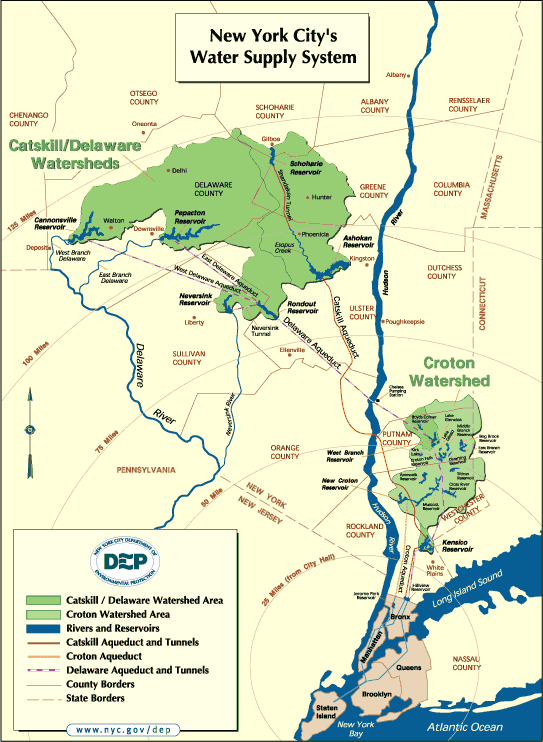
Hydraulic fracturing has been implicated in a growing number of water pollution cases across the country. It has become especially controversial in New York, where regulators are eager to clear the way for drilling in the New York City watershed, potentially imperiling the city’s water supply. Thankfully, the main company involved has now decided not to go ahead.

The safety of the nation’s water supply should not have to rely on luck or the public relations talents of the oil and gas industry.

Thanks in part to two New Yorkers — Representative Maurice Hinchey and Senator Charles Schumer — Congress last week approved a bill that asks the E.P.A. to conduct a new study on the risks of hydraulic fracturing. An agency study in 2004 whitewashed the industry and was dismissed by experts as superficial and politically motivated. This time Congress is demanding “a transparent, peer-reviewed process.”

An even more important bill is waiting in the wings. Cumbersomely named the Fracturing Responsibility and Awareness of Chemicals Act, it would close the loophole and restore the E.P.A.’s rightful authority to regulate hydraulic fracturing. It would also require the oil and gas industry to disclose the chemicals they use.

The industry argues that the chemicals are proprietary secrets and that disclosing them would hurt their competitiveness. It also argues that the process is basically safe and that regulating it would deter domestic production. But if hydraulic fracturing is as safe as the industry says it is, why should it fear regulation?

DEMAND ACCOUNTABILITY!

Wednesday, October 14, 2009

PA DEP Reviews Cabot's Drilling Plan

According to a report in today's Press & Sun-Bulletin by Tom Wilber, online at pressconnects.com, the PA DEP is currently reviewing Cabot Oil & Gas' plans for safe hydraulic fracturing operations in Dimock, and one hopes, wherever they plan to drill and frack wells in Pennsylvania.
The Cabot plan is under review by the Department of Environmental Protection, said Daniel T. Spadoni, a spokesman for the agency. No fines have been issued, he added, although that remains a legal option.

The DEP ordered Cabot to stop fracking operations and submit plans to improve operations after three separate spills late last month at the Heitsman well in a rural area just south of Montrose. About 8,000 gallons of a carcinogenic chemical -- used to ease resistance in gas well production -- polluted a wetland and caused a fish kill in Stevens Creek. The chemical, LGC, is manufactured by Halliburton. It dissolves in water, making cleanup difficult.
Cabot plans to strengthen their pollution controls as well as study their equipment and work practices, toward improvement... though one has to wonder why they hadn't done these things from the start. Read more HERE.


How much slack will The New Cabot find acceptable?

Q: Can a leopard change its spots?

DEMAND ACCOUNTABILITY!

RURAL IMPACT VIDEOS, 6 parts

Natural gas development in Colorado, the impacts on communities, environment and public health. A primer for public servants and residents of counties that care for their lifestyles.

Drilling for Gas in Bradford County, PA ... Listen!

Cattle Drinking Drilling Waste!

EPA... FDA... Hello? How many different ways are we going to have to eat this? ... Thank you TXSharon for all you do! ... Stay tuned in at http://txsharon.blogspot.com

Landfarms

A film by Txsharon. Thank you Sharon for all you do. Click HERE to read the complete article on Bluedaze: Landfarms: Spreading Toxic Drilling Waste on Farmland

SkyTruth: Upper Green River Valley - A View From Above